
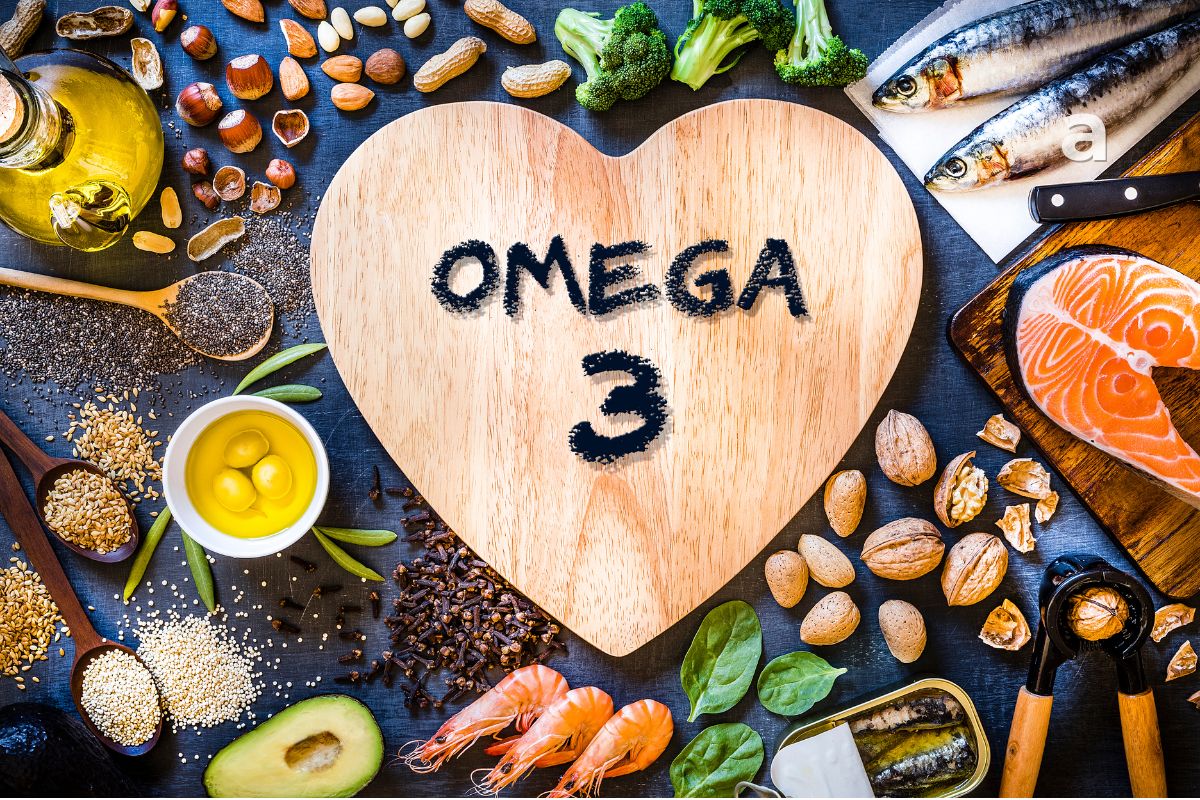
Omega-3 Benefits: Best Sources, Health Benefits & Daily Needs
Understanding omega-3 benefits starts with knowing what these essential fatty acids are, where they come from, and how the body uses them. They are found in foods such as fatty fish, seafood, flaxseed, chia seeds, walnuts, and certain plant oils, as well as in dietary supplements such as fish oil and algal oil.
When people talk about omega-3s, they are usually referring to three important fatty acids:
- ALA — Alpha-linolenic acid
- EPA — Eicosapentaenoic acid
- DHA — Docosahexaenoic acid
These three are related, but they are not interchangeable.
ALA is considered an essential fatty acid because the body cannot make it and therefore must obtain it from food. The body can convert some ALA into EPA and DHA, but this conversion is very limited. If you specifically want to increase EPA or DHA levels, obtaining them directly from seafood or appropriate supplements is more effective.
What Are Omega-3 Fatty Acids?
Omega-3s are a family of fats that contribute to the structure and function of cells throughout the body.
They are important components of cell membranes, and DHA is particularly concentrated in tissues such as the brain and retina of the eye. Omega-3 fatty acids also participate in functions involving the heart, blood vessels, lungs, immune system, and endocrine system.
This is why omega-3s are much more than simply “healthy fats.”
They are structural and functional nutrients that the body uses every day.
ALA, EPA and DHA: What’s the Difference?
Understanding these three fatty acids is essential before discussing omega-3 benefits.
Alpha-linolenic acid (ALA) is found primarily in plant foods.
Good sources include:
- Flaxseed
- Chia seeds
- Walnuts
- Soybeans
- Canola oil
- Other plant oils
ALA is the omega-3 fatty acid that is essential in the dietary sense because humans cannot produce it themselves.
Eicosapentaenoic acid (EPA) is a long-chain omega-3 fatty acid found primarily in:
- Fatty fish
- Seafood
- Fish oil
- Algal-based products in some cases
EPA is involved in cell signaling and the production of biologically active molecules.
Docosahexaenoic acid (DHA) is another long-chain omega-3.
It is particularly important as a structural component of:
- Brain tissue
- Retinal tissue
- Cell membranes
DHA is especially relevant during periods of growth and development, including pregnancy and early life.
Why Does Your Body Need Omega-3?
Omega-3 fatty acids contribute to several fundamental processes.
They help form the membranes surrounding cells and participate in biological signaling.
Omega-3s are therefore relevant to:
- Heart and blood-vessel function
- Brain structure and function
- Eye health
- Immune function
- Cell signaling
- Normal development
- Healthy cell membranes
However, it is important to separate established physiological roles from exaggerated supplement claims.
Omega-3 is essential nutrition—not a miracle cure.
Omega-3 and the Heart
Omega-3-rich foods, particularly seafood, are an important part of healthy dietary patterns.
Research has associated regular seafood consumption with cardiovascular benefits. However, the evidence for taking omega-3 supplements to prevent cardiovascular disease in everyone is much less straightforward.
For example, fish-oil supplements can lower triglyceride levels, but research on their broader effects on cardiovascular outcomes has produced mixed findings.
This distinction matters:
Eating nutrient-rich seafood as part of a balanced diet is not the same thing as taking a high-dose fish-oil supplement.
Omega-3 and the Brain
DHA is particularly abundant in brain tissue and is an important structural component of brain-cell membranes.
Adequate omega-3 intake is therefore relevant to normal brain structure and function.
DHA is especially important during fetal and early childhood development, when the brain is undergoing rapid growth.
This does not mean that taking extra DHA automatically improves memory or intelligence in healthy adults.
Again, adequacy is the foundation.
Omega-3 and Eye Health
DHA is also highly concentrated in the retina.
The retina is the light-sensitive tissue at the back of the eye, and DHA forms an important part of retinal cell membranes.
This helps explain why omega-3 nutrition is particularly relevant during periods of early development.
Omega-3 During Pregnancy
Omega-3s are particularly interesting during pregnancy because DHA contributes to fetal development, including brain and eye development.
Pregnant individuals are generally encouraged to include appropriate seafood choices as part of a healthy eating pattern, while paying attention to mercury exposure. The NIH notes that expert groups recommend approximately 8–12 ounces of seafood per week during pregnancy, choosing varieties lower in methylmercury.
Good lower-mercury choices include examples such as:
- Salmon
- Sardines
- Herring
- Trout
- Light canned tuna
Certain fish with higher mercury levels should be avoided during pregnancy according to applicable public-health guidance.
Omega-3s and Inflammation
Omega-3 fatty acids participate in biological pathways involved in inflammation and the body’s resolution of inflammatory responses.
EPA and DHA can be converted into specialized lipid mediators involved in regulating these processes.
But this should not be simplified into:
“Omega-3 cures inflammation.”
Inflammation is a normal and necessary biological response. The goal is healthy regulation—not eliminating inflammation completely.
How Much Omega-3 Do You Need?
This is where omega-3 nutrition becomes slightly different from vitamins and minerals.
There is an established Adequate Intake (AI) for ALA, but there is no universally established Recommended Dietary Allowance specifically for EPA and DHA in the U.S. Dietary Reference Intake system.
For adults, the ALA recommendations are approximately:
- Men: 1.6 g/day
- Women: 1.1 g/day
- Pregnancy: 1.4 g/day
- Breastfeeding: 1.3 g/day
Children and teenagers have age-specific requirements.
Omega-3 Is Not Just About Fish
One of the biggest misconceptions is that omega-3 automatically means fish.
Plant foods can provide ALA, including:
- Flaxseed
- Chia seeds
- Walnuts
- Soybeans
- Canola oil
Seafood provides EPA and DHA.
For people who don’t eat fish, algal oil can provide a direct source of DHA and, depending on the product, EPA. This makes algae-derived omega-3 particularly relevant to vegetarian and vegan diets.
Food First: A Better Starting Point
Rather than immediately reaching for a supplement, consider your overall diet.
A nutrient-rich omega-3 eating pattern can include:
Plant sources
- Chia seeds
- Flaxseed
- Walnuts
- Soy foods
Seafood
- Salmon
- Sardines
- Mackerel
- Herring
- Trout
Fortified foods
Some products such as certain eggs, yogurts, milk, and soy beverages may contain added omega-3s. Always check the nutrition label.
Omega-3 and Other Nutrients
Omega-3 fatty acids don’t work in isolation.
A healthy eating pattern should also provide:
- Protein
- Fiber
- Vitamin B12
- Vitamin D
- Iron
- Zinc
- Magnesium
- Calcium
- Antioxidant-rich fruits and vegetables
The Big Picture
Omega-3s deserve attention because they are involved in fundamental aspects of human biology.
But the most useful way to think about them is not:
“How many omega-3 capsules should I take?”
Instead, start with:
“Which omega-3 foods are part of my regular diet?”
From there, consider whether a supplement has a specific purpose.
This food-first approach makes omega-3 nutrition easier to understand and more sustainable.
Key Takeaway
Omega-3 fatty acids are important fats that support cell membranes and contribute to normal heart, brain, eye, immune, and developmental functions. ALA comes mainly from plant foods such as flaxseed, chia seeds, walnuts, and certain oils, while EPA and DHA are found primarily in fish and seafood. Because the body converts ALA into EPA and DHA only in limited amounts, direct dietary sources of EPA and DHA can be important when these long-chain omega-3s are desired.
Science-Backed Omega-3 Benefits
Omega-3 fatty acids are often described as “healthy fats,” but their role in the body is much more specific. ALA, EPA, and DHA participate in cell structure, signaling, and several physiological processes involving the heart, brain, eyes, immune system, and development.
At the same time, it is important to distinguish between the established biological roles of omega-3s and the much broader claims sometimes made by supplement marketing.
1. Supports Healthy Cell Membranes
One of the most fundamental omega-3 benefits is their structural role.
Omega-3 fatty acids are incorporated into the membranes surrounding cells throughout the body.
These membranes help cells:
- Maintain their structure
- Communicate with one another
- Respond to signals
- Interact with their environment
DHA is particularly concentrated in certain tissues, including the brain and retina.
This means omega-3 nutrition isn’t simply about getting a particular number of capsules each day. These fatty acids are actually incorporated into the body’s cellular structures.
2. Supports Normal Heart Health
Omega-3s have a well-established connection with cardiovascular nutrition, particularly through their effects on triglyceride levels.
EPA and DHA can help lower blood triglycerides, especially at higher doses used under medical supervision. However, the evidence surrounding omega-3 supplements and broader cardiovascular outcomes is more complicated.
Research consistently supports including fish and seafood as part of a healthy eating pattern.
That is different from saying that everyone needs a fish-oil supplement to prevent heart disease.
The important distinction
Seafood as part of a healthy diet: Strong nutritional support.
Omega-3 supplements for everyone: Not established as universally necessary.
3. Helps Maintain Normal Triglyceride Levels
Triglycerides are a type of fat circulating in the blood.
High triglyceride levels can increase cardiovascular risk.
EPA and DHA can reduce triglyceride concentrations, which is one of the clearest established effects of supplemental omega-3 fatty acids.
However, people with significantly elevated triglycerides should not self-treat with ordinary over-the-counter fish oil.
Medical-grade omega-3 preparations and appropriate doses are sometimes used under professional supervision.
4. Supports Brain Structure and Function
DHA is particularly abundant in the brain.
It is an important structural component of brain-cell membranes and contributes to normal neurological function.
This makes adequate DHA especially important during periods of rapid brain development.
However, claims such as:
“Omega-3 supplements make you smarter.”
go beyond the evidence.
Adequate nutrition supports normal brain function, but that does not mean taking extra omega-3 automatically improves memory or intelligence in healthy adults.
5. Important for Eye and Retinal Health
DHA is also highly concentrated in the retina, the light-sensitive tissue at the back of the eye.
This helps explain why DHA is particularly important during early development.
Omega-3 nutrition therefore has a legitimate connection to eye biology.
But supplementation is not a universal treatment for every eye condition.
For example, NIH notes that adding EPA and DHA to the AREDS formulation did not provide additional benefit for slowing vision loss from age-related macular degeneration.
6. Supports Pregnancy and Fetal Development
Omega-3s—particularly DHA—are important during pregnancy.
DHA accumulates rapidly in the developing brain and retina, particularly during the third trimester.
Adequate omega-3 nutrition is therefore relevant to:
- Fetal brain development
- Eye development
- Normal growth
- Maternal nutrition
Expert groups generally recommend that pregnant women consume 8–12 ounces of lower-mercury seafood per week, providing a practical dietary source of DHA and EPA.
Both nutrients are important components of a healthy pregnancy diet, although their biological roles are different.
7. May Reduce the Risk of Preterm Birth
This is one area where evidence around long-chain omega-3s is particularly interesting.
Research reviewed by the NIH indicates that omega-3 supplementation during pregnancy can reduce the risk of preterm birth, with evidence suggesting a particularly meaningful reduction in early preterm birth in some populations.
However, this does not mean every pregnant person should automatically take a high-dose omega-3 supplement.
Dietary intake, existing supplements, individual risk factors, and medical guidance all matter.
8. Participates in Inflammation Regulation
EPA and DHA participate in the production of signaling molecules involved in inflammatory processes.
The body can use long-chain omega-3s to produce lipid mediators, including molecules involved in regulating and resolving inflammatory responses.
This is more accurate than saying:
“Omega-3s eliminate inflammation.”
Inflammation itself is a normal biological process.
The body needs inflammation to respond to injury and infection. The goal is appropriate regulation—not eliminating inflammation altogether.
9. Supports Normal Immune Function
Omega-3 fatty acids interact with immune-cell membranes and participate in signaling pathways involved in immune responses.
However, the evidence does not justify describing omega-3 supplements as a universal “immune booster.”
A healthy immune system depends on many factors, including:
10. Supports Normal Blood-Vessel Function
EPA and DHA influence biological signaling and lipid metabolism, which can affect cardiovascular physiology.
Omega-3-rich seafood is therefore commonly included in heart-healthy dietary patterns.
But again, food and supplements should not be treated as interchangeable.
A diet rich in fish, vegetables, whole grains, legumes, nuts, and other minimally processed foods provides a broader nutritional benefit than an isolated fish-oil capsule.
11. Supports Healthy Development in Early Life
Omega-3 fatty acids are particularly important during periods of rapid growth.
DHA is involved in developing:
- Brain tissue
- Retina
- Cell membranes
This is why adequate omega-3 intake is particularly relevant during:
- Pregnancy
- Infancy
- Early childhood
The biological importance of DHA during development is well established, although supplementation studies do not consistently demonstrate improvements in every developmental outcome.
12. May Support Joint Health
Omega-3 fatty acids have been studied extensively in relation to inflammatory joint conditions, particularly rheumatoid arthritis.
Some research suggests that omega-3 supplementation may help certain people reduce joint symptoms or their need for anti-inflammatory medication.
However, evidence varies, and omega-3 should not be presented as a cure for arthritis.
People with persistent joint pain should receive appropriate medical evaluation.
13. Supports Healthy Blood Lipid Metabolism
Omega-3s influence the metabolism and transport of fats within the body.
Their most established lipid effect is reducing triglycerides.
This makes EPA and DHA particularly relevant for people with elevated triglyceride levels.
But cholesterol and triglycerides are different measurements, and omega-3 supplements should not be promoted as a universal solution for every abnormal cholesterol result.
14. Provides a Direct Source of EPA and DHA When Diet Is Limited
This is particularly relevant for people who don’t eat seafood.
Plant foods such as flaxseed and chia provide ALA, but the body converts ALA to EPA and DHA only in very small amounts.
Therefore:
Plant foods Provide primarily:
ALA
Fatty fish and seafood Provide:
EPA + DHA
Algal oil Can provide:
DHA and, depending on the product, EPA
This makes algal oil an important option for people who avoid fish.
15. Supports a Nutrient-Dense Eating Pattern
One of the most useful “omega-3 benefits” may actually come from the foods that contain omega-3s.
For example, fatty fish can provide:
- EPA
- DHA
- High-quality protein
- Vitamin B12
- Selenium
- Vitamin D
- Other nutrients
Similarly, walnuts and seeds provide omega-3 ALA alongside:
Omega-3 Benefits: What the Evidence Supports
Let’s separate established roles from common marketing claims.
| Claim | Evidence-based view |
|---|---|
| Supports cell membranes | ✅ Well established |
| DHA is important for brain structure | ✅ Well established |
| DHA is important for retinal structure | ✅ Well established |
| Supports normal heart health | ✅ Strong dietary evidence |
| Lowers triglycerides | ✅ Well established for EPA/DHA |
| Important during pregnancy | ✅ Supported |
| May reduce preterm birth risk | ✅ Evidence supports benefit in certain circumstances |
| “Prevents every heart attack” | ❌ Not supported |
| “Cures inflammation” | ❌ Misleading |
| “Makes everyone smarter” | ❌ Not established |
| “Prevents all colds” | ❌ Not established |
| “Everyone needs fish-oil supplements” | ❌ Not established |
Food vs. Supplement: An Important Difference
This distinction should remain central throughout the article.
Eating fish Provides:
- EPA
- DHA
- Protein
- Vitamins
- Minerals
- Other beneficial nutrients
Taking fish oil
Primarily provides:
- EPA
- DHA
A supplement can be useful in specific circumstances, but it does not reproduce the complete nutritional profile of a whole food.
NIH notes that seafood consumption is associated with cardiovascular benefits, while the broader cardiovascular effects of fish-oil supplements remain less clear.
Omega-3 + Vitamin D
Fatty fish can provide both omega-3 fatty acids and vitamin D.
For example, salmon and other oily fish can contribute to dietary intake of both nutrients.
Omega-3 + Vitamin B12
Fish and seafood can be excellent sources of both DHA/EPA and vitamin B12.
This makes seafood particularly nutrient-dense.
Omega-3 + Protein
Fatty fish combines omega-3 fatty acids with high-quality protein.
That makes it a particularly useful food for a balanced diet.
Omega-3 + Zinc
Some seafood provides both omega-3 fatty acids and zinc.
This illustrates why whole foods are often more useful than focusing on isolated nutrients.
What Omega-3 Cannot Do
Omega-3 should not be presented as a miracle nutrient.
It cannot:
- Replace a balanced diet
- Cure every inflammatory condition
- Prevent every cardiovascular event
- Guarantee better memory
- Replace prescribed medication
- Eliminate the need for exercise
- Make an unhealthy diet healthy
Its real value is much more grounded:
Omega-3s are essential or physiologically important fatty acids that support normal biological functions and can provide specific benefits in appropriate dietary and clinical contexts.
Key Takeaway
The strongest evidence for omega-3s relates to their structural role in cell membranes, DHA’s importance in the brain and retina, EPA and DHA’s ability to lower triglycerides, and their importance during pregnancy and early development. Seafood is a particularly nutrient-dense source of EPA and DHA, while plant foods provide ALA. Supplements can be useful in specific situations, but they should not be treated as a universal replacement for a healthy dietary pattern.
How Much Omega-3 Do You Need Every Day?
Unlike vitamins and minerals such as zinc or vitamin C, omega-3 recommendations are a little more nuanced because ALA, EPA, and DHA are different fatty acids with different dietary roles.
For ALA, established Adequate Intake (AI) values are available. However, U.S. authorities have not established a specific recommended daily amount for EPA and DHA for healthy adults.
That distinction is important when evaluating omega-3 supplements: a product containing “1,000 mg fish oil” does not necessarily contain 1,000 mg of EPA + DHA.
1. Daily ALA Requirements
The following are the U.S. recommended amounts for ALA.
| Life Stage | Recommended ALA |
|---|---|
| Birth–12 months | 0.5 g/day* |
| Children 1–3 years | 0.7 g/day |
| Children 4–8 years | 0.9 g/day |
| Boys 9–13 years | 1.2 g/day |
| Girls 9–13 years | 1.0 g/day |
| Teen boys 14–18 years | 1.6 g/day |
| Teen girls 14–18 years | 1.1 g/day |
| Adult men | 1.6 g/day |
| Adult women | 1.1 g/day |
| Pregnant teens & women | 1.4 g/day |
| Breastfeeding teens & women | 1.3 g/day |
For infants, the value is expressed as total omega-3 fatty acids rather than ALA alone.
2. Why Is There No Official Daily EPA + DHA Target?
This is one of the most important things to understand about omega-3 nutrition.
The U.S. Dietary Reference Intakes establish recommendations for ALA, but experts have not established a comparable RDA or AI for EPA and DHA.
This does not mean EPA and DHA are unimportant.
It means that the evidence has not established one universal daily amount that applies to everyone.
EPA and DHA intake depends on factors such as:
- Overall diet
- Seafood consumption
- Life stage
- Health status
- Pregnancy
- Medical conditions
- Whether supplementation is being used for a specific purpose
3. ALA vs. EPA vs. DHA
Think of the three omega-3s as related but different nutrients.
ALA
Mainly found in:
- Flaxseed
- Chia seeds
- Walnuts
- Soybeans
- Canola oil
EPA
Found mainly in:
- Fatty fish
- Seafood
- Fish oil
- Some algal products
DHA
Found mainly in:
- Fatty fish
- Seafood
- Fish oil
- Algal oil
The body can convert ALA into EPA and DHA, but the conversion is limited. Therefore, eating ALA-rich foods should not be viewed as equivalent to directly consuming EPA and DHA.
4. How Much Omega-3 Is in Fish?
The exact amount varies substantially according to:
- Species
- Farmed vs. wild fish
- Portion size
- Preparation
- Season
- Food source
Fatty fish generally provide much more EPA and DHA than lean fish.
Good examples include:
- Salmon
- Sardines
- Mackerel
- Herring
- Trout
Rather than obsessing over an exact number for every meal, a practical strategy is to include suitable seafood regularly as part of an overall balanced diet.
5. How Much Seafood Should You Eat?
For pregnancy, U.S. guidance referenced by NIH recommends approximately 8–12 ounces of seafood per week, choosing varieties that are lower in methylmercury.
That’s approximately:
225–340 grams of seafood per week.
The focus should be on variety and lower-mercury choices, rather than simply eating the largest possible amount of fish.
6. Omega-3 Requirements During Pregnancy
Pregnancy increases the recommended ALA intake to:
1.4 g/day
DHA is also particularly important during fetal development because it accumulates in developing brain and retinal tissue.
This is one reason seafood can be valuable during pregnancy.
However, pregnancy is also a time when seafood selection matters because some fish contain higher levels of mercury.
Pregnant individuals should follow current local dietary guidance and discuss supplements with their healthcare professional.
7. Omega-3 During Breastfeeding
The recommended ALA intake during breastfeeding is:
1.3 g/day
Breastfeeding also increases the nutritional importance of DHA because fatty acids are present in breast milk and contribute to infant nutrition.
People who do not eat seafood may wish to discuss DHA-containing foods or algal-based supplements with a healthcare professional.
8. Omega-3 for Vegetarians
Vegetarian diets can provide ALA through:
- Chia seeds
- Flaxseed
- Walnuts
- Soybeans
- Canola oil
If eggs and dairy are included, these foods may contribute additional nutrients, although they are not major sources of EPA and DHA.
The key point is that a vegetarian diet can provide ALA, but direct EPA/DHA intake may be lower depending on food choices.
9. Omega-3 for Vegans
A vegan diet can provide plenty of ALA through plant foods.
Excellent choices include:
- Ground flaxseed
- Chia seeds
- Walnuts
- Hemp seeds
- Soy foods
- Canola oil
For direct DHA—and sometimes EPA—algal oil is an option because algae are the original source of omega-3s that accumulate in many marine food chains.
Certain algal oils are established food ingredients and can provide DHA, with some products also providing EPA.
10. How Much Flaxseed or Chia Do You Need?
There’s no requirement to consume a specific spoonful of seeds every day.
A practical approach is to incorporate them regularly into meals.
For example:
Breakfast
Oatmeal + ground flaxseed + walnuts
Snack
Yogurt or plant-based yogurt + chia seeds
Lunch
Salad + seeds
Dinner
Soy-based meal + vegetables
The important goal is a consistent dietary pattern, not one magic serving.
11. Is 1,000 mg of Fish Oil Equal to 1,000 mg of Omega-3?
No.
This is a very common supplement-label misconception.
A fish-oil capsule might contain:
1,000 mg total fish oil
but only part of that amount may be:
- EPA
- DHA
For example, the label might list a much smaller combined EPA + DHA amount.
Always check:
EPA + DHA per serving
rather than simply looking at:
“Fish oil 1,000 mg.”
This is particularly important when comparing omega-3 supplements.
12. Is There a Maximum Safe Amount?
There isn’t a single U.S. RDA or UL for EPA and DHA comparable to the UL established for nutrients such as zinc.
However, high-dose supplementation should not be treated casually.
The FDA has concluded that dietary supplements providing up to 5 g/day of combined EPA and DHA when used according to labeling are considered safe and lawful for purposes discussed in its qualified-health-claim review. Above 5 g/day, the available evidence was insufficient for the FDA to draw the same conclusion regarding bleeding risk.
This should not be interpreted as a recommendation to consume 5 grams of EPA + DHA every day.
That’s a safety-related regulatory threshold—not a nutritional target.
13. Why High-Dose Omega-3 Should Be Different From Everyday Nutrition
There’s a huge difference between:
Eating salmon with dinner
and
Taking several grams of concentrated EPA/DHA daily.
High-dose omega-3 supplements are sometimes used under medical supervision for specific conditions, such as significantly elevated triglycerides.
That is different from routine nutritional supplementation.
If you are considering high-dose omega-3, particularly alongside medication, speak with a healthcare professional.
14. Omega-3 and Blood-Thinning Medicines
People taking medicines that affect blood clotting should be particularly cautious about high-dose omega-3 supplementation.
The evidence does not suggest that ordinary dietary omega-3 intake is inherently dangerous, but concentrated supplements can be pharmacologically meaningful at higher doses.
FDA’s review specifically examined bleeding concerns at higher EPA/DHA intakes. U.S. Food and Drug Administration
Practical rule:
Food amounts ≠ high-dose supplements.
If you’re taking anticoagulants or other medicines that affect bleeding, discuss omega-3 supplementation with your doctor or pharmacist.
15. Do You Need an Omega-3 Supplement?
Not necessarily.
First ask:
1. Do I regularly eat omega-3-rich foods?
2. Do I eat fatty fish?
3. Do I follow a vegetarian or vegan diet?
4. Am I pregnant or breastfeeding?
5. Has a healthcare professional recommended omega-3 supplementation?
6. Am I taking medication that could interact with high-dose supplements?
This approach is much more useful than assuming everyone needs fish oil.
16. A Practical Daily Omega-3 Strategy
Instead of calculating every gram, build omega-3 foods into your normal routine.
Plant-based option
Breakfast: Oats + ground flaxseed + walnuts
Vegetarian option
Breakfast: Chia pudding + walnuts
Lunch: Lentil bowl + vegetables
Seafood option
Two meals per week: Fatty fish such as salmon or sardines
Vegan direct EPA/DHA option
Consider an algal oil supplement if appropriate.
This approach provides flexibility without turning nutrition into a numbers game.
17. Omega-3 + Vitamin D
Fatty fish can provide both omega-3 fatty acids and vitamin D.
This makes oily fish particularly nutrient-dense.
18. Omega-3 + Vitamin B12
Fish and seafood can provide both:
- EPA/DHA
- Vitamin B12
This is one reason seafood can contribute to a nutrient-dense diet beyond omega-3 alone.
19. Omega-3 + Protein
Fish and seafood combine omega-3 fats with high-quality protein.
Plant sources such as:
- Chia
- Flax
- Walnuts
- Soybeans
provide ALA along with varying amounts of protein and other nutrients.
20. Omega-3 + Fiber
Plant-based omega-3 foods can also contribute fiber.
For example:
- Chia seeds
- Flaxseed
- Walnuts
- Soy foods
This is another advantage of obtaining nutrients through whole foods.
A Simple Omega-3 Rule
If you want one easy principle to remember:
Eat ALA-rich plant foods regularly, include suitable seafood when you eat fish, and use EPA/DHA supplements for a specific reason rather than simply chasing a higher dose.
For people who don’t consume seafood, algal oil provides another option for obtaining DHA and, depending on the product, EPA.
Key Takeaway
For adults, the established daily ALA intake is 1.6 g for men and 1.1 g for women. During pregnancy, the recommendation is 1.4 g/day, and during breastfeeding it is 1.3 g/day. There is no universally established U.S. daily recommendation for EPA and DHA. Plant foods provide ALA, while fatty fish and seafood provide EPA and DHA more directly.
When considering supplements, don’t confuse 1,000 mg of fish oil with 1,000 mg of EPA + DHA. Always check the actual EPA and DHA amounts on the label. High-dose supplementation should be approached carefully, particularly if you take medications that affect bleeding.
20 Best Omega-3-Rich Foods to Add to Your Diet
Omega-3s don’t come from one single type of food. ALA is found mainly in plant foods such as flaxseed, chia seeds, walnuts, and certain oils, while EPA and DHA are found primarily in fatty fish and seafood. Some fortified foods and algal oils can also contribute omega-3s.
The important distinction is that these sources aren’t nutritionally identical. Plant foods are excellent sources of ALA, but the body’s conversion of ALA into EPA and DHA is limited. If you specifically want more EPA or DHA, direct sources such as seafood or suitable algal oil are more reliable.
1. Salmon
Salmon is one of the most popular dietary sources of EPA and DHA.
It also provides:
- High-quality protein
- Vitamin B12
- Vitamin D
- Selenium
- Other essential nutrients
This makes salmon more than an omega-3 food—it is a highly nutrient-dense protein source.
2. Sardines
Sardines are an excellent source of EPA and DHA and are often more affordable than premium fish.
They also provide:
- Protein
- Vitamin B12
- Vitamin D
- Selenium
- Calcium when the edible bones are included
Canned sardines can be particularly convenient because they require little preparation.
3. Mackerel
Mackerel is a fatty fish that can provide substantial amounts of EPA and DHA.
It also contributes:
- Protein
- Vitamin B12
- Selenium
- Vitamin D
When choosing mackerel, pay attention to the species because mercury levels can vary among fish.
For pregnancy, follow current local seafood guidance and choose lower-mercury varieties.
4. Herring
Herring is another naturally omega-3-rich fish.
It can provide:
- EPA
- DHA
- Protein
- Vitamin B12
- Vitamin D
It can be eaten fresh, canned, smoked, or prepared in other traditional ways, although preparation methods can substantially affect sodium content.
5. Trout
Trout provides EPA and DHA while also supplying:
- Protein
- Vitamin B12
- Selenium
- Vitamin D
It can be baked, grilled, or prepared with vegetables and whole grains for a balanced meal.
6. Anchovies
Anchovies may be small, but they can contribute meaningful amounts of EPA and DHA.
They are commonly used in:
- Salads
- Sauces
- Pasta
- Pizzas
- Mediterranean-style dishes
Because they are often preserved in salt, check the sodium content if you consume them frequently.
7. Oysters
Oysters provide omega-3s along with:
- Zinc
- Vitamin B12
- Iron
- Selenium
- Protein
This makes oysters an especially nutrient-dense seafood choice.
8. Canned Light Tuna
Canned light tuna can provide omega-3s and is a convenient protein source.
However, tuna is not nutritionally identical to fatty fish such as salmon or sardines. EPA and DHA levels vary by species.
For pregnancy, canned light tuna is generally considered a lower-mercury choice than some larger tuna species, but current local seafood guidance should always be followed.
9. Flaxseed
Flaxseed is one of the best plant sources of ALA.
It also provides:
Ground flaxseed is generally more practical than whole flaxseed because grinding makes its nutrients easier to access.
Try adding it to:
- Oatmeal
- Smoothies
- Yogurt
- Chia puddings
- Homemade breads
10. Chia Seeds
Chia seeds are another excellent plant source of ALA.
They also provide:
A simple way to use them is to add them to:
- Overnight oats
- Yogurt
- Smoothies
- Chia pudding
- Fruit bowls
11. Walnuts
Walnuts provide ALA together with:
- Healthy fats
- Fiber
- Protein
- Magnesium
- Copper
A small handful can be added to breakfast or eaten as a snack.
Walnuts are calorie-dense, so portion size still matters.
12. Hemp Seeds
Hemp seeds provide ALA alongside:
- Protein
- Healthy fats
- Magnesium
- Other minerals
They can be sprinkled over:
- Salads
- Oatmeal
- Yogurt
- Smoothies
They are particularly useful for people looking for plant-based sources of both healthy fats and protein.
13. Soybeans
Soybeans provide ALA along with substantial amounts of plant protein.
Useful options include:
- Edamame
- Tofu
- Tempeh
- Soy milk
This makes soy particularly useful for vegetarian and vegan diets.
14. Canola Oil
Canola oil contains ALA and can be used as an everyday cooking oil.
Because it has a relatively neutral flavor, it can be used for:
- Cooking
- Baking
- Salad dressings
Use reasonable amounts because oils are calorie-dense even when they contain beneficial fats.
15. Soybean Oil
Soybean oil provides ALA and is widely used in food preparation.
It can contribute to overall omega-3 intake when used as part of a balanced diet.
However, oil should still be considered one component of the diet rather than a reason to consume large amounts.
16. Omega-3-Fortified Eggs
Some eggs are produced using feed enriched with omega-3 fatty acids.
These eggs can provide more omega-3 than conventional eggs, although the exact amount varies by product.
Check the nutrition label if you’re specifically looking for omega-3-fortified eggs.
Eggs also provide:
- Protein
- Vitamin B12
- Selenium
- Choline
17. Omega-3-Fortified Milk or Plant Beverages
Some dairy and plant-based beverages are fortified with omega-3 fatty acids.
The type and amount vary considerably.
Look at the nutrition label for:
- ALA
- DHA
- EPA
This is especially useful when comparing products.
For plant-based beverages, also check:
- Protein
- Calcium
- Vitamin D
- Added sugar
18. Algal Oil
Algal oil is particularly important for people who don’t eat fish.
Algae are the original source of omega-3 fatty acids that enter marine food chains.
Depending on the product, algal oil can provide:
- DHA
- EPA
This makes it one of the most useful direct sources of long-chain omega-3 for vegetarian and vegan diets.
19. Seaweed and Algae Foods
Certain seaweeds and algae can contain omega-3 fatty acids, although their nutritional composition varies significantly.
They can be useful additions to plant-based diets, but they shouldn’t automatically be considered equivalent to a concentrated algal-oil supplement.
20. Omega-3-Enriched Foods
Food manufacturers can add omega-3s to products such as:
- Yogurt
- Milk
- Eggs
- Plant beverages
- Cereals
- Other fortified foods
These can be useful, but always check the label to determine whether the product provides:
ALA, EPA, or DHA.
Quick Omega-3 Food Guide
| Food | Main Omega-3 | Dietary Pattern |
|---|---|---|
| Salmon | EPA + DHA | Non-vegetarian |
| Sardines | EPA + DHA | Non-vegetarian |
| Mackerel | EPA + DHA | Non-vegetarian |
| Herring | EPA + DHA | Non-vegetarian |
| Trout | EPA + DHA | Non-vegetarian |
| Anchovies | EPA + DHA | Non-vegetarian |
| Oysters | EPA + DHA | Non-vegetarian |
| Canned light tuna | EPA + DHA | Non-vegetarian |
| Flaxseed | ALA | Vegetarian/Vegan |
| Chia seeds | ALA | Vegetarian/Vegan |
| Walnuts | ALA | Vegetarian/Vegan |
| Hemp seeds | ALA | Vegetarian/Vegan |
| Soybeans | ALA | Vegetarian/Vegan |
| Canola oil | ALA | Vegetarian/Vegan |
| Soybean oil | ALA | Vegetarian/Vegan |
| Omega-3 eggs | Variable | Vegetarian |
| Fortified milk | Variable | Vegetarian |
| Fortified plant beverages | Variable | Vegetarian/Vegan |
| Algal oil | DHA ± EPA | Vegetarian/Vegan |
| Seaweed/algae | Variable | Vegetarian/Vegan |
Exact omega-3 content varies according to species, variety, serving size, preparation, growing conditions, and product formulation. For packaged foods, use the nutrition label for precise amounts.
Best Omega-3 Foods for Non-Vegetarians
If you eat fish, prioritize a variety of fatty fish such as:
- Salmon
- Sardines
- Mackerel
- Herring
- Trout
These foods provide direct EPA and DHA.
A varied seafood pattern is generally more useful than relying on a single fish every week.
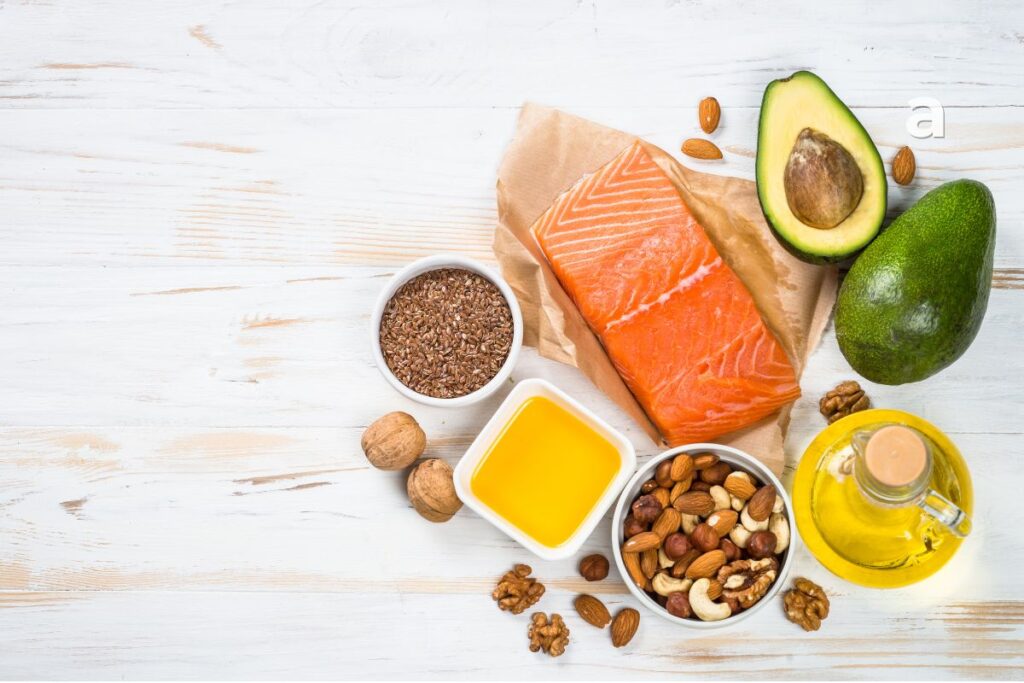
Best Omega-3 Foods for Vegetarians
Vegetarians can build omega-3 intake around:
- Flaxseed
- Chia seeds
- Walnuts
- Hemp seeds
- Soybeans
- Omega-3-fortified eggs
- Fortified dairy products
The majority of plant-based omega-3 is ALA.
Best Omega-3 Foods for Vegans
Useful vegan options include:
- Ground flaxseed
- Chia seeds
- Walnuts
- Hemp seeds
- Soybeans
- Canola oil
- Fortified plant beverages
- Algae foods
- Algal oil
If you specifically want direct DHA or EPA, algal oil is particularly relevant.
Best Indian-Friendly Omega-3 Foods
You don’t need an imported “superfood” to increase omega-3 intake.
Traditional Indian eating patterns can incorporate several useful sources.
Vegetarian
- Flaxseed
- Chia seeds
- Walnuts
- Soybeans
- Tofu
- Mustard oil
- Omega-3-fortified foods
Non-Vegetarian
- Sardines
- Indian mackerel
- Salmon where available
- Trout
- Other suitable seafood
A Simple Indian Meal Idea
Dal + vegetables + roti + ground flaxseed chutney
This provides ALA alongside:
Don’t Confuse Flaxseed With Fish
This distinction is important.
Flaxseed
Provides:
ALA
Salmon
Provides:
EPA + DHA
Your body can convert some ALA into EPA and DHA, but the conversion is limited.
Therefore, consuming flaxseed is excellent for getting ALA, but it should not automatically be considered an equivalent substitute for eating EPA/DHA-rich seafood.
How to Get More Omega-3 Without Supplements
Try these simple changes:
Breakfast
Add ground flaxseed or chia seeds to oatmeal.
Snack
Choose walnuts instead of a highly processed snack.
Lunch
Add soybean or tofu to a grain-and-vegetable bowl.
Dinner
If you eat fish, choose salmon, sardines, trout, or another suitable fatty fish.
Vegan option
Consider an algal-oil source of DHA/EPA when appropriate.
Omega-3 + Vitamin B12
Fatty fish and seafood can provide both omega-3s and vitamin B12.
This makes them especially nutrient-dense foods.
Omega-3 + Vitamin D
Fatty fish can also provide vitamin D.
This creates a natural nutritional connection between omega-3 and vitamin D-rich foods.
Omega-3 + Protein
Fish, seafood, soybeans, tofu, and other foods can provide omega-3s alongside protein.
This is one reason whole foods are often more useful than isolated nutrient supplements.
Omega-3 + Fiber
Plant-based omega-3 sources such as flaxseed, chia seeds, and walnuts can also provide fiber.
This combination supports a broader healthy eating pattern.
What About Mustard Oil?
Mustard oil is commonly used in Indian cooking and contains alpha-linolenic acid (ALA), although the exact fatty-acid composition varies by product and variety.
It can contribute to dietary ALA intake.
However, don’t treat any single cooking oil as a complete omega-3 strategy.
A varied diet containing seeds, nuts, soy foods, and—where appropriate—seafood provides a broader range of omega-3 sources.
A Simple Omega-3 Food Rotation
Instead of eating the same food every day:
Monday
Ground flaxseed + walnuts
Tuesday
Chia seeds + soy foods
Wednesday
Sardines or another suitable fatty fish
Thursday
Flaxseed + walnuts
Friday
Tofu or edamame
Saturday
Salmon or trout
Sunday
Chia + walnuts + soy foods
This creates variety while reducing dependence on a single food.
Food First Still Wins
Whole foods provide much more than omega-3.
Salmon
Omega-3 + protein + vitamin B12 + vitamin D + selenium
Chia
ALA + fiber + protein + calcium + magnesium
Walnuts
ALA + fiber + protein + magnesium + healthy fats
Soybeans
ALA + protein + fiber + minerals
This is the real advantage of a food-first strategy.
Key Takeaway
The best direct food sources of EPA and DHA include fatty fish such as salmon, sardines, mackerel, herring, and trout. The best plant sources of ALA include flaxseed, chia seeds, walnuts, hemp seeds, and soybeans. For people who don’t eat fish, algal oil can provide DHA and, depending on the product, EPA.
Rather than searching for one “superfood,” build omega-3-rich foods into your regular diet and rotate your sources. This gives you omega-3s alongside protein, fiber, vitamins, minerals, and other beneficial nutrients.
Omega-3 Deficiency & Low Intake: Signs, Causes & Who Is at Risk
Omega-3 deficiency is a little different from deficiencies of nutrients such as iron, vitamin B12, or zinc. There is no single, universally recognized set of symptoms that can reliably diagnose an omega-3 deficiency from appearance or everyday feelings alone.
Instead, it is more useful to think about inadequate omega-3 intake and omega-3 status.
ALA is an essential fatty acid, meaning the body cannot make it and must obtain it from food. EPA and DHA have important biological roles, but there is no established U.S. Recommended Dietary Allowance specifically for EPA and DHA.
What Does “Omega-3 Deficiency” Actually Mean?
The phrase omega-3 deficiency is frequently used online, but it can mean several different things.
It may refer to:
- Not consuming enough ALA
- Very low intake of EPA and DHA
- Low blood levels of certain omega-3 fatty acids
- A clinically recognized fatty-acid deficiency in unusual circumstances
These are not necessarily the same thing.
For most healthy adults eating a reasonably varied diet, the more practical concern is simply:
Are you regularly eating foods that provide omega-3 fatty acids?
ALA Is Essential
ALA is considered an essential fatty acid because humans cannot synthesize it in sufficient amounts.
That means it must come from the diet.
Good sources include:
- Flaxseed
- Chia seeds
- Walnuts
- Soybeans
- Canola oil
- Certain fortified foods
The adult Adequate Intake for ALA is 1.6 g/day for men and 1.1 g/day for women.
EPA and DHA Are Different
EPA and DHA are long-chain omega-3 fatty acids.
They can be obtained directly from:
- Fatty fish
- Seafood
- Fish oil
- Algal oil
The body can convert ALA into EPA and DHA, but the conversion is limited.
Therefore, someone can consume plenty of plant-based ALA while still having relatively little direct EPA and DHA intake.
This is particularly relevant when discussing vegetarian and vegan diets.
Does Low Omega-3 Intake Cause Symptoms?
There isn’t a simple checklist such as:
“Dry skin + tiredness = omega-3 deficiency.”
Many symptoms commonly attributed to omega-3 deficiency can have numerous other explanations.
For example:
- Dry skin can result from weather, dehydration, skincare products, or dermatological conditions.
- Fatigue can be associated with sleep, stress, iron deficiency, vitamin B12 deficiency, illness, and many other factors.
- Dry eyes can have environmental, medication-related, age-related, or medical causes.
Therefore, symptoms alone cannot establish an omega-3 deficiency.
What Can Severe Essential Fatty Acid Deficiency Look Like?
Severe essential fatty acid deficiency is uncommon in healthy people consuming normal diets.
When true essential fatty acid deficiency occurs, it has historically been associated with manifestations such as:
- Dry or scaly skin
- Poor growth
- Hair changes
- Increased susceptibility to infection
- Impaired wound healing
However, these findings are nonspecific and can occur for many other reasons.
This is why it would be misleading to tell readers that these symptoms automatically mean they need an omega-3 supplement.
Dry Skin and Omega-3
Dry skin is one of the most common symptoms people associate with low omega-3 intake.
Omega-3 fatty acids are incorporated into cell membranes and participate in biological signaling, so they have legitimate connections to skin biology.
However, dry skin alone is not evidence of omega-3 deficiency.
Other common causes include:
- Dry weather
- Hot showers
- Harsh soaps
- Low humidity
- Aging
- Certain medications
- Skin conditions
If persistent skin problems are present, the underlying cause should be evaluated rather than automatically assuming a nutritional deficiency.
Hair Health and Omega-3
Omega-3s are often marketed as “hair-growth nutrients.”
The reality is more nuanced.
A balanced diet containing essential fatty acids, protein, iron, zinc, vitamin B12, and other nutrients supports normal tissue maintenance.
But there is insufficient evidence to say that taking an omega-3 supplement will automatically stop hair loss or stimulate significant hair growth in everyone.
Hair loss has many possible causes.
Dry Eyes and Omega-3
Omega-3 fatty acids have been studied extensively in relation to dry-eye symptoms.
However, clinical trial results have not consistently demonstrated that omega-3 supplementation provides meaningful benefit for everyone with dry eye.
A large randomized clinical trial published through the National Institutes of Health found that high-dose fish-oil supplementation was not better than placebo for treating dry-eye disease.
This is an excellent example of why biological plausibility does not automatically translate into a proven treatment.
Brain Fog and Omega-3
“Brain fog” is another symptom frequently attributed to low omega-3 intake.
However, brain fog is not a specific medical diagnosis of omega-3 deficiency.
It can be associated with many factors, including:
- Poor sleep
- Stress
- Medication effects
- Illness
- Nutritional deficiencies
- Hormonal changes
While DHA is an important structural component of brain tissue, that doesn’t mean brain fog automatically indicates inadequate omega-3 intake.
Joint Pain and Omega-3
Omega-3 supplements have been studied in inflammatory joint conditions, particularly rheumatoid arthritis.
Some studies suggest that higher EPA/DHA intake may help certain people with joint symptoms or reduce their need for anti-inflammatory medication.
But joint pain alone should not be interpreted as evidence of omega-3 deficiency.
Persistent or severe joint symptoms deserve proper evaluation.
Who May Have Lower Omega-3 Intake?
Some people are more likely to consume less EPA and DHA simply because of their dietary pattern.
This can include people who:
- Rarely eat seafood
- Avoid fish completely
- Follow vegan diets
- Follow certain restrictive diets
- Have limited access to seafood
- Dislike the taste or texture of fish
This does not automatically mean they are deficient.
It simply means their dietary sources of EPA and DHA may be limited.
Vegetarians and Omega-3 Status
Vegetarians can obtain ALA from:
- Flaxseed
- Chia seeds
- Walnuts
- Soybeans
- Canola oil
However, direct EPA/DHA intake may be relatively low.
For vegetarians who consume eggs or dairy, these foods can provide additional nutrients, but they generally aren’t major sources of EPA and DHA.
A varied plant-based diet can still provide adequate essential fatty acids.
Vegans and Omega-3 Status
Vegans can obtain plenty of ALA through:
- Flaxseed
- Chia
- Walnuts
- Soy
- Hemp seeds
If a vegan wants a direct source of DHA or EPA, algal oil is the most relevant supplement option because algae are the original marine source of these long-chain omega-3s.
People Who Rarely Eat Fish
Someone who eats fish only occasionally may still obtain enough ALA from plant foods.
However, their direct EPA and DHA intake may be relatively low.
A practical solution is not necessarily to start taking a large fish-oil dose.
Instead, consider:
- Eating suitable fatty fish more regularly, or
- Discussing an appropriate algal or fish-oil supplement with a healthcare professional.
Pregnancy and Omega-3
Pregnancy is a particularly important life stage for omega-3 nutrition.
DHA contributes to fetal brain and retinal development, and seafood can provide DHA and EPA.
NIH notes that expert groups recommend approximately 8–12 ounces of seafood per week during pregnancy, with choices emphasizing lower-mercury fish.
Examples include:
- Salmon
- Sardines
- Trout
- Herring
- Certain other lower-mercury seafood choices
Pregnant individuals should follow current local seafood-safety guidance.
Breastfeeding and Omega-3
DHA is also relevant during breastfeeding because fatty acids contribute to the composition of breast milk.
People who don’t consume seafood may want to discuss dietary or supplemental DHA with their healthcare professional, particularly when dietary intake is very limited.
Older Adults and Omega-3
Older adults may consume less fish because of:
- Reduced appetite
- Difficulty preparing meals
- Dietary restrictions
- Limited food variety
- Changes in taste preferences
This doesn’t mean that every older adult needs an omega-3 supplement.
Instead, dietary patterns should be reviewed as part of overall nutrition.
People With Very Restricted Diets
People following highly restrictive diets may have a greater risk of inadequate intake of several nutrients—not just omega-3.
A diet lacking:
- Nuts
- Seeds
- Plant oils
- Seafood
- Soy foods
may provide relatively few omega-3 sources.
The answer is usually dietary variety, rather than immediately reaching for a high-dose supplement.
Can a Blood Test Diagnose Omega-3 Deficiency?
Omega-3 status can be assessed through fatty-acid measurements in blood, including tests that measure the proportion of EPA and DHA in red blood cell membranes.
However, there isn’t a universally accepted clinical blood-test threshold that defines omega-3 deficiency for the general population in the same way that some established nutrient deficiencies are diagnosed.
Some commercial tests report an Omega-3 Index, but consumers should understand that this is a measure of omega-3 status—not automatically a diagnosis of disease.
Testing should be interpreted in an appropriate clinical context.
Omega-3 Index: What Is It?
The Omega-3 Index generally refers to the percentage of EPA + DHA in red blood cell membranes.
It has been researched as a marker of long-term omega-3 status.
You may see products or articles describing specific percentages as “optimal.”
Be careful with these claims.
There is ongoing research into how omega-3 status relates to health outcomes, and one number should not be treated as a universal health target for every individual.
Is Low Omega-3 Intake the Same as Deficiency?
No.
This distinction is crucial.
Low intake
You rarely eat omega-3-rich foods.
Low omega-3 status
Your measured tissue or blood levels of certain omega-3 fatty acids are relatively low.
Clinical deficiency
A medically meaningful essential fatty acid deficiency has developed.
These are three different concepts.
Most people discussing omega-3 nutrition online are dealing with the first issue—not a severe clinical deficiency.
Should You Take Omega-3 If You Have Dry Skin?
Not automatically.
First consider:
- Overall diet
- Water intake
- Weather
- Skincare products
- Medications
- Existing skin conditions
If your diet contains very few sources of essential fatty acids, improving overall food quality may be worthwhile.
But persistent or severe skin symptoms should be assessed appropriately.
Should You Take Omega-3 for Hair Loss?
Again, not automatically.
Hair loss can result from:
- Iron deficiency
- Low protein intake
- Zinc deficiency
- Vitamin B12 deficiency
- Thyroid disorders
- Hormonal changes
- Stress
- Certain medications
- Genetic factors
Omega-3 may be part of an overall nutritious diet, but it should not be presented as a universal hair-loss treatment.
Should You Take Omega-3 for Joint Pain?
Omega-3 supplements have been studied for rheumatoid arthritis and other inflammatory conditions.
Some evidence suggests possible benefits for certain symptoms.
However:
Joint pain ≠ omega-3 deficiency.
If you have persistent joint pain, stiffness, swelling, or reduced mobility, the underlying condition should be evaluated.
A Better Way to Think About Omega-3 Status
Instead of asking:
“Do I have an omega-3 deficiency?”
Start with three practical questions:
Question 1
Do I regularly eat foods containing ALA?
Question 2
Do I consume EPA/DHA sources such as fatty fish or appropriate algal products?
Question 3
Is there a specific reason I may need supplementation?
This gives you a much more useful picture than relying on internet symptom checklists.
When Should You Consider Professional Advice?
Consider discussing omega-3 intake with a healthcare professional if you:
- Rarely or never eat seafood
- Follow a strict vegan diet
- Are pregnant or breastfeeding
- Have significantly elevated triglycerides
- Take medicines that affect blood clotting
- Are considering high-dose omega-3 supplements
- Have a medically diagnosed nutritional deficiency
- Have a highly restrictive diet
Key Takeaway
Severe essential fatty acid deficiency is uncommon in people eating a normal, varied diet. Low intake of omega-3-rich foods is much more common than a clinically diagnosed deficiency. Dry skin, hair loss, brain fog, or joint pain should not automatically be interpreted as signs of omega-3 deficiency because these symptoms have many possible causes.
The practical approach is simple: regularly include ALA-rich foods such as flaxseed, chia, walnuts, and soy, and consider direct EPA/DHA sources such as suitable seafood or algal oil according to your dietary pattern and individual needs.
EPA, DHA & ALA Explained: What’s the Difference?
When people say “omega-3,” they are not talking about one single nutrient. Omega-3 is a family of fatty acids, and the three most important ones in human nutrition are ALA, EPA, and DHA.
They share the same omega-3 family, but their food sources, biological roles, and behavior in the body are different.
Understanding this difference is essential when choosing omega-3 foods or supplements.
1. ALA — Alpha-Linolenic Acid
ALA (alpha-linolenic acid) is primarily found in plant foods.
Important sources include:
- Flaxseed
- Chia seeds
- Walnuts
- Soybeans
- Canola oil
- Soybean oil
ALA is considered an essential fatty acid because the human body cannot produce enough of it on its own. It therefore needs to come from the diet.
2. EPA — Eicosapentaenoic Acid
EPA (eicosapentaenoic acid) is a long-chain omega-3 fatty acid.
It is found mainly in:
- Fatty fish
- Seafood
- Fish oil
- Some algal oils
EPA participates in cell signaling and the production of biologically active lipid mediators involved in immune and inflammatory processes.
EPA is also particularly relevant to the effect of omega-3 supplementation on triglyceride levels.
3. DHA — Docosahexaenoic Acid
DHA (docosahexaenoic acid) is another long-chain omega-3 fatty acid.
It is especially concentrated in:
- Brain tissue
- Retina
- Cell membranes
DHA has a particularly important structural role in the brain and eyes, which is why it receives considerable attention during pregnancy and early childhood development.
ALA vs EPA vs DHA — Quick Comparison
| Feature | ALA | EPA | DHA |
|---|---|---|---|
| Full name | Alpha-linolenic acid | Eicosapentaenoic acid | Docosahexaenoic acid |
| Main sources | Plants | Fish & seafood | Fish & seafood |
| Vegan sources | Flax, chia, walnuts, soy | Some algal products | Algal oil |
| Main role | Essential dietary fat | Cell signaling & lipid mediators | Structural role in brain & retina |
| Can body make it? | No | Some can be made from ALA | Some can be made from ALA |
| Conversion from ALA | — | Limited | Very limited |
| Direct food sources | Seeds, nuts, oils | Fatty fish | Fatty fish |
4. Why Is ALA Called “Essential”?
The term essential has a specific nutritional meaning.
It doesn’t mean ALA is necessarily more important than EPA or DHA.
It means your body cannot make enough ALA to meet its needs.
Therefore, ALA must come from food.
The adult Adequate Intake is:
- Men: 1.6 g/day
- Women: 1.1 g/day
Pregnancy and breastfeeding have slightly different requirements.
5. Can the Body Convert ALA Into EPA and DHA?
Yes—but only to a limited extent.
The body has metabolic pathways that can convert ALA into longer-chain fatty acids, including EPA and DHA.
However, the conversion is generally small, particularly for DHA.
This is why eating flaxseed or chia is excellent for obtaining ALA but shouldn’t automatically be treated as equivalent to consuming fatty fish containing EPA and DHA.
6. Why Is Conversion Limited?
ALA must pass through several enzymatic steps before it can become EPA and DHA.
These pathways involve:
ALA → longer-chain intermediates → EPA → DHA
The conversion process is influenced by multiple biological factors and is relatively inefficient.
As a result, the body generally obtains EPA and DHA more effectively when they are consumed directly.
7. Does This Mean Plant Omega-3 Is Not Useful?
Absolutely not.
ALA remains an essential nutrient.
Foods such as:
- Flaxseed
- Chia
- Walnuts
- Soybeans
provide ALA along with other valuable nutrients.
For example, flaxseed also provides:
Chia seeds provide:
- ALA
- Fiber
- Protein
- Calcium
- Magnesium
So plant-based omega-3 foods remain an important part of a healthy diet.
8. Why Are EPA and DHA Important?
EPA and DHA are incorporated into cell membranes and participate in biological signaling.
They are particularly interesting because they can be converted into signaling molecules that influence processes involving:
- Inflammation
- Immune responses
- Blood vessels
- Cell communication
DHA also has a particularly important structural role in:
- Brain tissue
- Retina
9. EPA and Triglycerides
One of the most clearly established effects of EPA and DHA supplementation is the ability to lower blood triglyceride levels.
Higher doses are sometimes used therapeutically under medical supervision for people with significantly elevated triglycerides.
This is very different from taking a standard low-dose supplement for general wellness.
If your triglycerides are high, discuss treatment options with your healthcare professional rather than attempting to manage them with random over-the-counter doses.
10. DHA and the Brain
DHA is highly concentrated in the brain.
It contributes to the structure of neuronal cell membranes and is therefore important for normal brain biology.
This is particularly relevant during:
- Pregnancy
- Infancy
- Childhood
However, the fact that DHA is important for the brain does not mean that taking additional DHA automatically makes a healthy adult smarter or dramatically improves memory.
Adequacy and excess are two different concepts.
11. DHA and the Eyes
DHA is also abundant in the retina.
The retina requires specialized cell membranes to function correctly, and DHA is an important structural component.
This helps explain why adequate DHA is particularly relevant during fetal and infant development.
Again, this should not be confused with saying that DHA supplements treat every eye condition.
12. EPA and DHA During Pregnancy
Pregnancy is one of the life stages where DHA receives particular attention.
DHA accumulates in the developing fetal brain and retina, especially later in pregnancy.
Seafood can provide both EPA and DHA.
NIH notes that expert groups recommend approximately 8–12 ounces of seafood per week during pregnancy, while choosing fish lower in methylmercury.
Good choices include suitable varieties of:
- Salmon
- Sardines
- Trout
- Herring
- Other lower-mercury seafood
Pregnant individuals should follow current local seafood-safety guidance.
13. EPA vs DHA: Which One Is Better?
There isn’t a simple answer.
It depends on why you’re consuming omega-3s.
EPA
Often discussed in relation to:
- Triglycerides
- Lipid metabolism
- Cell signaling
- Inflammatory pathways
DHA
Particularly important for:
- Brain structure
- Retina
- Cell membranes
- Fetal and infant development
Both are biologically important.
It’s better to ask:
Which omega-3 am I getting, and why?
rather than:
Which omega-3 is the best?
14. Fish Provides Both EPA and DHA
Fatty fish can provide a natural combination of EPA and DHA.
Examples include:
- Salmon
- Sardines
- Mackerel
- Herring
- Trout
This is one reason seafood is an efficient dietary source of long-chain omega-3 fatty acids.
It also provides other nutrients such as protein, vitamin B12, selenium, and—in some fish—vitamin D.
15. Algal Oil: The Vegan EPA/DHA Option
Algae are particularly interesting because they are the original source of omega-3s that accumulate in marine food chains.
Certain algal-oil supplements provide DHA, and some provide both DHA and EPA.
This makes algal oil a useful option for:
- Vegans
- Vegetarians
- People with seafood allergies
- People who simply don’t eat fish
Check the product label to determine whether it provides:
DHA only or DHA + EPA.
16. Why “Fish Oil 1,000 mg” Can Be Misleading
This is one of the most important things to understand when buying omega-3 supplements.
Suppose a capsule says:
Fish oil — 1,000 mg
That does not mean:
EPA + DHA — 1,000 mg
The 1,000 mg refers to the total fish-oil content.
Only part of that oil may consist of EPA and DHA.
For example, a hypothetical product could contain:
- Total fish oil: 1,000 mg
- EPA: 180 mg
- DHA: 120 mg
- Other fats: remaining amount
In that example, the actual EPA + DHA content would be 300 mg, not 1,000 mg.
Always read the Supplement Facts panel.
17. What Should You Look for on an Omega-3 Label?
When comparing supplements, look for:
1. EPA amount
How many milligrams of EPA per serving?
2. DHA amount
How many milligrams of DHA per serving?
3. Combined EPA + DHA
This is often more useful than the total fish-oil number.
4. Serving size
One capsule may not equal one serving.
5. Other ingredients
Check for unnecessary additives or allergens.
6. Product quality
Look for reputable manufacturers and appropriate quality testing.
18. Don’t Compare Supplements by “1,000 mg” Alone
Consider these hypothetical labels:
Product A
Fish oil: 1,000 mg
EPA: 180 mg
DHA: 120 mg
Product B
Fish oil: 1,000 mg
EPA: 500 mg
DHA: 250 mg
Both contain 1,000 mg of fish oil.
But their actual EPA + DHA content is very different.
That’s why comparing only the large number on the front of the bottle can be misleading.
19. What About “High-Potency” Omega-3?
A supplement marketed as high potency may simply contain a higher concentration of EPA and DHA.
That isn’t automatically better for everyone.
A higher dose may be appropriate for a specific medical purpose, but routine nutritional needs are different.
The correct dose depends on:
- Dietary intake
- Health status
- Reason for supplementation
- Other medications
- Healthcare advice
20. Omega-3 Ethyl Esters vs Triglyceride Forms
You may encounter terms such as:
- Triglyceride (TG)
- Re-esterified triglyceride (rTG)
- Ethyl ester (EE)
- Phospholipid
These describe different chemical forms of omega-3 supplements.
They can differ in digestion, absorption, concentration, and manufacturing.
For consumers, however, the most important first step is still:
Check the actual EPA + DHA content and choose a reputable product appropriate for your needs.
Don’t assume a more complicated chemical name automatically means a better supplement.
21. Can You Get Enough ALA Without Supplements?
For many people, yes.
ALA-rich foods are widely available.
Try including:
- Ground flaxseed
- Chia seeds
- Walnuts
- Soybeans
- Canola oil
For example:
Oatmeal + ground flaxseed + walnuts
can provide a simple plant-based omega-3-rich breakfast.
22. Can You Get Enough EPA and DHA From Food?
Yes, if you regularly consume appropriate seafood.
Fatty fish are among the richest dietary sources of EPA and DHA.
For people who don’t eat seafood, algal oil can provide another option.
The appropriate approach depends on your dietary pattern and individual circumstances.
23. Is ALA Better Than EPA or DHA?
No.
They’re simply different.
ALA
Essential dietary omega-3
EPA
Long-chain omega-3 involved in signaling and lipid metabolism
DHA
Long-chain omega-3 with important structural roles in the brain and retina
Rather than ranking them, think of them as different members of the same nutritional family.
24. Can ALA Replace EPA and DHA?
Not completely.
Because conversion of ALA to EPA and DHA is limited, direct sources of EPA and DHA can be useful when those fatty acids are specifically desired.
This is particularly relevant to:
- People who don’t eat fish
- Vegans
- Vegetarians
- Pregnant individuals
- People with specific nutritional or medical considerations
25. The Simple Omega-3 Formula
Think of omega-3 nutrition like this:
Plant foods
ALA
↓
Limited conversion
EPA + DHA
Seafood
EPA + DHA directly
Algal oil
DHA ± EPA directly
This simple distinction makes omega-3 nutrition much easier to understand.
Omega-3 Source Cheat Sheet
| Source | ALA | EPA | DHA |
|---|---|---|---|
| Flaxseed | ⭐⭐⭐ | — | — |
| Chia seeds | ⭐⭐⭐ | — | — |
| Walnuts | ⭐⭐ | — | — |
| Soybeans | ⭐⭐ | — | — |
| Salmon | — | ⭐⭐⭐ | ⭐⭐⭐ |
| Sardines | — | ⭐⭐⭐ | ⭐⭐⭐ |
| Mackerel | — | ⭐⭐⭐ | ⭐⭐⭐ |
| Herring | — | ⭐⭐⭐ | ⭐⭐⭐ |
| Algal oil | — | ± | ⭐⭐⭐ |
The stars indicate the general type of omega-3 source, not exact quantities.
The Most Important Label Lesson
When buying an omega-3 supplement, remember:
Don’t buy the biggest number on the front. Read the EPA and DHA amounts on the back.
A bottle advertising:
“1,000 mg Omega-3 Fish Oil”
may provide much less than 1,000 mg of actual EPA + DHA.
This single distinction can help consumers make much more informed supplement choices.
Key Takeaway
ALA, EPA, and DHA are all omega-3 fatty acids, but they are not interchangeable. ALA comes mainly from plant foods and is essential because the body cannot make enough of it. EPA and DHA are long-chain omega-3s found primarily in seafood and certain algal oils. The body can convert ALA into EPA and DHA, but only in limited amounts.
When choosing an omega-3 supplement, always look beyond the headline number. “1,000 mg fish oil” does not mean 1,000 mg EPA + DHA. Check the Supplement Facts panel for the actual EPA and DHA amounts.
Omega-3 Supplements: Fish Oil, Algal Oil, Benefits, Risks & Who Should Take Them?
Omega-3 supplements are available in many forms, including fish oil, algal oil, krill oil, cod liver oil, and concentrated EPA/DHA products.
They can be useful in certain situations, but supplementation should not automatically be considered necessary for everyone.
The most important question is not:
“Which omega-3 supplement is the strongest?”
It is:
“Do I have a reason to take one, and what amount of EPA and DHA does it actually provide?”
1. When Might an Omega-3 Supplement Be Useful?
A supplement may be worth discussing with a healthcare professional when:
- You rarely or never eat seafood
- You follow a vegan diet and want direct DHA/EPA
- Your diet provides very little omega-3
- You have significantly elevated triglycerides
- You are pregnant and have low seafood intake
- A healthcare professional has recommended supplementation
- You have a specific nutritional or medical reason
This doesn’t mean everyone in these groups automatically needs supplements.
Your overall diet and individual circumstances still matter.
2. Fish Oil Supplements
Fish oil is one of the most common omega-3 supplements.
It generally provides:
- EPA
- DHA
The amount varies considerably between products.
One capsule may contain a large amount of total fish oil but a much smaller amount of EPA + DHA.
Always check:
EPA + DHA per serving
rather than relying on:
Total fish oil per capsule.
3. Algal Oil Supplements
Algal oil is produced from algae and is particularly useful for people who don’t consume fish.
Depending on the product, it can provide:
- DHA
- EPA
- Or both
Algal oil is therefore one of the most practical direct sources of long-chain omega-3 for vegans and vegetarians.
4. Why Is Algal Oil Important?
Algae sit near the beginning of the marine omega-3 food chain.
Fish obtain EPA and DHA either directly or indirectly through their diet.
Algal oil essentially provides a way to obtain these long-chain omega-3s without eating fish.
This makes it particularly useful for:
- Vegans
- Vegetarians
- People avoiding seafood
- People with certain dietary preferences
5. Krill Oil
Krill oil is another omega-3 supplement.
It contains EPA and DHA, along with phospholipids and the antioxidant astaxanthin.
However, “krill oil” does not automatically mean “better omega-3.”
When comparing products, consider:
- EPA amount
- DHA amount
- Serving size
- Cost
- Product quality
- Dietary preferences
- Allergy considerations
A more expensive supplement isn’t necessarily more effective for your particular goal.
6. Cod Liver Oil
Cod liver oil is different from ordinary fish oil.
It can provide:
- EPA
- DHA
- Vitamin A
- Vitamin D
This can be both an advantage and a reason for caution.
Unlike standard fish oil, cod liver oil can contribute significant amounts of vitamins A and D. Excessive intake of preformed vitamin A can be harmful, particularly during pregnancy.
Therefore, don’t treat cod liver oil as simply another version of ordinary fish oil.
7. Fish Oil vs Algal Oil
| Feature | Fish Oil | Algal Oil |
|---|---|---|
| EPA | Usually | Depends on product |
| DHA | Usually | Usually |
| Suitable for vegans | ❌ | ✅ |
| Direct long-chain omega-3 | ✅ | ✅ |
| Marine-derived | Fish | Algae |
| Common use | General & clinical supplementation | Plant-based supplementation |
The best option depends on dietary preferences and the specific EPA/DHA content of the product.
8. How Much EPA + DHA Should a Supplement Contain?
There isn’t one universal supplement dose that is appropriate for everyone.
A product intended for general dietary supplementation is different from a prescription-strength product used to manage very high triglycerides.
This distinction is extremely important.
General nutrition
Focus on meeting dietary needs.
Medical treatment
Specific EPA/DHA doses may be prescribed for conditions such as severe hypertriglyceridemia.
Don’t use therapeutic doses without medical guidance.
9. High-Dose Omega-3 for Triglycerides
EPA and DHA can significantly reduce triglyceride levels.
For people with substantially elevated triglycerides, healthcare professionals may prescribe specific high-dose omega-3 preparations.
These products are different from casually taking a standard fish-oil capsule.
If your blood test shows high triglycerides, discuss the result with your doctor rather than trying to determine a therapeutic dose yourself.
10. Omega-3 Supplements During Pregnancy
Pregnancy is a special situation.
DHA is important for fetal brain and retinal development, and seafood is an important source of EPA and DHA.
NIH notes that expert groups recommend approximately 8–12 ounces of seafood per week during pregnancy, with an emphasis on lower-mercury choices.
People who eat little or no seafood may wish to discuss DHA supplementation with their healthcare professional.
11. Pregnancy and Mercury Matter Too
Getting more omega-3 does not mean choosing the largest fish available.
Some large predatory fish can contain higher levels of methylmercury.
Pregnant individuals should follow current seafood guidance and choose lower-mercury options.
The goal is:
Adequate omega-3 + appropriate seafood safety.
Not:
Maximum seafood consumption.
12. Omega-3 Supplements for Vegans
For people following a vegan diet, the most relevant supplement is generally algal oil.
A good approach is:
Food
Use:
- Flaxseed
- Chia
- Walnuts
- Soybeans
for ALA.
Supplement
Consider algal oil when direct DHA/EPA intake is desired.
This provides a more complete omega-3 strategy without requiring fish.
13. Do Vegetarians Need Fish Oil?
No.
Vegetarians who consume seafood are technically pescatarians rather than vegetarian, but dietary terminology varies.
If someone avoids fish but consumes eggs and dairy, they can obtain ALA from plant foods and may choose an algal DHA/EPA supplement if appropriate.
There is no nutritional requirement to use fish oil specifically.
14. Omega-3 and Blood Thinners
This is an important safety consideration.
High-dose omega-3 supplementation can affect platelet function and has historically raised concerns about bleeding, particularly when combined with medications that affect blood clotting.
Current evidence does not suggest that ordinary dietary omega-3 intake causes dangerous bleeding in most people, but people taking anticoagulant or antiplatelet medicines should discuss higher-dose supplementation with their healthcare professional.
Don’t stop prescribed medication because of an omega-3 supplement.
15. Can Omega-3 Supplements Cause Side Effects?
Some people experience:
- Fishy aftertaste
- Burping
- Heartburn
- Nausea
- Stomach discomfort
- Diarrhea
Taking the supplement with food may improve tolerance for some people.
If significant or persistent symptoms occur, stop and seek appropriate professional advice.
16. What About Fishy Burps?
“Fishy burps” are one of the most common complaints about fish oil.
Possible strategies include:
- Taking the supplement with a meal
- Splitting the dose when appropriate
- Refrigerating some products if the label permits
- Choosing a different formulation
If symptoms remain bothersome, an algal-oil alternative may be worth considering.
17. Can Omega-3 Supplements Become Oxidized?
Omega-3 fatty acids are highly unsaturated and can be susceptible to oxidation.
Product quality and storage therefore matter.
When buying a supplement, look for:
- Reputable manufacturer
- Clear ingredient information
- Appropriate packaging
- Expiration date
- Quality testing where available
- Proper storage instructions
Avoid products with a strong rancid smell or taste.
18. Should You Buy an “Ultra-Premium” Omega-3?
Not necessarily.
Marketing terms such as:
- Ultra pure
- Pharmaceutical grade
- Maximum strength
- Triple strength
- Advanced absorption
do not automatically prove that a product is better for everyone.
Look at measurable information:
EPA
How much?
DHA
How much?
Total EPA + DHA
How much?
Quality
Is the manufacturer reputable?
Purpose
Does the product match your nutritional need?
19. What Does “Enteric-Coated” Mean?
Some fish-oil capsules use an enteric coating designed to delay release until the capsule reaches the intestine.
Manufacturers may market this as a way to reduce fishy aftertaste.
It may help some people, but it isn’t necessary for everyone.
Again, focus first on:
EPA + DHA + quality + appropriate dose.
20. Should You Take Omega-3 With Food?
For many products, taking omega-3 with a meal can improve tolerance.
Because omega-3 fatty acids are fats, taking them with food may also support digestion and absorption.
Follow the specific product instructions.
21. Can Omega-3 Be Taken With Other Supplements?
Omega-3 is commonly combined with:
- Vitamin D
- Vitamin E
- Multivitamins
- Magnesium
- Other nutritional supplements
There isn’t a universal problem with combining these nutrients.
However, the total supplement regimen should be reviewed if you’re taking multiple products.
More supplements don’t necessarily mean better nutrition.
22. Omega-3 + Vitamin D
Some fish-oil products also contain vitamin D, while cod liver oil naturally contains vitamin D.
Be careful about unintentionally taking excessive vitamin D from several supplements.
23. Omega-3 + Vitamin E
Some omega-3 products contain vitamin E because manufacturers may use it as an antioxidant to help protect the oil from oxidation.
This doesn’t mean you need a separate high-dose vitamin E supplement.
Always consider the total amount you’re consuming.
24. Omega-3 and Medications
Always mention your supplements to your healthcare professional if you take prescription medication.
This is especially important with medicines affecting:
- Blood clotting
- Blood pressure
- Cholesterol
- Other cardiovascular conditions
A pharmacist can also check for potential interactions.
25. Is Prescription Omega-3 Better Than Fish Oil?
“Better” depends on the purpose.
Prescription omega-3 products are:
- Standardized
- Clinically studied for specific indications
- Used at defined doses
- Prescribed for particular medical purposes
Over-the-counter supplements vary widely in EPA/DHA concentration and quality.
Prescription omega-3 should therefore not be treated as interchangeable with an ordinary supplement.
26. What About Prescription EPA?
Certain prescription products contain highly purified EPA.
These are used in specific clinical circumstances and are not equivalent to ordinary fish oil.
If a doctor prescribes a particular omega-3 medicine, don’t replace it with a random supplement without discussing it with them.
27. Who Should Be Cautious With Omega-3 Supplements?
Talk to a healthcare professional before using high-dose omega-3 supplements if you:
- Take anticoagulants
- Take antiplatelet medicines
- Have a bleeding disorder
- Have upcoming surgery
- Are pregnant
- Are breastfeeding
- Have significantly elevated triglycerides
- Have a seafood or shellfish allergy
- Take multiple medications
- Are considering several grams of EPA/DHA daily
28. Who May Not Need a Supplement?
A supplement may not be necessary if you:
- Eat a varied diet
- Regularly eat appropriate seafood
- Consume ALA-rich plant foods
- Have no specific medical indication
- Already receive omega-3 through your regular diet
In such cases, adding another supplement may provide little additional nutritional value.
29. Food First vs Supplement First
Food First
Choose:
- Salmon
- Sardines
- Trout
- Mackerel
- Flaxseed
- Chia
- Walnuts
- Soy foods
Supplement When Appropriate
Consider:
- Fish oil
- Algal oil
- Clinically indicated prescription omega-3
This is the more balanced approach.
30. A Simple Omega-3 Supplement Checklist
Before buying a product, check:
✅ 1. EPA amount
How much EPA per serving?
✅ 2. DHA amount
How much DHA per serving?
✅ 3. Combined EPA + DHA
What is the actual amount?
✅ 4. Serving size
Is the listed amount for one capsule or several?
✅ 5. Source
Fish, algae, krill, or cod liver?
✅ 6. Quality
Is the manufacturer reputable?
✅ 7. Expiry
Is the product within its recommended use period?
✅ 8. Storage
Can it be stored correctly in your environment?
✅ 9. Medications
Could it interact with your medicines?
✅ 10. Purpose
Why are you taking it?
If you can’t answer number 10, that’s a good reason to pause before buying.
Fish Oil vs Algal Oil vs Krill Oil
| Feature | Fish Oil | Algal Oil | Krill Oil |
|---|---|---|---|
| EPA | Usually | Product dependent | Usually |
| DHA | Usually | Usually | Usually |
| Vegan | ❌ | ✅ | ❌ |
| Direct EPA/DHA | ✅ | ✅ | ✅ |
| Usually cheaper | Often | Variable | Often more expensive |
| Main advantage | Widely available | Fish-free source | Alternative formulation |
| Best for | Many general users | Vegans/vegetarians | Those seeking an alternative |
The actual EPA + DHA content and product quality matter more than the marketing category.
The Biggest Supplement Mistake
Don’t choose a supplement because the bottle says:
“2,000 mg Omega-3!”
Look at the back.
Find:
EPA = ___ mg
DHA = ___ mg
Then calculate:
EPA + DHA = actual long-chain omega-3 provided
That is the number that deserves your attention.
A Balanced Decision Framework
If you eat fatty fish regularly:
You may not need a supplement.
If you never eat fish:
Consider discussing algal oil or fish oil with a healthcare professional.
If you’re vegan:
Algal oil is the most direct fish-free option for DHA/EPA.
If your triglycerides are high:
Speak to a healthcare professional about appropriate treatment rather than self-prescribing high doses.
If you’re pregnant:
Prioritize lower-mercury seafood and discuss supplementation if seafood intake is low.
Key Takeaway
Omega-3 supplements can be useful in specific circumstances, but they are not automatically necessary for everyone. Fish oil provides EPA and DHA, while algal oil provides DHA and, depending on the product, EPA without using fish. Prescription omega-3 products are different from ordinary supplements and may be used at specific doses for conditions such as high triglycerides.
When choosing a supplement, focus on actual EPA + DHA content, product quality, purpose, and safety, rather than the large number printed on the front of the bottle. People taking blood-thinning medication, preparing for surgery, pregnant or breastfeeding individuals, and anyone considering high-dose omega-3 should seek appropriate professional guidance.
10 Omega-3 Myths vs. Facts
Omega-3 fatty acids have earned a strong reputation as “healthy fats,” but that popularity has also created plenty of exaggerated claims.
Some statements are based on genuine nutritional science. Others take a legitimate biological function and turn it into a promise that omega-3 supplements can solve almost anything.
Let’s separate the science from the supplement marketing.
Myth 1: Everyone Needs an Omega-3 Supplement
Fact: Not necessarily.
Omega-3 supplements can be useful, but they aren’t automatically necessary for everyone.
Many people can obtain omega-3 fatty acids through food, including:
- Fatty fish
- Seafood
- Flaxseed
- Chia seeds
- Walnuts
- Soybeans
- Certain fortified foods
ALA has an established dietary requirement, while there isn’t a universally established U.S. daily recommendation for EPA and DHA for healthy adults.
Better approach
Assess your diet first.
If you regularly consume omega-3-rich foods, you may not need another supplement.
Myth 2: More Omega-3 Is Always Better
Fact: Higher doses aren’t automatically healthier.
Omega-3 is essential nutrition, but concentrated supplements can provide much larger amounts than normal dietary intake.
Higher doses are sometimes used for specific medical purposes, such as managing significantly elevated triglycerides.
That doesn’t mean everyone should take several grams of EPA and DHA every day.
Remember:
Adequate ≠ maximum.
Myth 3: 1,000 mg Fish Oil Means 1,000 mg Omega-3
Fact: These numbers are not the same.
This is one of the most common supplement-label misunderstandings.
A capsule might contain:
1,000 mg fish oil
but only:
300 mg EPA + DHA
with the remainder consisting of other fatty acids.
Always check the Supplement Facts panel.
Look specifically for:
- EPA
- DHA
- Total EPA + DHA
Don’t choose a product simply because the front label has a large number.
Myth 4: Flaxseed Is Exactly the Same as Fish
Fact: Both provide omega-3s, but they provide different types.
Flaxseed
Primarily provides:
ALA
Fatty fish
Primarily provides:
EPA + DHA
The body can convert ALA into EPA and DHA, but the conversion is limited.
So flaxseed is an excellent source of plant-based omega-3—but it isn’t chemically equivalent to salmon or sardines.
Myth 5: Omega-3 Makes You Smarter
Fact: DHA is important for normal brain structure, but supplementation doesn’t guarantee better intelligence.
DHA is an important structural component of brain tissue.
That makes adequate DHA relevant to normal brain development and function.
But this doesn’t mean:
“More DHA = higher IQ.”
Research has not established omega-3 supplementation as a universal intelligence-enhancing strategy.
A healthy brain depends on much more than one nutrient.
Myth 6: Omega-3 Cures Inflammation
Fact: Omega-3s participate in regulating inflammatory processes, but they don’t simply “turn inflammation off.”
EPA and DHA are involved in producing signaling molecules that influence inflammatory and inflammation-resolution pathways.
Inflammation itself is a normal biological response.
Your body needs it to:
- Respond to injury
- Fight infections
- Begin tissue repair
So the scientifically accurate message is:
Omega-3s participate in the regulation of inflammatory processes.
Not:
Omega-3 eliminates inflammation.
Myth 7: Fish Oil Prevents Every Heart Problem
Fact: The cardiovascular evidence is more nuanced.
Eating fish as part of a healthy dietary pattern is associated with cardiovascular benefits.
Omega-3s can also lower triglycerides.
But this does not mean that taking an over-the-counter fish-oil capsule guarantees protection against:
- Heart attacks
- Strokes
- Heart disease
- High blood pressure
Research on omega-3 supplementation and cardiovascular outcomes has produced mixed results, and different formulations and doses can produce different outcomes.
The better message:
Include appropriate seafood in a healthy diet when possible, and use supplements for specific nutritional or medical reasons.
Myth 8: All Fish-Oil Supplements Are the Same
Fact: Products can vary considerably.
Different supplements may differ in:
- EPA concentration
- DHA concentration
- Chemical form
- Purity
- Oxidation
- Serving size
- Added ingredients
- Quality testing
Two bottles can both say:
“1,000 mg fish oil”
while providing very different amounts of EPA and DHA.
Always compare the Supplement Facts panel.
Myth 9: Vegans Can’t Get Enough Omega-3
Fact: Vegans can obtain plenty of ALA.
Plant foods can provide ALA through:
- Flaxseed
- Chia seeds
- Walnuts
- Soybeans
- Hemp seeds
- Canola oil
The bigger consideration is direct EPA and DHA intake.
Because conversion from ALA to EPA and DHA is limited, vegans who specifically want direct DHA or EPA may consider algal oil.
This supports Aarohi’s broader plant-based nutrition and micronutrient cluster.
Myth 10: Omega-3 Supplements Are Completely Risk-Free
Fact: Supplements can have side effects and medication considerations.
Common side effects can include:
- Fishy aftertaste
- Burping
- Heartburn
- Nausea
- Stomach discomfort
- Diarrhea
High-dose omega-3 supplementation also deserves additional caution in people taking medicines that affect blood clotting.
People taking anticoagulant or antiplatelet medicines should discuss higher-dose omega-3 supplementation with their healthcare professional.
Bonus Myth 11: Omega-3 Supplements Always Improve Dry Eyes
Fact: Evidence is mixed, and a large clinical trial did not show a meaningful benefit.
Omega-3 has been studied extensively for dry-eye disease because of its role in cell membranes and inflammatory pathways.
However, a large randomized trial found that high-dose fish-oil supplementation was not better than placebo for treating dry-eye disease.
This is a useful reminder:
A plausible biological mechanism does not automatically prove a clinical benefit.
Bonus Myth 12: Omega-3 Automatically Stops Hair Loss
Fact: Hair loss has many possible causes.
Omega-3 fatty acids can be part of a nutritious diet, but they aren’t a universal hair-loss treatment.
Hair loss may be associated with:
- Iron deficiency
- Zinc deficiency
- Low protein intake
- Vitamin B12 deficiency
- Thyroid conditions
- Hormonal changes
- Genetics
- Stress
- Certain medications
Bonus Myth 13: Omega-3 Supplements Replace Eating Fish
Fact: Supplements provide specific fatty acids—not the complete nutritional package of seafood.
A serving of salmon provides:
- EPA
- DHA
- Protein
- Vitamin B12
- Selenium
- Other nutrients
A fish-oil capsule primarily provides:
- EPA
- DHA
This doesn’t make supplements useless.
It simply means they serve a different nutritional purpose.
Bonus Myth 14: Plant Omega-3 Doesn’t Count
Fact: ALA is an essential omega-3 fatty acid.
Plant-based ALA absolutely counts.
Foods such as flaxseed and chia provide meaningful amounts of ALA and can be valuable parts of a healthy diet.
The important distinction is simply that:
ALA ≠ EPA/DHA
because they are different fatty acids.
Bonus Myth 15: If You Don’t Eat Fish, You’re Automatically Deficient
Fact: Not eating fish does not automatically mean omega-3 deficiency.
You can obtain ALA from:
- Flaxseed
- Chia
- Walnuts
- Soybeans
- Canola oil
If you want direct DHA/EPA, algal oil can provide an alternative source.
Severe essential fatty acid deficiency is uncommon in people consuming adequate calories and a varied diet.
Myth vs Fact — Quick Reference
| Myth | Fact |
|---|---|
| Everyone needs fish oil | Not necessarily |
| More omega-3 is always better | Higher doses aren’t automatically healthier |
| 1,000 mg fish oil = 1,000 mg EPA/DHA | Total oil and EPA/DHA are different |
| Flaxseed is the same as fish | Flax provides ALA; fish provides EPA/DHA |
| Omega-3 makes you smarter | DHA supports brain structure, but intelligence claims aren’t established |
| Omega-3 cures inflammation | It participates in inflammatory regulation |
| Fish oil prevents every heart problem | Cardiovascular evidence is more nuanced |
| All fish oils are identical | Products vary considerably |
| Vegans can’t get omega-3 | Vegans can obtain ALA and can use algal oil for direct DHA/EPA |
| Omega-3 supplements are risk-free | Side effects and interactions are possible |
| Omega-3 always treats dry eye | Clinical evidence is mixed |
| Omega-3 automatically stops hair loss | Hair loss has many causes |
| Supplements replace fish | They don’t provide the full nutritional profile of seafood |
| Plant omega-3 doesn’t count | ALA is an essential omega-3 |
| No fish means deficiency | Not necessarily |
How to Think About Omega-3 Without the Hype
There are three questions worth asking before believing an omega-3 claim:
1. Is the biological role established?
For example:
DHA is an important component of brain and retinal tissue.
Yes.
2. Has supplementation been proven to improve the specific health outcome?
This is a different question.
For example:
DHA is present in the brain.
Does that automatically mean DHA supplements improve memory in healthy adults?
No.
3. Is the claim about food or a concentrated supplement?
This distinction matters enormously.
A nutrient-rich food and a high-dose supplement are not interchangeable.
The Food-First Principle
For everyday nutrition, start with food.
Plant sources
- Flaxseed
- Chia
- Walnuts
- Soybeans
Seafood sources
- Salmon
- Sardines
- Trout
- Herring
- Mackerel
Fish-free direct EPA/DHA
- Algal oil
This gives people choices based on dietary preferences without turning omega-3 into a supplement-only conversation.
The Smart Omega-3 Rule
If you remember only one thing from this section, remember:
Omega-3 is essential nutrition—not a miracle supplement.
Get it regularly through appropriate foods, understand the difference between ALA, EPA, and DHA, and use supplements when there is a clear reason to do so.
Key Takeaway
The biggest omega-3 myth is that more is automatically better. The science is more balanced: ALA is an essential fatty acid found mainly in plants, while EPA and DHA are long-chain omega-3s found primarily in seafood and certain algal products. Omega-3s have important biological roles, but supplements are not universal cures for heart disease, inflammation, cognitive problems, dry eyes, or hair loss.
The smartest approach is food first, evidence over marketing, and supplements for a specific purpose rather than simply taking the highest dose available.
Practical Ways to Get More Omega-3 Every Day
Getting enough omega-3 does not have to mean taking a fish-oil capsule every morning. For most people, the easiest starting point is to build omega-3-rich foods into regular meals.
The right strategy depends on whether you eat fish, follow a vegetarian diet, or follow a vegan diet. The key is understanding the difference between ALA from plant foods and EPA/DHA from seafood or algal oil.
1. Start With Your Breakfast
Breakfast is one of the easiest meals for adding plant-based omega-3.
Option 1 — Oatmeal Bowl
Oats + ground flaxseed + walnuts + milk or fortified plant beverage
This combination can provide:
Option 2 — Chia Bowl
Chia seeds + yogurt + fruit + walnuts
A simple way to add ALA without changing your regular eating pattern.
Option 3 — Indian Breakfast
Besan chilla + vegetables + ground flaxseed chutney
This combines an ALA-rich ingredient with protein and other nutrients.
2. Add Ground Flaxseed to Everyday Foods
Flaxseed is one of the easiest plant sources of ALA.
Try adding ground flaxseed to:
- Oatmeal
- Smoothies
- Yogurt
- Curd
- Chutney
- Roti dough
- Homemade energy bites
Why ground flaxseed?
Grinding makes the seeds easier to incorporate into meals and helps make their nutrients more accessible than relying solely on whole seeds.
3. Make Chia Seeds a Regular Ingredient
Chia seeds are another convenient source of ALA.
Use them in:
- Overnight oats
- Chia pudding
- Smoothies
- Yogurt
- Fruit bowls
- Homemade granola
Chia also provides fiber, calcium, magnesium, and protein.
4. Keep Walnuts as an Easy Snack
Walnuts provide ALA along with:
- Healthy fats
- Fiber
- Protein
- Magnesium
- Copper
A small handful can be a simple alternative to highly processed snack foods.
You can also add walnuts to:
- Oatmeal
- Salads
- Yogurt
- Fruit bowls
5. Include Soy Foods
Soybeans provide ALA along with plant protein.
Useful options include:
- Tofu
- Tempeh
- Edamame
- Soy milk
- Cooked soybeans
For vegetarian and vegan diets, soy can be especially useful because it contributes both omega-3 ALA and protein.
6. Eat Fatty Fish if You Consume Seafood
If you eat fish, seafood provides a direct source of EPA and DHA.
Good choices include:
- Salmon
- Sardines
- Trout
- Herring
- Mackerel
Rather than trying to eat fish every day, include suitable seafood regularly as part of an overall balanced diet.
7. Use Sardines as a Budget-Friendly Option
Sardines are often overlooked.
They can provide:
- EPA
- DHA
- Protein
- Vitamin B12
- Vitamin D
- Selenium
Canned sardines are also convenient and can be added to:
- Whole-grain toast
- Salads
- Rice
- Pasta
- Sandwiches
8. Build an Indian Omega-3 Meal
You don’t need to completely change your traditional eating pattern.
Vegetarian option
Dal + roti + vegetable sabzi + flaxseed chutney + curd
This can provide:
- ALA
- Protein
- Fiber
- Calcium
- Iron
Non-vegetarian option
Grilled fish + roti or rice + vegetables + salad
This provides direct EPA and DHA alongside protein and other nutrients.
9. Add Flaxseed to Chutney
This is a particularly easy Indian-friendly strategy.
Roasted flaxseed can be incorporated into homemade chutneys or dry spice mixes.
It adds:
- ALA
- Fiber
- Healthy fats
without requiring a separate “supplement routine.”
10. Add Seeds to Salads
Instead of eating a plain salad, add:
- Chia seeds
- Ground flaxseed
- Hemp seeds
- Walnuts
This increases the nutritional density of the meal.
A salad containing:
Leafy vegetables + chickpeas + walnuts + flaxseed
can provide omega-3 ALA along with protein, fiber, iron, magnesium, and other nutrients.
11. Choose Omega-3-Fortified Foods
Some foods are fortified with omega-3 fatty acids.
Examples can include:
- Eggs
- Milk
- Yogurt
- Plant beverages
- Cereals
The amount and type vary.
Always check the nutrition label to determine whether the product contains:
ALA
or:
DHA/EPA
This distinction matters.
12. Choose an Algal-Oil Source if You Don’t Eat Fish
For vegans and people who avoid seafood, algal oil can provide direct DHA and, depending on the product, EPA.
This creates a simple two-part strategy:
Food
Flax + chia + walnuts + soy
for ALA
Optional supplement
Algal oil
for direct DHA ± EPA
This can be especially useful when seafood isn’t part of your diet.
13. Don’t Forget Omega-3 When Planning Snacks
Snacks can contribute to your overall dietary pattern.
Try:
Snack 1
Walnuts + fruit
Snack 2
Chia yogurt bowl
Snack 3
Roasted chickpeas + walnuts
Snack 4
Whole-grain toast + nut butter
The goal isn’t to turn every snack into an omega-3 calculation.
It’s simply to make nutrient-dense choices more often.
14. Build Omega-3 Into Your Lunch
Vegetarian lunch
Brown rice + rajma + salad + flaxseed
Vegan lunch
Tofu + vegetables + whole grains + chia
Non-vegetarian lunch
Sardines or salmon + rice + vegetables
This approach gives omega-3 alongside other nutrients.
15. Build Omega-3 Into Dinner
A simple dinner rotation could look like:
Monday
Dal + vegetables + roti + flaxseed chutney
Tuesday
Tofu + brown rice + vegetables
Wednesday
Salmon + vegetables + whole grains
Thursday
Chickpea curry + roti + salad + walnuts
Friday
Sardines + rice + vegetables
Saturday
Soy-based meal + vegetables
Sunday
Trout or another suitable fish + salad + whole grains
Variety is more sustainable than eating one “superfood” every day.
16. A Simple 7-Day Omega-3 Meal Framework
Day 1
Breakfast: Oats + ground flaxseed + walnuts
Lunch: Dal + rice + vegetables
Snack: Fruit + walnuts
Dinner: Salmon + vegetables + whole grains
Day 2
Breakfast: Chia pudding + yogurt + fruit
Lunch: Rajma + rice + salad
Snack: Walnuts
Dinner: Tofu + vegetables + roti
Day 3
Breakfast: Besan chilla + flaxseed chutney
Lunch: Chickpea salad + whole grains
Snack: Chia yogurt
Dinner: Sardines + vegetables + rice
Day 4
Breakfast: Oats + chia + walnuts
Lunch: Dal + roti + vegetables
Snack: Fruit + nuts
Dinner: Tofu + brown rice + vegetables
Day 5
Breakfast: Yogurt + ground flaxseed + fruit
Lunch: Soybean curry + rice + salad
Snack: Walnuts
Dinner: Trout + vegetables + whole grains
Day 6
Breakfast: Chia pudding + walnuts
Lunch: Rajma + roti + vegetables
Snack: Roasted chickpeas + seeds
Dinner: Vegetable tofu bowl + brown rice
Day 7
Breakfast: Oats + flaxseed + walnuts
Lunch: Mixed dal + rice + vegetables
Snack: Chia yogurt
Dinner: Salmon or sardines + vegetables + whole grains
This is a general food framework, not an individualized meal plan. Portion sizes should be adjusted according to individual energy requirements, dietary preferences, age, and health circumstances.
17. A Simple Grocery List
Plant-Based Omega-3 Sources
- Flaxseed
- Chia seeds
- Walnuts
- Hemp seeds
- Soybeans
- Tofu
- Tempeh
- Canola oil
Seafood
- Salmon
- Sardines
- Trout
- Herring
- Mackerel
Optional Fortified Foods
- Omega-3 eggs
- Fortified milk
- Fortified yogurt
- Fortified plant beverages
Supplements When Appropriate
- Fish oil
- Algal oil
18. How to Choose Between Fish and Supplements
Use this simple decision framework.
If you regularly eat suitable fatty fish:
Food may already provide substantial EPA and DHA.
If you never eat seafood:
Consider discussing fish oil or algal oil with a healthcare professional.
If you’re vegan:
Algal oil is the direct fish-free option for DHA/EPA.
If you have high triglycerides:
Don’t self-prescribe high-dose supplements. Discuss appropriate treatment with your healthcare professional.
19. Don’t Chase a Specific Number Every Day
One of the easiest ways to make nutrition unnecessarily complicated is to calculate every milligram.
Instead:
Build a pattern.
For example:
- Seeds regularly
- Nuts regularly
- Soy foods regularly
- Suitable seafood regularly if you eat fish
A consistent dietary pattern matters more than obsessing over a single day’s intake.
20. Rotate Your Omega-3 Sources
Don’t rely exclusively on flaxseed.
Don’t rely exclusively on salmon.
Don’t rely exclusively on supplements.
Instead, rotate:
Flax + chia + walnuts + soy + seafood where appropriate
This gives your diet greater nutritional variety.
21. Pair Omega-3 Foods With Vegetables
A meal shouldn’t be designed around omega-3 alone.
For example:
Salmon + vegetables + whole grains
provides:
- EPA
- DHA
- Protein
- Fiber
- Vitamins
- Minerals
Chia + yogurt + berries
provides:
- ALA
- Protein
- Calcium
- Fiber
- Plant compounds
This is what balanced nutrition looks like in practice.
22. Omega-3 + Vitamin C
Omega-3 foods can easily be combined with vitamin C-rich fruits and vegetables.
Try:
Salmon + lemon + vegetables
or:
Chickpea salad + lemon + flaxseed
23. Omega-3 + Iron
Plant-based omega-3 foods can be combined with iron-rich foods.
For example:
Lentils + flaxseed + vegetables + lemon
provides:
- ALA
- Iron
- Protein
- Fiber
- Vitamin C
24. Omega-3 + Zinc
Seeds and seafood can provide omega-3 alongside zinc.
For example:
Pumpkin seeds + chia + walnuts
or:
Seafood + vegetables + whole grains
can contribute multiple nutrients at once.
25. Omega-3 + Vitamin B12
Seafood is particularly useful because it can provide:
- EPA
- DHA
- Vitamin B12
- Protein
- Selenium
This makes fatty fish a nutrient-dense food rather than simply an omega-3 delivery system.
26. Omega-3 + Vitamin D
Some fatty fish provide both omega-3 and vitamin D.
This is another reason to view whole foods as nutritional packages rather than isolated nutrients.
27. A Practical “Omega-3 Every Day” Formula
You can keep your approach very simple:
Every day
Include one or more:
Flaxseed + chia + walnuts + soy
Regularly
If you eat fish:
Salmon + sardines + trout + other suitable seafood
If you don’t eat fish
Consider:
Algal oil for direct DHA ± EPA
This provides a flexible strategy for different dietary patterns.
28. What Not to Do
Avoid turning omega-3 nutrition into a supplement competition.
You don’t need:
❌ Multiple fish-oil products
❌ High-dose capsules without a reason
❌ Several different omega-3 supplements together
❌ Expensive products simply because they claim “maximum strength”
❌ A diet centered around one “superfood”
Instead:
Eat a varied diet and supplement strategically when appropriate.
29. The Food-First Principle
A good omega-3 strategy can be summarized in four steps:
Step 1
Identify your dietary pattern.
Fish eater, vegetarian, or vegan?
Step 2
Include ALA-rich foods regularly.
Flaxseed, chia, walnuts, soy.
Step 3
Include EPA/DHA sources when appropriate.
Fatty fish or algal oil.
Step 4
Use supplements for a reason.
Not simply because the label promises “maximum health.”
30. Your Simple Weekly Omega-3 Checklist
By the end of the week, ask yourself:
☐ Did I eat flaxseed or chia several times?
☐ Did I include walnuts or other nuts?
☐ Did I include soy foods?
☐ If I eat fish, did I include suitable fatty fish?
☐ If I don’t eat fish, did I consider an appropriate DHA/EPA source?
☐ Did I eat a variety of vegetables and whole foods?
☐ Did I avoid unnecessary high-dose supplements?
If most answers are yes, you’re building a much stronger omega-3 dietary pattern.
Key Takeaway
Getting more omega-3 doesn’t have to be complicated. Flaxseed, chia seeds, walnuts, and soy foods can provide ALA, while fatty fish such as salmon, sardines, trout, and mackerel provide EPA and DHA. People who don’t eat seafood can consider algal oil as a direct source of DHA and, depending on the product, EPA.
The best long-term strategy is to build omega-3-rich foods into normal meals, rotate your sources, and use supplements when there is a specific nutritional or medical reason.
Frequently Asked Questions About Omega-3
What are omega-3 fatty acids?
Omega-3 fatty acids are a family of polyunsaturated fats that play important structural and functional roles in the body.
The three most commonly discussed omega-3s are:
ALA (alpha-linolenic acid)
EPA (eicosapentaenoic acid)
DHA (docosahexaenoic acid)
ALA is found primarily in plant foods, while EPA and DHA are found mainly in seafood and certain algal products.
What are the main benefits of omega-3?
Omega-3 fatty acids contribute to:
Normal cell membrane structure
Brain and retinal structure
Cardiovascular function
Triglyceride metabolism
Immune and inflammatory signaling
Fetal and infant development
DHA is particularly concentrated in the brain and retina, while EPA and DHA can have important effects on blood triglyceride levels.
What is the best source of omega-3?
It depends on which omega-3 you want.
For ALA:
Flaxseed
Chia seeds
Walnuts
Soybeans
For EPA and DHA:
Salmon
Sardines
Mackerel
Herring
Trout
For fish-free DHA/EPA:
Algal oil
There isn’t one single “best” omega-3 food for everyone.
Is flaxseed as good as fish for omega-3?
Flaxseed is an excellent source of ALA, but fish provides EPA and DHA.
The body can convert ALA into EPA and DHA, but the conversion is limited.
Therefore, they should not be considered nutritionally identical.
Can vegetarians get enough omega-3?
Yes.
Vegetarians can obtain ALA from:
Flaxseed
Chia
Walnuts
Soybeans
Canola oil
If direct DHA/EPA is desired, an algal-oil supplement can be considered depending on individual circumstances.
Can vegans get EPA and DHA?
Yes, through algal oil.
Certain algae-based products provide DHA, while some provide both DHA and EPA.
This provides a direct fish-free source of long-chain omega-3.
How much omega-3 should I consume every day?
For ALA, U.S. Adequate Intake values for adults are:
Men: 1.6 g/day
Women: 1.1 g/day
Pregnancy: 1.4 g/day
Breastfeeding: 1.3 g/day
There is no universally established U.S. Recommended Dietary Allowance for EPA and DHA for healthy adults.
For the complete age-specific table, see Part 3 of this article.
Is 1,000 mg of fish oil equal to 1,000 mg of omega-3?
No.
“1,000 mg fish oil” refers to the total amount of oil.
The actual EPA and DHA content may be considerably lower.
Always check the Supplement Facts panel for:
EPA + DHA per serving.
Omega-3: The Bigger Picture
Omega-3 is not a magic nutrient.
Its real value is more practical.
Your body uses omega-3 fatty acids as part of normal cell structure and biological signaling. ALA needs to come from the diet, while EPA and DHA can be obtained directly through seafood or certain algal products.
The best approach is therefore not to chase the largest supplement dose.
Instead:
Eat well.
Choose a variety of omega-3-rich foods.
Understand the difference between ALA, EPA and DHA.
Use supplements strategically when appropriate.
Don’t confuse marketing claims with established evidence.
A Simple Omega-3 Daily Strategy
You don’t need to redesign your entire diet.
Try this:
Morning
Oats + ground flaxseed + walnuts
Lunch
Dal/beans + vegetables + whole grains
Snack
Fruit + nuts
Dinner
If you eat fish:
Salmon/sardines/trout + vegetables
If you don’t eat fish:
Tofu/soy foods + vegetables + an appropriate algal-oil source when needed
This is a much more sustainable approach than relying entirely on supplements.
Final Thoughts
Omega-3 fatty acids deserve their reputation as important nutrients—but they don’t need the hype that sometimes surrounds them.
ALA, EPA, and DHA each have different roles.
Plant foods such as flaxseed, chia, walnuts, and soy can provide ALA. Fatty fish and seafood provide EPA and DHA. Algal oil provides another direct option for DHA and, depending on the product, EPA.
The smartest strategy is simple:
Build omega-3-rich foods into your regular diet, understand what you’re actually consuming, and use supplements thoughtfully rather than automatically.
Good nutrition isn’t about finding one perfect food or one perfect capsule.
It’s about creating a balanced pattern that you can maintain for years.
Medical & Nutrition Disclaimer
This article is intended for general educational and informational purposes only. It is not a substitute for professional medical, nutritional, or healthcare advice, diagnosis, or treatment.
Individual nutritional needs can vary according to age, sex, pregnancy or breastfeeding status, dietary pattern, medical conditions, medications, and other factors.
If you have a medical condition, significantly elevated triglycerides, are pregnant or breastfeeding, take prescription medicines, have a bleeding disorder, or are considering high-dose omega-3 supplementation, consult a qualified healthcare professional before making significant changes to your diet or supplement routine.
Do not stop, start, or change prescribed medication based solely on information in this article.
References & Authoritative Sources
For readers who want to explore the evidence further, these authoritative sources provide reliable information about omega-3 fatty acids:
1. National Institutes of Health — Office of Dietary Supplements
Omega-3 Fatty Acids — Fact Sheet for Consumers
This is the primary reference for the article’s information about ALA, EPA, DHA, food sources, dietary recommendations, and supplement considerations.
2. National Institutes of Health — Office of Dietary Supplements
Omega-3 Fatty Acids — Fact Sheet for Health Professionals
Useful for deeper information about omega-3 research, cardiovascular outcomes, triglycerides, pregnancy, supplementation, and safety.
3. NIH — Office of Dietary Supplements
Pregnancy and Omega-3 Fatty Acids
Provides information about seafood intake, DHA, pregnancy, fetal development, and seafood safety.
4. National Eye Institute / NIH
Clinical research has examined whether omega-3 supplementation improves dry-eye disease; a large randomized trial did not find high-dose fish oil superior to placebo.
If this stayed with you, you can support Aarohi here🌿
If this piece stayed with you, you can support Aarohi 🌿
Secure payments via UPI, Cards, Net Banking & PayPal
This is not a transaction, it is an exchange of energy.



I really liked the section comparing ALA, EPA, and DHA. It explained the different types of Omega-3 in a simple way and made choosing healthier foods much easier.
I always thought all fats were unhealthy, but the explanation of Omega-3 and its role in heart, brain, and eye health was incredibly helpful.