
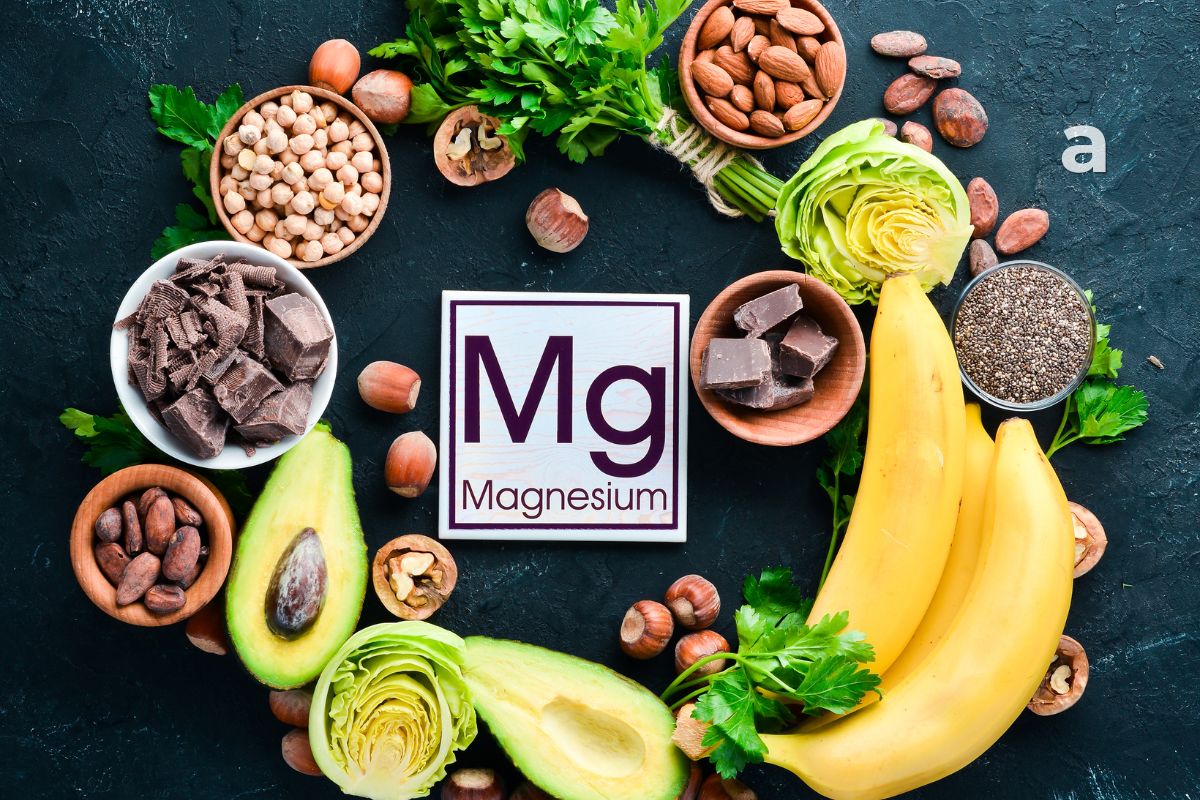
Magnesium Benefits: 10 Powerful Reasons Your Body Needs It
Magnesium benefits nearly every major system in the body, yet this essential mineral rarely receives the same attention as protein, vitamin D, or omega-3 fats. Magnesium supports normal muscle and nerve function, energy production, bone health, blood glucose regulation, and many other biological processes—but that doesn’t mean more magnesium is always better.
Your body needs magnesium every day, but it cannot produce the mineral on its own. It must come from food—and, when medically appropriate, supplements.
Fortunately, magnesium occurs naturally in many everyday foods, including:
- Leafy green vegetables
- Nuts and seeds
- Beans and lentils
- Whole grains
- Some dairy products
- Certain fruits
- Fortified foods
Still, magnesium has become one of the most heavily marketed nutrients in the wellness world.
Scroll through social media and you may encounter claims that magnesium can fix almost everything:
“Take magnesium and you’ll sleep instantly.”
“Magnesium eliminates anxiety.”
“Everyone is magnesium deficient.”
“Magnesium supplements are essential for muscle cramps.”
“One type of magnesium is the secret to better health.”
The evidence is more nuanced.
Magnesium is unquestionably essential for health, and inadequate intake matters. But that doesn’t mean everyone needs a supplement—or that magnesium is a universal treatment for sleep problems, stress, fatigue, or muscle cramps.
Understanding the difference between what magnesium actually does in the body and what wellness marketing promises is therefore important.
In this guide, we’ll explore what magnesium is, how much you need, the best magnesium-rich foods, possible signs of inadequate magnesium, who may be at greater risk of deficiency, what research says about magnesium and sleep, and when supplements may—or may not—be appropriate.
What Is Magnesium?
Magnesium is an essential mineral that your body needs to function normally.
It is naturally present in the body as well as in many foods.
A large proportion of the body’s magnesium is stored in bones, while the remainder is found mainly in muscles, soft tissues, and body fluids.
Magnesium participates in numerous enzyme systems and physiological processes.
Among other functions, it contributes to:
- Normal muscle function
- Normal nerve function
- Energy production
- Protein synthesis
- Bone structure
- DNA and RNA synthesis
- Blood glucose regulation
- Blood pressure regulation
- Normal heart rhythm
Because magnesium participates in so many processes, maintaining an adequate intake is an important part of overall nutrition.
But there’s an important distinction:
Essential doesn’t mean “the more, the better.”
Like protein, fiber, water, and other nutrients, magnesium is needed in appropriate amounts.
Where Does Magnesium Come From?
Magnesium occurs naturally in a wide variety of foods.
Particularly useful dietary sources include:
Nuts and Seeds
Pumpkin seeds, chia seeds, almonds, cashews and peanuts.
Legumes
Black beans, kidney beans, chickpeas, lentils and other pulses.
Whole Grains
Whole wheat, oats, brown rice and other minimally refined grains.
Leafy Green Vegetables
Spinach and other dark leafy greens contain magnesium because the mineral is part of chlorophyll.
Other Foods
Avocado, some dairy foods, certain fruits, dark chocolate and fortified foods can also contribute magnesium.
This is one reason dietary variety matters.
Rather than searching for a single “superfood,” eating a mixture of vegetables, legumes, whole grains, nuts, seeds and other minimally processed foods can provide magnesium alongside fiber, protein, vitamins and other minerals.
Magnesium, Fiber and Gut Health
There’s also an interesting nutritional connection between magnesium and the foods that support digestive health.
Many magnesium-rich foods—including legumes, whole grains, nuts, seeds and leafy vegetables—also contribute dietary fiber.
This means that improving the overall quality and variety of your diet can simultaneously increase your intake of several useful nutrients.
A plant-rich eating pattern can also provide substrates used by microorganisms within the digestive system, making food variety relevant to gut health as well.
Does Hydration Affect Magnesium?
Magnesium is an electrolyte, and fluid and electrolyte balance are closely connected within normal physiology.
However, this doesn’t mean that adding magnesium powder to your water automatically makes it “better hydrated.”
For ordinary daily life, most healthy people can maintain hydration through appropriate fluid intake and obtain minerals through a balanced diet.
Special circumstances—such as prolonged strenuous exercise, significant sweating, vomiting or diarrhea—can change fluid and electrolyte requirements.
If you’d like to understand this distinction in detail, our guide to hydration explains how water and electrolytes work together and why more electrolytes aren’t automatically better.
Food First: A Useful Starting Point
For most people, the first question shouldn’t be:
“Which magnesium supplement should I buy?”
A better question is:
“Am I regularly eating foods that naturally contain magnesium?”
A meal containing lentils, whole grains, leafy vegetables and seeds, for example, provides far more than magnesium alone.
It can also provide:
- Protein
- Fiber
- Iron
- Potassium
- Folate
- Other vitamins and minerals
- Beneficial plant compounds
That’s one of the major advantages of obtaining nutrients from food.
You aren’t consuming magnesium in isolation—you’re eating it as part of a broader nutritional package.
Supplements can have legitimate uses, particularly when recommended for specific nutritional or medical reasons, but they shouldn’t automatically replace a balanced diet.
Key Takeaway
Magnesium is an essential mineral involved in many processes throughout the body, including muscle and nerve function, energy production, bone health, protein synthesis, and regulation of blood glucose and blood pressure.
It is naturally available in foods such as leafy green vegetables, nuts, seeds, legumes and whole grains.
The important question isn’t whether magnesium matters—it clearly does.
The more useful question is:
How much magnesium do you actually need, and what does it really do for your health?
10 Evidence-Based Benefits and Functions of Magnesium
Magnesium is sometimes marketed as a solution for everything from poor sleep to stress and muscle pain. But the strongest case for magnesium is much simpler: your body requires it for normal physiological function.
Magnesium acts as a cofactor for hundreds of enzyme systems involved in processes such as energy production, protein synthesis, muscle and nerve function, blood glucose regulation, and blood pressure regulation.
Rather than treating magnesium as a miracle nutrient, it is more useful to understand the important roles it already performs inside the body.
Here are ten evidence-based functions and potential health benefits associated with maintaining adequate magnesium intake.
1. Supports Normal Muscle Function
Magnesium plays an important role in normal muscle contraction and relaxation.
Muscle movement depends on carefully coordinated interactions between minerals, including magnesium and calcium. These minerals help regulate the electrical and biochemical processes that allow muscle fibers to contract and relax.
This makes adequate magnesium important for:
- Everyday movement
- Physical activity
- Normal muscle function
- Neuromuscular signalling
However, this doesn’t mean that every muscle cramp is caused by magnesium deficiency.
Cramps can have many possible causes, including:
- Muscle fatigue
- Prolonged exercise
- Certain medications
- Fluid and electrolyte changes
- Nerve-related conditions
- Other health factors
Taking magnesium supplements without knowing the cause therefore isn’t a guaranteed solution for muscle cramps.
2. Supports the Nervous System
Your nervous system depends on electrical and chemical signals to communicate between the brain, spinal cord, nerves, and muscles.
Magnesium contributes to normal nerve transmission and neuromuscular function.
It interacts with ion channels and other cellular processes involved in regulating nerve activity.
This is one reason magnesium is biologically important for the nervous system.
But it is important to separate this established role from claims that magnesium supplements automatically “calm the nervous system” or eliminate anxiety.
Magnesium is essential for normal neurological function.
That is not the same as saying magnesium is a universal treatment for anxiety or stress.
We’ll examine the evidence around magnesium and stress later in this guide.
3. Helps the Body Produce Energy
When people hear “energy,” they often think about caffeine, sugar, or calories.
At the cellular level, however, energy production involves a complex series of biochemical reactions—and magnesium participates in many of them.
Magnesium is involved in processes related to ATP (adenosine triphosphate), the molecule cells use as a primary source of usable energy.
Adequate magnesium therefore supports normal energy metabolism.
This doesn’t mean taking extra magnesium acts like an energy drink.
If your magnesium status is already adequate, taking more doesn’t necessarily give you additional energy.
Persistent fatigue can have many causes and shouldn’t automatically be interpreted as magnesium deficiency.
4. Contributes to Healthy Bones
Calcium usually receives most of the attention when people think about bone health.
But magnesium matters too.
A significant proportion of the body’s magnesium is stored in bone, and the mineral contributes to normal bone structure and metabolism.
Bone health depends on many interacting factors, including:
- Magnesium
- Calcium
- Vitamin D
- Protein
- Physical activity
- Hormonal factors
- Age
- Genetics
This is another good example of why focusing on a single nutrient can be misleading.
Your bones don’t depend on one “bone nutrient.” They depend on an entire nutritional and physiological system.
5. Supports Normal Heart Function
Your heart is a muscle, and its normal rhythm depends on carefully controlled electrical activity and electrolyte balance.
Magnesium contributes to:
- Normal muscle function
- Nerve signalling
- Electrolyte balance
- Normal heart rhythm
This doesn’t mean magnesium supplements should be used to self-treat heart rhythm problems.
Palpitations, chest pain, fainting, unexplained shortness of breath, or suspected abnormal heart rhythms require appropriate medical evaluation.
Magnesium may be used medically in certain specific situations, but those uses are very different from taking an over-the-counter supplement without clinical guidance.
6. Helps Regulate Blood Pressure
Magnesium participates in processes involved in blood vessel function and blood pressure regulation.
Research has investigated whether increasing magnesium intake or taking supplements can reduce blood pressure.
Some studies and meta-analyses suggest magnesium supplementation may produce modest reductions in blood pressure in certain populations, but results vary depending on dose, baseline magnesium status, health conditions, and study design.
The important distinction is:
Magnesium contributes to normal blood pressure regulation, but magnesium supplements are not a replacement for prescribed blood-pressure treatment.
Overall blood pressure management may involve:
- A balanced diet
- Appropriate sodium intake
- Regular physical activity
- Maintaining a healthy weight where appropriate
- Adequate sleep
- Limiting tobacco exposure
- Medication when prescribed
Nutrition works as a pattern, not as one isolated mineral.
7. Supports Normal Blood Glucose Regulation
Magnesium is involved in glucose metabolism and insulin-related processes.
Observational research has found relationships between magnesium intake and metabolic health, but these associations don’t mean magnesium supplements can prevent or treat diabetes on their own.
A balanced eating pattern remains much more important.
Foods naturally rich in magnesium—such as legumes, whole grains, nuts, seeds, and leafy vegetables—often provide dietary fiber as well.
Fiber itself plays an important role in the overall nutritional quality of a diet.
8. Contributes to Protein and DNA Synthesis
Magnesium participates in fundamental cellular processes, including the synthesis of:
- Proteins
- DNA
- RNA
These processes occur continuously as cells maintain, repair, and reproduce themselves.
This isn’t the kind of magnesium benefit you’ll usually see promoted in a social-media reel because it doesn’t sound dramatic.
But biologically, it is far more important than many exaggerated wellness claims.
Your body requires magnesium because it participates in the basic chemistry that keeps cells functioning normally.
9. Helps Maintain Electrolyte Balance
Magnesium is itself an electrolyte.
Other important electrolytes include:
- Sodium
- Potassium
- Chloride
- Calcium
Together, electrolytes contribute to fluid balance, nerve signalling, muscle function, and other physiological processes.
This is where magnesium connects naturally with hydration.
When you sweat, you lose water and electrolytes, although the amounts and proportions vary considerably between individuals.
For ordinary daily activity, a balanced diet and adequate fluids are usually sufficient for healthy people.
Prolonged strenuous exercise, heavy sweating, vomiting, or diarrhea can create different requirements.
10. Supports Overall Nutritional Health
Perhaps the most overlooked benefit of magnesium is the type of foods that naturally provide it.
Many good magnesium sources are also nutrient-dense whole foods.
For example:
Pumpkin seeds can provide magnesium, healthy fats, protein, and other minerals.
Lentils provide magnesium alongside protein and fiber.
Whole grains provide magnesium, fiber, B vitamins, and other nutrients.
Leafy green vegetables provide magnesium alongside vitamins, minerals, and plant compounds.
Nuts provide magnesium, healthy fats, protein, and fiber.
So increasing magnesium intake through whole foods can improve more than your magnesium intake alone.
That’s why a food-first approach is such a useful starting point.
Does Magnesium Help With Sleep?
This is one of the most searched questions about magnesium, so it deserves careful treatment.
Magnesium is involved in nervous-system function, and researchers have investigated whether magnesium supplementation can improve sleep.
Some studies suggest potential benefits in certain groups, particularly people with lower magnesium status or some older adults. However, the evidence is not strong enough to conclude that magnesium is a universal sleep aid.
Sleep problems can be influenced by many factors, including:
- Stress
- Caffeine
- Screen use
- Sleep schedule
- Environment
- Medications
- Mental health
- Sleep disorders
- Other medical conditions
If someone sleeps poorly because they consume caffeine late at night and sleep at inconsistent times, magnesium won’t necessarily solve the underlying problem.
We’ll examine magnesium and sleep more deeply later in this article.
Does Magnesium Reduce Stress or Anxiety?
Magnesium’s role in normal nervous-system function has led to widespread claims that supplementation can reduce stress and anxiety.
Research in this area is interesting but still limited.
Some studies have reported improvements in certain populations, particularly where magnesium status may be inadequate, but study quality and results vary.
It would therefore be inaccurate to claim:
“Magnesium cures anxiety.”
A more evidence-aligned statement is:
Adequate magnesium is important for normal nervous-system function, while the potential role of supplementation in stress and anxiety requires further research.
People experiencing persistent or severe anxiety should seek appropriate professional support rather than relying solely on supplements.
Does Magnesium Prevent Muscle Cramps?
Another popular claim is:
“Muscle cramps mean you need magnesium.”
That’s too simplistic.
Magnesium deficiency can affect normal muscle function, but muscle cramps have numerous potential causes.
Research into routine magnesium supplementation for cramps has produced mixed results depending on the population and circumstances.
For example, cramps related to exercise may involve:
- Neuromuscular fatigue
- Exercise intensity
- Conditioning
- Fluid balance
- Electrolyte losses
- Other individual factors
So taking magnesium every time your calf cramps isn’t necessarily addressing the actual cause.
Magnesium Works as Part of a Bigger Nutritional System
One of the central ideas throughout Aarohi’s nutrition series is that nutrients rarely work alone.
Magnesium interacts with a much larger nutritional picture that includes:
- Protein
- Fiber
- Calcium
- Potassium
- Vitamins
- Healthy fats
- Carbohydrates
- Water
For example, a bowl containing lentils, leafy vegetables, whole grains, seeds, and yogurt doesn’t provide just magnesium.
It provides a complex mixture of nutrients that work together.
And because many magnesium-rich foods are plant foods containing fiber, they can also form part of a dietary pattern that supports gut health.
Food vs. Supplements: An Important Difference
When studies associate magnesium-rich diets with positive health outcomes, we shouldn’t automatically assume that a magnesium supplement will reproduce every benefit.
Why?
Because foods containing magnesium also contain many other nutrients and plant compounds.
Consider almonds.
They don’t provide only magnesium.
They also contain:
- Protein
- Fiber
- Unsaturated fats
- Vitamin E
- Other minerals
The same applies to beans, whole grains, seeds, and leafy vegetables.
This is why nutrition research must distinguish between:
Magnesium intake from a healthy dietary pattern
and
Taking isolated magnesium supplements.
They aren’t always equivalent.
Key Takeaway
Magnesium is essential for normal muscle and nerve function, energy production, bone health, blood glucose and blood pressure regulation, electrolyte balance, and fundamental cellular processes such as protein and DNA synthesis.
Maintaining adequate magnesium intake matters.
But that doesn’t mean magnesium supplements are a cure-all.
The strongest everyday strategy is much simpler:
Eat a varied diet containing naturally magnesium-rich foods and use supplements when there is a genuine reason to do so—not because social media says everyone needs them.
How Much Magnesium Do You Need Every Day?
Magnesium is essential, but that doesn’t mean everyone needs the same amount.
Your daily magnesium requirement varies according to age, sex, pregnancy, and breastfeeding. Most people should aim to meet these needs primarily through food rather than automatically turning to supplements.
For adults, recommended amounts are generally measured in milligrams (mg) per day—not grams.
Recommended Daily Magnesium Intake for Adults
According to established dietary reference values, adult magnesium needs generally fall within the following ranges:
| Group | Recommended Magnesium per Day |
|---|---|
| Men 19–30 years | 400 mg |
| Men 31+ years | 420 mg |
| Women 19–30 years | 310 mg |
| Women 31+ years | 320 mg |
| Pregnancy, 19–30 years | 350 mg |
| Pregnancy, 31–50 years | 360 mg |
| Breastfeeding, 19–30 years | 310 mg |
| Breastfeeding, 31–50 years | 320 mg |
These recommendations refer to total magnesium intake from food, beverages, supplements, and medications where applicable.
For most healthy adults, that means roughly 310–420 mg of magnesium per day, depending on age and sex.
How Much Magnesium Do Children and Teenagers Need?
Magnesium requirements increase as children grow.
Approximate recommended daily amounts include:
| Age | Male | Female |
|---|---|---|
| 1–3 years | 80 mg | 80 mg |
| 4–8 years | 130 mg | 130 mg |
| 9–13 years | 240 mg | 240 mg |
| 14–18 years | 410 mg | 360 mg |
Pregnancy during adolescence changes magnesium requirements, so individualized nutritional guidance may be appropriate.
Children generally don’t need magnesium supplements simply because they are growing. A varied diet containing whole grains, legumes, nuts, seeds, vegetables, and other nutritious foods can contribute substantially to magnesium intake.
Why Do Men Generally Need More Magnesium?
Adult men typically have a somewhat higher recommended magnesium intake than adult women.
This partly reflects differences in factors such as average body size and physiological requirements used when establishing dietary reference values.
It doesn’t mean every man automatically needs exactly 420 mg or every woman exactly 320 mg each day.
Dietary recommendations are designed to cover the nutritional needs of most healthy individuals within a population.
Think of them as useful nutritional reference points rather than a daily test you either pass or fail.
Do Magnesium Needs Increase During Pregnancy?
Yes.
Magnesium requirements increase during pregnancy.
For adults:
- Ages 19–30: approximately 350 mg/day
- Ages 31–50: approximately 360 mg/day
Pregnancy involves major physiological changes and increased nutritional demands.
However, pregnant individuals should not automatically begin high-dose magnesium supplements.
Prenatal vitamins, diet, medications, and individual health circumstances all need to be considered together.
Supplement use during pregnancy is best discussed with an appropriate healthcare professional.
What About Breastfeeding?
Interestingly, recommended magnesium intake during breastfeeding is not higher than during pregnancy.
For breastfeeding adults, commonly cited recommendations are approximately:
- 310 mg/day for ages 19–30
- 320 mg/day for ages 31–50
A varied diet can provide substantial magnesium alongside other nutrients important during this stage of life.
Can You Get Enough Magnesium From Food?
Yes, many people can meet their magnesium needs through food.
The key is dietary variety.
Magnesium-rich foods include:
- Pumpkin seeds
- Chia seeds
- Almonds
- Cashews
- Peanuts
- Spinach
- Black beans
- Kidney beans
- Chickpeas
- Lentils
- Whole grains
- Avocado
- Some fortified foods
Instead of asking:
“Which single food has the most magnesium?”
a more practical approach is to include several magnesium-containing foods throughout the day.
What Might a Magnesium-Rich Day Look Like?
You don’t need to eat an unusual “magnesium diet.”
A normal day could include:
Breakfast
Oatmeal topped with chia seeds and fruit.
Lunch
Dal or chickpeas with whole grains and vegetables.
Snack
A small handful of almonds or other nuts.
Dinner
Leafy green vegetables alongside beans, lentils, tofu, fish, or another protein source.
This eating pattern provides magnesium alongside protein, dietary fiber, vitamins, minerals, and healthy fats.
Does Cooking Reduce Magnesium?
Some magnesium can be lost during food processing and preparation, particularly when foods are boiled and the cooking water is discarded.
However, this doesn’t mean you need to eat everything raw.
Cooking methods such as:
- Steaming
- Roasting
- Stir-frying
- Cooking foods in dishes where the liquid is consumed
can help retain nutrients while making foods enjoyable and digestible.
The bigger nutritional issue is usually the overall quality and variety of the diet rather than small differences caused by individual cooking methods.
Whole Grains vs. Refined Grains
Food processing can influence magnesium content.
Magnesium is concentrated partly in portions of grains that may be removed during refining.
As a result, whole grains generally contain more magnesium than highly refined grain products.
This is another reason whole grains can be useful within a balanced diet.
They also provide dietary fiber and other nutrients.
For example:
- Oats
- Brown rice
- Whole wheat
- Barley
- Other intact or minimally processed grains
can contribute to magnesium intake.
Magnesium, Fiber and Food Quality
There’s an interesting pattern when you look at magnesium-rich foods.
Many are also naturally high in fiber.
Consider:
Lentils → magnesium + fiber + protein
Chickpeas → magnesium + fiber + protein
Almonds → magnesium + fiber + protein + healthy fats
Chia seeds → magnesium + fiber + healthy fats
Whole grains → magnesium + fiber + other minerals
Leafy vegetables → magnesium + vitamins + plant compounds
This overlap helps explain why improving overall diet quality can simultaneously increase several important nutrients.
Rather than building your diet around one mineral, focus on a variety of minimally processed foods.
Does Exercise Increase Magnesium Requirements?
Exercise affects many aspects of nutrition, but recreational exercise doesn’t automatically mean you need magnesium supplements.
Magnesium is involved in:
- Energy metabolism
- Muscle function
- Nerve function
- Electrolyte balance
People participating in intensive athletic training may have different nutritional demands depending on energy intake, sweat losses, diet, and training volume.
But for most recreational exercisers, eating a balanced diet remains the appropriate starting point.
And remember that exercise also changes hydration needs, particularly when sweating heavily or training in hot weather.
How Do You Know If You’re Eating Enough Magnesium?
This is where things become less straightforward.
You generally can’t determine magnesium status simply by looking at one day’s food intake.
Diet varies from day to day.
Instead, consider your overall eating pattern.
Ask yourself:
- Do I regularly eat vegetables?
- Do I include legumes?
- Do I eat nuts or seeds?
- Do I choose whole grains?
- Is my diet varied?
- Do I rely heavily on ultra-processed foods?
A diet consistently low in magnesium-rich foods may make inadequate intake more likely.
But symptoms alone cannot reliably diagnose magnesium deficiency.
Can a Blood Test Check Magnesium?
Magnesium can be measured in blood, but interpreting magnesium status isn’t always straightforward because only a small proportion of the body’s magnesium is present in serum.
Most magnesium is stored in bones and tissues.
A healthcare professional may order magnesium testing when clinically appropriate, particularly if deficiency or abnormal magnesium levels are suspected.
This is another reason self-diagnosing “magnesium deficiency” based on social-media symptom lists isn’t reliable.
Magnesium From Food vs. Magnesium From Supplements
This distinction is extremely important.
There is no established tolerable upper intake level (UL) for magnesium naturally present in food for healthy people.
Why?
Because healthy kidneys are generally effective at eliminating excess magnesium obtained from normal foods.
The situation is different for supplemental magnesium.
What Is the Upper Limit for Magnesium Supplements?
For adults, the commonly established tolerable upper intake level for magnesium from supplements and medications alone is:
350 mg per day
This limit does not include magnesium naturally present in food.
That distinction causes a lot of confusion.
For example, suppose someone consumes:
320 mg magnesium from food
200 mg from a supplement
Their total intake is 520 mg.
That does not automatically mean they have exceeded the 350 mg supplemental upper limit, because the UL applies specifically to magnesium obtained from supplements and medications—not food.
Why Is There a Limit for Supplemental Magnesium?
Higher amounts of supplemental magnesium can cause gastrointestinal side effects, particularly:
- Diarrhea
- Nausea
- Abdominal cramping
Certain forms of magnesium are more likely to produce a laxative effect than others.
Very high magnesium exposure can become more serious, particularly in people whose kidneys cannot efficiently eliminate excess magnesium.
This is one reason “more magnesium” isn’t automatically better.
What About Magnesium in Antacids and Laxatives?
Magnesium isn’t found only in dietary supplements.
Some:
- Antacids
- Laxatives
also contain magnesium.
This means a person’s total supplemental or medicinal magnesium exposure can be higher than they realize.
Always read medication and supplement labels carefully, particularly if using more than one magnesium-containing product.
Should Everyone Take a Magnesium Supplement?
No.
Magnesium supplements can be useful in appropriate situations, but there is no reason to assume that every person needs one.
Supplementation may be considered when:
- Dietary intake is inadequate
- Deficiency has been identified
- A healthcare professional recommends it
- A specific medical use is being supervised
For many people, improving food choices is a better starting point.
A Food-First Magnesium Strategy
Rather than immediately buying supplements, try adding magnesium-rich foods throughout your week.
For example:
Breakfast:
Oats + chia seeds
Lunch:
Dal + brown rice + vegetables
Snack:
Almonds
Dinner:
Spinach + chickpeas + whole grains
This type of eating pattern provides magnesium alongside fiber, protein, and other nutrients.
It can also contribute to a diverse plant-rich diet that supports gut health.
Key Takeaway
Most adult magnesium requirements fall between approximately 310 and 420 mg per day, depending on age and sex, with somewhat different recommendations during pregnancy and breastfeeding.
Magnesium can be obtained naturally from foods such as nuts, seeds, legumes, leafy green vegetables, and whole grains.
And remember the critical distinction:
The 350 mg upper limit applies to magnesium from supplements and medications—not magnesium naturally present in food.
For most people, the best starting point isn’t a supplement bottle.
It’s the plate.
20 Best Magnesium-Rich Foods to Add to Your Diet
Getting enough magnesium doesn’t require expensive powders, trendy supplements, or a complicated diet.
Magnesium occurs naturally in many familiar foods—particularly seeds, nuts, legumes, whole grains, and leafy green vegetables. Many of these foods also provide fiber, protein, healthy fats, vitamins, and other minerals.
The exact magnesium content of food varies according to variety, serving size, preparation, and processing. So rather than obsessing over individual milligrams, use the numbers below as a practical guide for building a magnesium-rich diet.
1. Pumpkin Seeds
Pumpkin seeds are among the most concentrated food sources of magnesium.
A small serving—around 28 grams (1 ounce)—can provide roughly 150–160 mg of magnesium.
They also provide:
- Protein
- Healthy fats
- Iron
- Zinc
- Fiber
Try adding pumpkin seeds to oatmeal, yogurt, salads, or simply eating a small portion as a snack.
Because seeds are calorie-dense, you don’t need enormous quantities to gain nutritional benefits.
2. Chia Seeds
Chia seeds provide roughly 110 mg of magnesium per 28-gram serving.
They are also particularly rich in dietary fiber and contain plant-based omega-3 fatty acids.
Chia seeds can be added to:
- Oatmeal
- Yogurt
- Smoothies
- Overnight oats
- Chia pudding
Because chia absorbs water and forms a gel-like texture, introduce larger amounts gradually if your usual diet is relatively low in fiber.
Maintaining appropriate hydration is also useful when increasing fiber intake.
3. Almonds
A 28-gram serving of almonds provides approximately 75–80 mg of magnesium.
Almonds also provide:
- Protein
- Fiber
- Vitamin E
- Unsaturated fats
They make an easy snack and can also be added to breakfast cereals, yogurt, salads, or homemade trail mixes.
Choose unsalted or lightly salted varieties when possible if you’re trying to manage overall sodium intake.
4. Cashews
Cashews are another useful source, providing roughly 70–75 mg of magnesium per 28 grams.
They also contain protein, unsaturated fats, copper, and other minerals.
Cashews can be:
- Eaten as a snack
- Added to stir-fries
- Used in curries
- Blended into sauces
Again, portion size matters because nuts are nutrient-dense but also energy-dense.
5. Peanuts
Peanuts are affordable, widely available, and nutritionally valuable.
A serving can contribute a meaningful amount of magnesium alongside:
- Protein
- Healthy fats
- Fiber
- Niacin
- Other micronutrients
This is particularly useful because nutritious eating doesn’t have to depend on expensive imported “superfoods.”
Ordinary foods can be excellent sources of essential nutrients.
6. Spinach
Leafy green vegetables are important magnesium sources, and spinach is one of the best-known examples.
About ½ cup of cooked spinach can provide roughly 75–80 mg of magnesium.
Spinach also contributes:
- Folate
- Vitamin K
- Carotenoids
- Iron
- Fiber
Cooked spinach is more concentrated by volume than raw spinach, which is why the magnesium amount can look surprisingly high for a relatively small serving.
7. Black Beans
Cooked black beans provide approximately 60 mg of magnesium per ½ cup, depending on preparation.
They also provide substantial amounts of:
- Dietary fiber
- Plant protein
- Folate
- Iron
- Potassium
Beans are a great example of why focusing on whole foods is so valuable.
You don’t get only magnesium—you get a package of nutrients.
8. Kidney Beans (Rajma)
Rajma fits beautifully into a magnesium-rich Indian diet.
Kidney beans provide magnesium along with:
- Plant protein
- Fiber
- Iron
- Folate
- Potassium
A bowl of rajma doesn’t need to be marketed as a “magnesium meal” to be nutritious.
Traditional foods often already contain many of the nutrients people later try to purchase separately as supplements.
9. Chickpeas (Chana)
Chickpeas are another versatile source of magnesium.
They can be used in:
- Chana masala
- Salads
- Soups
- Hummus
- Roasted snacks
Chickpeas provide magnesium alongside protein and dietary fiber, making them especially useful for plant-based diets.
10. Lentils (Dal)
For Indian readers, this is one of the most practical foods on the entire list.
Lentils contribute:
- Magnesium
- Protein
- Fiber
- Iron
- Folate
- Potassium
Different dals have somewhat different nutritional profiles, but regularly including pulses is an easy way to improve overall diet quality.
Rather than searching for exotic magnesium foods, something as familiar as dal can already contribute to your daily magnesium intake.
11. Edamame
Edamame—young soybeans—provides magnesium along with high-quality plant protein, fiber, folate, and other nutrients.
It can be:
- Steamed
- Added to salads
- Mixed into grain bowls
- Used in stir-fries
Soy foods can be particularly useful for people following vegetarian or predominantly plant-based diets.
12. Whole Wheat
Whole wheat retains more of the grain’s naturally occurring nutrients than highly refined wheat products.
It can contribute:
- Magnesium
- Fiber
- B vitamins
- Iron
- Other minerals
Whole-wheat roti can therefore form part of a magnesium-rich dietary pattern.
The goal isn’t to label one type of grain as “perfect,” but to include a variety of whole or minimally refined grains when practical.
13. Oats
Oats provide magnesium alongside:
- Soluble fiber
- Carbohydrates
- Protein
- Iron
- Other minerals
A simple breakfast of:
Oats + chia seeds + yogurt + fruit
can provide magnesium, protein, fiber, carbohydrates, and several micronutrients in one meal.
This is the type of dietary combination that matters more than chasing a single nutrient.
14. Brown Rice
Brown rice retains the bran and germ layers that are removed during the production of white rice.
As a result, it generally provides more:
- Magnesium
- Fiber
- Certain B vitamins
- Other minerals
That doesn’t mean white rice is inherently “bad.”
Food choices should be considered within the context of the entire diet.
Combining rice with dal, vegetables, and other nutrient-rich foods can create a balanced meal regardless of whether every ingredient is nutritionally perfect on its own.
15. Avocado
Avocado contains magnesium along with:
- Unsaturated fats
- Fiber
- Potassium
- Folate
- Other micronutrients
It can be added to salads, sandwiches, toast, and grain bowls.
However, avocado isn’t necessary for obtaining magnesium.
If it is expensive or difficult to find where you live, traditional foods such as legumes, seeds, nuts, whole grains, and leafy vegetables can provide plenty of nutritional value.
16. Dark Chocolate
Yes, dark chocolate can provide magnesium.
Products with a higher cocoa content generally contain more magnesium than milk chocolate.
Dark chocolate also contains:
- Iron
- Copper
- Plant compounds
- Calories
- Fat
- Sometimes substantial added sugar
So while it can contribute useful nutrients, this doesn’t mean:
“Eat unlimited dark chocolate because it’s a magnesium superfood.”
A small portion can comfortably fit within an overall balanced diet.
17. Yogurt
Yogurt isn’t among the most concentrated magnesium sources, but it can still contribute to overall intake.
It also provides nutrients such as:
- Protein
- Calcium
- Vitamin B12
- Phosphorus
Some yogurts contain live bacterial cultures.
Pairing plain yogurt with nuts, seeds, oats, and fruit can create a nutrient-dense meal containing magnesium from several different ingredients.
18. Banana
Bananas contain magnesium, although they’re better known as a source of potassium.
One medium banana provides roughly 30 mg of magnesium.
Bananas also provide:
- Carbohydrates
- Potassium
- Vitamin B6
- Fiber
They are inexpensive, portable, and easy to combine with yogurt, oats, nuts, or peanut butter.
No exotic fruit required.
19. Tofu
Tofu can contribute meaningful amounts of magnesium, although the exact quantity varies according to how it is prepared and processed.
It also provides:
- Plant protein
- Iron
- Other minerals
Calcium-set tofu can additionally provide substantial calcium.
Tofu can be used in:
- Stir-fries
- Curries
- Salads
- Scrambles
- Grain bowls
For vegetarian diets, tofu provides a useful combination of minerals and protein.
20. Fortified Foods
Some breakfast cereals and other foods are fortified with magnesium and other micronutrients.
Fortification can make a meaningful contribution to nutrient intake in some diets.
However, check the overall nutrition label.
A fortified food can contain useful vitamins and minerals while also being high in:
- Added sugar
- Sodium
- Highly refined carbohydrates
The presence of added magnesium doesn’t automatically make a product healthy.

Quick Magnesium Food Chart
Here’s a simple comparison of several particularly useful sources.
| Food | Typical Serving | Approx. Magnesium |
|---|---|---|
| Pumpkin seeds | 28 g | 150–160 mg |
| Chia seeds | 28 g | ~110 mg |
| Almonds | 28 g | 75–80 mg |
| Cooked spinach | ½ cup | 75–80 mg |
| Cashews | 28 g | 70–75 mg |
| Black beans | ½ cup cooked | ~60 mg |
| Peanut butter | 2 tbsp | ~50 mg |
| Brown rice | ½ cup cooked | ~40 mg |
| Banana | 1 medium | ~30 mg |
Values are approximate and may vary by variety, brand, preparation, and serving size.
Best Vegetarian Sources of Magnesium
The good news for vegetarians is that many of the richest magnesium sources are already plant foods.
Excellent options include:
- Pumpkin seeds
- Chia seeds
- Almonds
- Cashews
- Peanuts
- Lentils
- Chickpeas
- Kidney beans
- Black beans
- Soy foods
- Spinach
- Whole grains
A well-planned vegetarian diet can therefore provide substantial magnesium without relying on supplements.
Best Indian Foods for Magnesium
You don’t need to redesign an Indian kitchen around imported health foods.
Several familiar foods naturally contribute magnesium:
Dal
Masoor, moong, urad, toor, and other pulses contribute magnesium alongside protein and fiber.
Rajma
Kidney beans provide magnesium and several other nutrients.
Chana
Both chickpeas and other forms of chana can contribute magnesium.
Peanuts
Affordable and widely available.
Sesame Seeds (Til)
Seeds can be concentrated sources of minerals, including magnesium.
Leafy Greens
Palak and other green leafy vegetables contribute magnesium.
Whole-Wheat Roti
Whole wheat can contribute more magnesium than highly refined grain products.
Nuts and Seeds
Almonds, cashews, pumpkin seeds, and other varieties can easily be added to everyday meals.
This is important for Aarohi’s approach to nutrition:
Healthy eating doesn’t have to mean abandoning traditional food.
Often, improving variety and food quality within familiar dietary traditions is far more sustainable.
Magnesium-Rich Breakfast Ideas
Option 1
Oats + chia seeds + banana + plain yogurt
Option 2
Whole-wheat vegetable paratha + curd
Option 3
Besan chilla with vegetables
Option 4
Oats with almonds, pumpkin seeds, and fruit
Option 5
Whole-grain toast with peanut butter and banana
Each meal provides multiple nutrients rather than magnesium alone.
Magnesium-Rich Lunch Ideas
Indian Meal
Dal + whole-wheat roti + palak + salad
Rajma Bowl
Rajma + brown rice + vegetables + curd
Chickpea Meal
Chana masala + roti + mixed vegetables
Plant-Based Bowl
Whole grain + chickpeas + leafy greens + seeds
These combinations provide magnesium alongside protein and fiber, making them more nutritionally complete.
Magnesium-Rich Snack Ideas
Instead of relying exclusively on packaged “magnesium snacks,” try:
- Almonds
- Peanuts
- Roasted chana
- Pumpkin seeds
- Yogurt with chia seeds
- Banana with peanut butter
- A small portion of dark chocolate with nuts
Again, variety beats obsessing over one food.
Magnesium-Rich Foods and Gut Health
Many magnesium-rich foods—especially legumes, nuts, seeds, whole grains, and vegetables—also provide dietary fiber.
Different fibers interact with the digestive system and gut microbiome in different ways.
This means a diet containing a variety of magnesium-rich plant foods may simultaneously contribute to magnesium intake, fiber intake, and an eating pattern supportive of gut health.
Do You Need to Count Magnesium in Every Meal?
Usually, no.
Nutrition can become unnecessarily stressful when every meal turns into a mathematical exercise.
You don’t necessarily need:
Breakfast = 83 mg
Lunch = 126 mg
Snack = 71 mg
Dinner = 142 mg
Instead, look at your overall dietary pattern.
If your diet regularly includes:
- Legumes
- Nuts
- Seeds
- Whole grains
- Leafy vegetables
- Other varied whole foods
you’re giving yourself multiple opportunities to obtain magnesium throughout the day.
People with specific nutritional deficiencies, medical conditions, restrictive diets, or clinically identified needs may require more individualized guidance.
Food First Doesn’t Mean Supplements Are Bad
It’s worth repeating this distinction.
A food-first approach doesn’t mean:
“Never take supplements.”
Supplements can be useful and sometimes medically necessary.
The point is that a healthy person shouldn’t automatically assume they need a magnesium supplement simply because magnesium is essential.
First consider the diet.
Then consider individual circumstances.
Then, when appropriate, use professional guidance to determine whether supplementation is necessary.
Key Takeaway
Some of the best dietary sources of magnesium are remarkably ordinary:
Pumpkin seeds, chia seeds, almonds, cashews, legumes, spinach, whole grains, peanuts, tofu, and other plant foods can all contribute meaningful amounts.
For Indian diets, familiar foods such as dal, rajma, chana, peanuts, til, palak, and whole-wheat roti can help increase magnesium intake without requiring an expensive “superfood” shopping list.
The simplest strategy is:
Don’t search for one perfect magnesium food. Build a varied diet containing several magnesium-rich foods.
That approach gives you magnesium alongside protein, fiber, healthy fats, vitamins, minerals, and other beneficial food components.
Magnesium Deficiency: Signs, Causes & Who Is at Risk
Because magnesium is involved in so many processes in the body, it’s easy to look at a list of vague symptoms—fatigue, muscle cramps, poor sleep—and conclude:
“I must be magnesium deficient.”
But magnesium deficiency cannot reliably be diagnosed from symptoms alone.
Many symptoms associated with low magnesium can also occur because of stress, inadequate sleep, medications, other nutrient deficiencies, illness, or numerous medical conditions.
There is also an important difference between not consistently meeting recommended magnesium intake and having a clinically significant magnesium deficiency.
Let’s look at what low magnesium actually means.
What Is Magnesium Deficiency?
Clinically significant magnesium deficiency is sometimes called hypomagnesemia, referring to an abnormally low concentration of magnesium in the blood.
It can develop when:
- Magnesium intake is persistently inadequate
- Magnesium absorption from the digestive tract is impaired
- Excessive magnesium is lost through the gastrointestinal tract
- The kidneys excrete excessive magnesium
- Certain medications affect magnesium balance
- Particular medical conditions interfere with normal magnesium regulation
In otherwise healthy people, short periods of lower dietary intake don’t necessarily cause immediate deficiency because the body has mechanisms for conserving magnesium.
Long-term problems are more concerning.
What Are the Early Signs of Magnesium Deficiency?
Early magnesium deficiency may produce few obvious symptoms.
When symptoms do occur, they may include:
- Loss of appetite
- Nausea
- Vomiting
- Fatigue
- Weakness
The problem is obvious: these symptoms are extremely nonspecific.
Fatigue alone, for example, doesn’t tell you that you need magnesium.
That’s why self-diagnosing deficiency from a social-media checklist isn’t reliable.
What Happens When Magnesium Becomes Very Low?
More significant magnesium deficiency can affect nerve and muscle function.
Possible symptoms may include:
- Muscle cramps
- Muscle contractions
- Tremors
- Numbness
- Tingling
- Weakness
- Abnormal heart rhythms
Severe deficiency can also be associated with disturbances in other electrolytes, including potassium and calcium.
Very low magnesium can become medically serious and requires appropriate evaluation and treatment.
Are Muscle Cramps a Sign of Magnesium Deficiency?
They can be, but muscle cramps do not automatically mean you’re magnesium deficient.
Muscle cramps can occur for many reasons, including:
- Muscle fatigue
- Intense exercise
- Prolonged muscle use
- Certain medications
- Neurological problems
- Electrolyte disturbances
- Other medical conditions
This is why taking a magnesium supplement whenever you experience a leg cramp isn’t necessarily the correct solution.
The underlying cause matters.
Does Magnesium Deficiency Cause Fatigue?
Low magnesium can be associated with fatigue and weakness.
But fatigue is one of the least specific symptoms in medicine.
It can also occur because of:
- Poor sleep
- Stress
- Inadequate calorie intake
- Iron deficiency
- Vitamin B12 deficiency
- Infection
- Thyroid problems
- Medications
- Numerous medical conditions
Persistent or unexplained fatigue deserves a broader evaluation rather than automatically being attributed to magnesium.
This distinction is especially important in health content because symptom lists should help readers understand possibilities—not encourage self-diagnosis.
Does Low Magnesium Cause Poor Sleep?
This is another area where online claims often go too far.
Magnesium is involved in normal nervous-system function, and researchers continue to study the relationship between magnesium status and sleep.
However:
Poor sleep by itself is not evidence of magnesium deficiency.
Sleep difficulties can arise from many factors, including caffeine, stress, irregular schedules, sleep disorders, medications, environmental factors, and health conditions.
Taking magnesium simply because you’re sleeping poorly may therefore miss the actual cause.
Who Is More Likely to Have Low Magnesium?
Certain groups may be at greater risk of inadequate magnesium status or magnesium loss.
1. People With Gastrointestinal Conditions
The digestive system is responsible for absorbing magnesium from food.
Conditions that cause chronic diarrhea or interfere with nutrient absorption can increase the risk of magnesium depletion.
Examples may include certain gastrointestinal diseases and malabsorption disorders.
Long-term gastrointestinal losses are particularly important because magnesium can be lost repeatedly before the body’s stores are adequately restored.
2. People With Type 2 Diabetes
People with type 2 diabetes can sometimes experience increased urinary magnesium losses, particularly when blood glucose is poorly controlled.
This doesn’t mean everyone with diabetes should take magnesium supplements.
Supplementation should be considered in the context of diet, medications, kidney function, laboratory results, and professional medical advice.
3. People With Long-Term Heavy Alcohol Use
Long-term heavy alcohol consumption can contribute to poor magnesium status through several mechanisms.
These can include:
- Poor dietary intake
- Gastrointestinal problems
- Increased urinary losses
- Other nutritional deficiencies
This is another situation where taking one mineral supplement doesn’t address the larger health issue.
4. Older Adults
Older adults may be at greater risk of inadequate magnesium status for several reasons.
These can include:
- Lower dietary intake
- Changes in intestinal absorption
- Changes in kidney handling of magnesium
- Greater use of medications that may influence magnesium balance
This doesn’t mean all older adults need magnesium supplements.
It means diet, health conditions, and medications deserve greater consideration.
Can Medications Lower Magnesium?
Yes. Some medications can influence magnesium absorption or excretion.
Two important examples are:
Certain Diuretics
Some diuretic medications can increase urinary magnesium losses, although the effect varies by medication type.
Proton Pump Inhibitors (PPIs)
Long-term use of proton pump inhibitors used to reduce stomach acid has, in some cases, been associated with low magnesium levels.
However, do not stop a prescribed medication because you’ve read that it can affect magnesium.
Medication decisions should be discussed with the healthcare professional who prescribed or manages the treatment.
Can Diarrhea Cause Low Magnesium?
Yes, particularly when diarrhea is severe or persistent.
The gastrointestinal tract can lose both fluid and electrolytes.
Prolonged diarrhea may therefore contribute to losses of:
- Water
- Sodium
- Potassium
- Magnesium
- Other electrolytes
This also creates a natural connection between magnesium and hydration, because significant gastrointestinal illness affects both fluid and electrolyte balance.
Does a Low-Magnesium Diet Automatically Mean Deficiency?
Not necessarily.
There’s an important difference between:
Inadequate Dietary Intake
You may regularly consume less magnesium than recommended.
and
Clinical Magnesium Deficiency
Magnesium levels or body stores have become sufficiently depleted to produce clinically meaningful abnormalities.
The body can conserve magnesium when intake falls, particularly through changes in kidney excretion.
But consistently poor dietary intake over long periods can still contribute to inadequate magnesium status, especially when combined with other risk factors.
How Is Magnesium Deficiency Diagnosed?
Healthcare professionals may use a combination of:
- Medical history
- Symptoms
- Medication review
- Dietary information
- Physical examination
- Laboratory testing
A common test measures serum magnesium.
However, interpreting magnesium status isn’t always simple.
Only a small proportion of the body’s total magnesium is found in the blood, while much of it is stored in bones and tissues.
A normal serum result therefore needs to be interpreted within the broader clinical picture.
Should You Test Your Magnesium Level?
Most healthy people don’t need routine magnesium testing simply because they read about magnesium online.
Testing may be appropriate when a healthcare professional suspects an abnormal magnesium level because of:
- Symptoms
- Certain medications
- Gastrointestinal losses
- Kidney-related issues
- Other electrolyte abnormalities
- Relevant medical conditions
Testing should answer a clinical question rather than become another wellness metric to obsessively track.
Can Magnesium Deficiency Affect Potassium and Calcium?
Yes.
Significant magnesium deficiency can occur alongside or contribute to abnormalities involving other electrolytes, particularly potassium and calcium.
This demonstrates why electrolyte balance is more complex than simply adding one mineral to your water.
Magnesium, potassium, sodium, calcium, water, hormones, and kidney function interact within a tightly regulated physiological system.
That’s also why serious electrolyte disturbances should be medically managed rather than treated using homemade supplement combinations.
Can You Fix Magnesium Deficiency With Food?
It depends on the cause and severity.
For someone whose magnesium intake is simply lower than ideal, increasing magnesium-rich foods may be a sensible strategy.
Examples include:
- Nuts
- Seeds
- Lentils
- Beans
- Chickpeas
- Whole grains
- Leafy green vegetables
These foods also provide dietary fiber, protein, and numerous other nutrients.
However, clinically significant deficiency may require magnesium supplementation or medical treatment depending on severity and underlying cause.
Food alone isn’t always sufficient.
Why Gut Health Can Matter for Magnesium
Magnesium from food has to pass through the gastrointestinal system before it can be absorbed.
Conditions that interfere with normal digestion or nutrient absorption can therefore influence magnesium status.
At the same time, many magnesium-rich foods—legumes, whole grains, nuts, seeds, and vegetables—also contribute fiber to dietary patterns associated with gut health.
Be careful with the wording here: we’re not claiming that improving the gut microbiome cures magnesium deficiency. We’re simply explaining the legitimate relationship between gastrointestinal function, nutrient absorption, and magnesium-rich foods.
Don’t Self-Diagnose Magnesium Deficiency From Social Media
A typical online post might say:
“Five signs you’re magnesium deficient: anxiety, insomnia, headaches, fatigue and muscle cramps.”
The problem is that every symptom on that list has numerous possible causes.
If millions of people read such a checklist, many will recognize at least one symptom.
That doesn’t establish deficiency.
A better approach is to consider:
Diet: Are you regularly eating magnesium-containing foods?
Risk factors: Do you have conditions or medications associated with magnesium loss?
Duration: Are symptoms persistent?
Severity: Are symptoms interfering with normal life?
Medical context: Could another condition explain them?
Symptoms can start a conversation.
They shouldn’t automatically provide the diagnosis.
When Should You Seek Medical Advice?
Seek appropriate medical evaluation if you experience persistent or concerning symptoms such as:
- Significant unexplained weakness
- Persistent numbness or tingling
- Severe or recurrent muscle spasms
- Fainting
- Suspected abnormal heart rhythm
- Seizures
- Persistent vomiting or diarrhea
These symptoms shouldn’t simply be treated by purchasing a magnesium supplement.
Some can have causes that require prompt medical attention.
Magnesium Deficiency vs. Magnesium Insufficiency
You’ll sometimes see the terms used interchangeably online, but they’re useful to distinguish conceptually.
Inadequate magnesium intake can mean someone’s diet isn’t consistently supplying recommended amounts.
Magnesium deficiency generally implies a more significant depletion that may have physiological or clinical consequences.
Not everyone eating slightly below the recommended intake develops symptomatic deficiency.
This distinction prevents us from turning:
“Many people may not consume ideal amounts”
into the much stronger—and often misleading—claim:
“Almost everyone is magnesium deficient.”
Those statements are not equivalent.
Key Takeaway
Magnesium deficiency can cause symptoms ranging from fatigue and weakness to muscle abnormalities and, in severe cases, abnormal heart rhythms or neurological complications.
But symptoms such as fatigue, poor sleep, headaches, or muscle cramps do not prove magnesium deficiency.
People with gastrointestinal disorders, type 2 diabetes, long-term heavy alcohol use, certain medication exposures, or other relevant health conditions may face greater risk.
The safest principle is:
Don’t diagnose a nutrient deficiency from a symptom checklist. Consider diet and risk factors, and use appropriate medical evaluation when deficiency is genuinely suspected.
Magnesium and Sleep: Does It Really Help You Sleep Better?
Magnesium has become one of the most popular supplements associated with sleep.
Search online and you’ll find claims such as:
“Magnesium helps you fall asleep instantly.”
“Take magnesium glycinate before bed for deeper sleep.”
“If you wake up during the night, you’re probably low in magnesium.”
These claims have helped turn magnesium—particularly magnesium glycinate—into a major wellness trend.
But the scientific picture is more complicated.
Magnesium is essential for normal nervous-system function and participates in biological processes related to sleep. Some research suggests magnesium supplementation may improve certain aspects of sleep in some people, particularly when magnesium intake or status is inadequate.
However, current evidence does not support treating magnesium as a universal sleeping pill.
Why Might Magnesium Affect Sleep?
Sleep isn’t controlled by one nutrient.
It involves interactions between:
- The brain
- Nervous system
- Hormones
- Circadian rhythms
- Neurotransmitters
- Light exposure
- Behaviour and lifestyle
Magnesium participates in normal nervous-system function and interacts with cellular processes involved in neuronal activity.
This biological connection provides a plausible reason for researchers to investigate magnesium and sleep.
But biological plausibility doesn’t automatically prove that taking additional magnesium will improve sleep in everyone.
That distinction matters.
What Does Research Say About Magnesium and Sleep?
Research examining magnesium supplementation and sleep has produced promising but limited evidence.
Some studies have reported improvements in outcomes such as sleep quality or duration, particularly among certain groups such as older adults.
Other research has found insufficient evidence to make strong conclusions.
There are several challenges:
- Some studies involve relatively few participants.
- Different magnesium forms and doses are used.
- Study durations vary.
- Participants have different baseline magnesium status.
- Sleep measurements differ between studies.
- Some studies rely on self-reported sleep.
So the evidence doesn’t justify the claim:
“Magnesium supplements will make everyone sleep better.”
A more accurate conclusion is:
Magnesium is essential for normal physiology, but more high-quality research is needed to determine when supplementation meaningfully improves sleep.
Does Magnesium Make You Sleepy?
Magnesium isn’t a conventional sedative.
Taking magnesium doesn’t normally produce the same direct sleep-inducing effect associated with prescription sleeping medications.
Some people report feeling more relaxed after taking magnesium, but individual experiences aren’t enough to establish that magnesium directly causes sleepiness.
If someone has inadequate magnesium status, correcting that inadequacy could potentially affect various physiological functions.
That’s different from saying magnesium acts as a sleeping pill.
What Is Magnesium Glycinate?
Magnesium glycinate—also called magnesium bisglycinate—is magnesium bound to the amino acid glycine.
It has become particularly popular in supplements marketed for:
- Sleep
- Relaxation
- Stress
- Muscle recovery
One reason for its popularity is that it is generally considered relatively well tolerated gastrointestinally compared with some forms of supplemental magnesium.
But here’s the important part:
The popularity of magnesium glycinate for sleep is currently stronger than the evidence proving that it is uniquely superior for sleep.
Claims that magnesium glycinate is definitively “the best magnesium for sleep” should therefore be treated cautiously.
Does Glycine Make Magnesium Glycinate Better for Sleep?
Glycine itself is an amino acid involved in numerous physiological processes, and it has separately been investigated in relation to sleep.
That makes magnesium glycinate scientifically interesting.
However, combining two biologically relevant substances doesn’t automatically prove that the resulting supplement is an effective sleep treatment.
More direct, high-quality research comparing magnesium forms is needed before confidently declaring magnesium glycinate the best form for sleep.
Magnesium Glycinate vs. Magnesium Citrate for Sleep
This is another highly searched comparison.
Magnesium Glycinate
Often marketed for:
- Sleep
- Relaxation
- General supplementation
It may be relatively well tolerated by some people.
Magnesium Citrate
Magnesium citrate is commonly used as a magnesium supplement and can also have a laxative effect, particularly at higher amounts.
It may therefore be useful in certain circumstances but can cause loose stools or gastrointestinal discomfort in some people.
Which Is Better for Sleep?
There currently isn’t enough robust evidence to confidently say that one of these forms will produce superior sleep outcomes for everyone.
Choose supplements based on the actual reason for supplementation, tolerability, dose, and professional advice—not just marketing language on the bottle.
What About Magnesium Oxide?
Magnesium oxide is widely available and often inexpensive.
It contains a relatively high proportion of elemental magnesium by weight, but its absorption characteristics differ from some other forms.
It is also used in products intended for gastrointestinal purposes and may produce a laxative effect.
Again, the question shouldn’t simply be:
“Which magnesium sounds best?”
It should be:
“Why am I taking magnesium in the first place?”
If there’s no clear reason for supplementation, debating glycinate versus citrate versus oxide may be solving a problem that doesn’t exist.
When Should You Take Magnesium for Sleep?
You’ll often see advice to take magnesium:
- 30 minutes before bed
- One hour before bed
- With dinner
- Exactly two hours before sleep
There is no universally established bedtime timing rule showing that every person must take magnesium at one specific time for better sleep.
If a magnesium supplement has been recommended, follow:
- The product instructions
- Appropriate dosage guidance
- Advice from your healthcare professional
Consistency and tolerability may matter more than chasing a supposedly perfect minute before bedtime.
Can You Get Magnesium From Your Evening Meal Instead?
Absolutely.
You don’t need a supplement simply because it’s evening.
A magnesium-containing dinner could include:
Dal + spinach + whole-grain roti + vegetables
Or:
Chickpeas + brown rice + leafy greens
An evening snack could include:
Plain yogurt + almonds + seeds
These foods provide magnesium alongside protein and dietary fiber, rather than delivering an isolated nutrient.
Could Magnesium Help If Your Diet Is Low in Magnesium?
This is where context becomes important.
Someone whose diet consistently provides inadequate magnesium isn’t in the same situation as someone who already meets their needs.
Correcting a genuine nutritional inadequacy can support normal physiological function.
But that doesn’t mean increasing magnesium beyond adequate levels will continue producing progressively better sleep.
Nutrition generally doesn’t work like:
More magnesium → more relaxation → deeper sleep → perfect sleep.
Once nutritional needs are met, additional intake doesn’t necessarily produce additional benefit.
Magnesium Isn’t a Substitute for Sleep Hygiene
Suppose someone:
- Drinks coffee at 8 p.m.
- Scrolls social media in bed until 1 a.m.
- Sleeps at different times every night
- Gets little daylight exposure
- Keeps their bedroom bright and noisy
Adding magnesium may not address the major factors affecting their sleep.
Basic sleep habits still matter.
These include:
Keep a Consistent Schedule
Try to sleep and wake at broadly consistent times.
Reduce Late Caffeine
Caffeine can remain active for several hours.
Create a Comfortable Sleep Environment
A dark, quiet, comfortable bedroom can support sleep.
Get Daytime Light
Natural daylight helps regulate circadian rhythms.
Reduce Stimulation Before Bed
Work, emotionally stimulating content, and endless scrolling can make it harder to transition into sleep.
No supplement replaces these fundamentals.
What About the Viral “Sleepy Girl Mocktail”?
Social media has popularized drinks combining ingredients such as:
- Tart cherry juice
- Magnesium powder
- Sparkling water
often marketed as a “sleepy girl mocktail.”
There’s nothing inherently magical about combining these ingredients.
Some individual components have been studied in relation to sleep, but a viral recipe shouldn’t automatically be interpreted as a clinically proven treatment for insomnia.
There is also a practical issue:
Different magnesium powders contain different amounts of elemental magnesium.
Adding scoops without checking the supplement label can lead to considerably more supplemental magnesium than expected.
Can Too Much Magnesium Before Bed Cause Problems?
Yes.
Higher amounts of supplemental magnesium can cause:
- Diarrhea
- Abdominal cramping
- Nausea
A supplement that sends you repeatedly to the bathroom is unlikely to improve your night’s sleep.
Remember that the established adult upper limit of 350 mg/day applies to magnesium from supplements and medications, not magnesium naturally present in food.
People with impaired kidney function require particular caution because the body may have difficulty eliminating excess magnesium.
Can Magnesium Interact With Medications?
Yes.
Magnesium supplements can interact with or affect the absorption of certain medications.
Examples can include some:
- Antibiotics
- Osteoporosis medications
Other medications can also influence magnesium status.
If you take regular prescription medicines, don’t assume that because magnesium is a mineral it cannot interact with medication.
Discuss supplementation with a pharmacist or healthcare professional when appropriate.
Magnesium, Hydration and Nighttime Cramps
Some people begin taking magnesium because they experience leg cramps at night.
But cramps don’t automatically mean magnesium deficiency.
Possible contributing factors vary widely.
Adequate hydration is one component of normal muscle function and fluid balance, particularly for people who exercise or sweat heavily, but even dehydration doesn’t explain every cramp.
Persistent, severe, or unexplained muscle cramps deserve appropriate evaluation rather than endless experimentation with supplements.
Magnesium and the Gut
Different forms and doses of supplemental magnesium can affect the gastrointestinal tract differently.
Some forms draw water into the intestine and can loosen stools, which explains why magnesium-containing products are sometimes used as laxatives.
This is quite different from claiming magnesium supplements universally improve gut health.
A varied diet rich in vegetables, fruits, whole grains, legumes, nuts, seeds, and fiber remains a more comprehensive dietary strategy for supporting the digestive environment.
Who Should Be More Careful With Magnesium Supplements?
Extra caution may be appropriate for people who:
- Have kidney disease
- Take medications that interact with magnesium
- Already use magnesium-containing antacids or laxatives
- Are pregnant or breastfeeding and considering higher-dose supplementation
- Have unexplained persistent symptoms
In these situations, individualized professional guidance is preferable to following a viral supplement routine.
So, Should You Take Magnesium for Sleep?
There’s no universal yes-or-no answer.
If your diet is poor in magnesium-rich foods, improving your diet is a sensible first step.
If magnesium deficiency or inadequate intake has been identified, addressing it may be appropriate.
If you’re considering supplementation solely because social media promises deeper sleep, understand that the evidence is not strong enough to guarantee that result.
And if you have persistent insomnia, frequent nighttime waking, severe daytime sleepiness, loud snoring with breathing interruptions, or another ongoing sleep problem, the underlying cause deserves attention.
Magnesium shouldn’t delay appropriate evaluation.
Food Before the Supplement Bottle
Before searching for the perfect bedtime magnesium powder, look at what you’re eating during the day.
Regularly include foods such as:
- Pumpkin seeds
- Almonds
- Cashews
- Lentils
- Chickpeas
- Beans
- Whole grains
- Spinach
- Other leafy vegetables
This approach provides magnesium along with many other nutrients your body needs.
A nutrient-rich diet may not have the marketing appeal of a trending supplement.
But it’s still the foundation.
Key Takeaway
Magnesium is essential for normal nervous-system function, and researchers have investigated its potential relationship with sleep.
Some evidence suggests supplementation may help certain people, but current research doesn’t establish magnesium as a universal sleep aid or prove that magnesium glycinate is the best form for everyone.
If you aren’t getting enough magnesium, improving dietary intake makes sense. If supplementation is appropriate, dose, form, medical history, medications, and individual needs matter.
And if poor sleep is persistent, don’t reduce the entire problem to one mineral.
Better sleep usually depends on the bigger picture—not one supplement.
Magnesium and Stress & Anxiety: What Does the Science Actually Say?
Magnesium is increasingly marketed as a “calming mineral.”
On social media, the claims can sound remarkably confident:
“Magnesium lowers cortisol.”
“Take magnesium glycinate to calm anxiety.”
“If you’re stressed all the time, you’re probably magnesium deficient.”
“Magnesium regulates your nervous system.”
There is a genuine biological reason researchers are interested in magnesium and mental well-being. Magnesium participates in normal nervous-system function and interacts with pathways involved in the body’s response to stress.
But that does not mean magnesium supplements are proven treatments for stress or anxiety.
The science is much more nuanced.
Why Is Magnesium Connected With Stress?
The body’s response to stress involves multiple interconnected systems, including:
- The brain
- Nervous system
- Hormones
- Sleep
- Immune signalling
- Cardiovascular system
- Behaviour and lifestyle
Magnesium participates in many cellular processes within these systems.
Researchers have therefore investigated whether magnesium status may influence the physiological response to stress—and whether prolonged stress might, in turn, affect magnesium balance.
This has sometimes been described as a potential magnesium–stress relationship.
However, a biological relationship doesn’t automatically mean that taking extra magnesium will make stress disappear.
Does Magnesium Calm the Nervous System?
You’ll frequently hear magnesium described as something that:
“calms your nervous system.”
This phrase is catchy, but it oversimplifies what actually happens.
Magnesium contributes to normal nerve transmission and neuromuscular function. It also interacts with receptors and signalling pathways involved in neuronal activity.
That makes magnesium essential for normal nervous-system function.
But the nervous system isn’t a simple switch that magnesium turns from:
STRESSED → CALM
Stress responses involve numerous biological and psychological processes.
So a more scientifically responsible statement is:
Adequate magnesium supports normal nervous-system function, but magnesium should not be described as a universal nervous-system calming treatment.
Does Magnesium Help With Anxiety?
Research has explored whether magnesium supplementation might reduce symptoms of anxiety.
Some studies and reviews have reported potential benefits, particularly among people vulnerable to anxiety or stress.
However, important limitations remain.
Studies often differ in:
- Number of participants
- Magnesium dose
- Magnesium formulation
- Duration
- Baseline magnesium status
- Participant characteristics
- Methods used to measure anxiety
Some research has also combined magnesium with other nutrients, making it harder to determine the effect of magnesium alone.
Therefore, current evidence isn’t strong enough to conclude that:
Magnesium supplements treat anxiety disorders.
What If Someone Is Actually Low in Magnesium?
This is an important distinction.
If someone has inadequate magnesium status, correcting that inadequacy supports normal physiological function.
That is different from giving additional magnesium to someone whose magnesium status is already adequate.
Think of it like water.
If someone is dehydrated, replacing appropriate fluids matters.
But once someone is adequately hydrated, continuously drinking more water doesn’t necessarily create progressively better health.
The same principle applies to many nutrients.
Does Magnesium Lower Cortisol?
This claim deserves particular caution because “cortisol reduction” has become a major wellness marketing trend.
Cortisol is a hormone produced by the adrenal glands.
It participates in:
- The body’s stress response
- Metabolism
- Blood pressure regulation
- Immune processes
- Circadian rhythms
Cortisol isn’t inherently bad.
In fact, your body needs it.
Research has investigated relationships between magnesium and physiological stress responses, including hormonal pathways. But evidence doesn’t justify the broad claim that taking an ordinary magnesium supplement will reliably “lower your cortisol” in a clinically meaningful way.
And importantly:
Lower cortisol is not automatically healthier cortisol.
Normal cortisol follows a daily rhythm and performs essential functions.
The goal isn’t to eliminate it.
Stress Doesn’t Always Mean Something Is Wrong With Your Nutrients
Feeling stressed doesn’t automatically mean your body is missing magnesium.
Stress can arise from:
- Work pressure
- Financial concerns
- Relationship difficulties
- Caregiving
- Poor sleep
- Major life changes
- Social isolation
- Uncertainty
- Chronic illness
- Overwork
- Constant digital stimulation
A supplement cannot remove these circumstances.
Nutrition can support overall health, but it shouldn’t turn normal human emotions into nutrient deficiencies.
Magnesium Glycinate for Anxiety
Magnesium glycinate is heavily promoted for both sleep and anxiety.
As discussed earlier, it consists of magnesium bound to glycine.
Because glycine has biological functions within the nervous system, marketers sometimes describe magnesium glycinate as uniquely calming.
However, evidence directly establishing magnesium glycinate as the best magnesium supplement for anxiety remains insufficient.
That doesn’t mean it has no potential value.
It means:
The marketing certainty currently exceeds the scientific certainty.
Magnesium vs. Lifestyle Factors for Stress
If you’re feeling persistently stressed, consider the broader picture.
Sleep
Poor sleep can make emotional regulation more difficult and may increase perceived stress.
Physical Activity
Regular movement can support both physical and psychological well-being.
Diet
Skipping meals, relying heavily on ultra-processed foods, or consuming inadequate nutrients can affect how you feel physically.
Caffeine
Large amounts of caffeine may contribute to:
- Jitteriness
- Restlessness
- Palpitations
- Sleep disruption
particularly in sensitive individuals.
Alcohol
Using alcohol as a routine strategy for managing stress can create additional health problems.
Social Connection
Meaningful relationships and social support can play important roles in psychological well-being.
Magnesium is only one small part of this much larger picture.
A Magnesium-Rich Diet Can Still Be a Good Idea
None of this means magnesium-rich foods are unimportant.
Quite the opposite.
A diet containing:
- Leafy vegetables
- Whole grains
- Lentils
- Chickpeas
- Beans
- Nuts
- Seeds
provides magnesium alongside many other nutrients.
For example:
Lentils provide magnesium + protein + fiber.
Almonds provide magnesium + protein + fiber + unsaturated fats.
Whole grains provide magnesium + fiber + B vitamins.
Pumpkin seeds provide magnesium + protein + healthy fats.
This is a far stronger nutritional strategy than trying to identify one supplement that supposedly switches stress off.
Magnesium, Gut Health and the Bigger Picture
Stress and digestive symptoms sometimes occur together, and researchers continue to investigate communication between the gastrointestinal system and the brain.
However, we should avoid turning the gut-brain connection into another exaggerated wellness claim.
Eating a varied diet containing legumes, vegetables, fruits, nuts, seeds, and whole grains provides fiber and other compounds that contribute to a dietary pattern supportive of gut health.
This keeps the connection evidence-conscious rather than claiming magnesium directly “heals the gut” or eliminates anxiety through the microbiome.
Magnesium and Protein-Rich Foods
Several plant foods can help increase both magnesium and protein intake.
Examples include:
- Lentils
- Chickpeas
- Beans
- Peanuts
- Almonds
- Cashews
- Soy foods
This is especially useful for people following vegetarian or predominantly plant-based diets.
Instead of treating every nutrient separately, meals can provide multiple nutritional benefits simultaneously.
For example:
Dal + whole-grain roti + leafy vegetables + curd
provides a mixture of magnesium, protein, fiber, carbohydrates, vitamins, minerals, and fluids.
Magnesium, Fiber and Stable Eating Patterns
Many magnesium-rich plant foods also contain dietary fiber.
Fiber contributes to normal digestive function and can help make meals more satisfying.
Examples include:
- Beans
- Lentils
- Whole grains
- Nuts
- Seeds
- Vegetables
Building meals around these foods can improve overall nutritional quality without requiring you to calculate every milligram of magnesium.
Should You Take Magnesium When You’re Stressed?
Not automatically.
First consider:
Your Diet
Are you regularly eating magnesium-rich foods?
Your Symptoms
Are you dealing with ordinary temporary stress or persistent anxiety that interferes with daily life?
Your Sleep
Are you consistently getting adequate sleep?
Your Caffeine Intake
Could excessive caffeine be contributing to how you feel?
Your Medications and Health
Could another medical or medication-related factor be involved?
If supplementation is being considered, dose, formulation, kidney function, medications, and overall dietary intake matter.
Magnesium Isn’t a Replacement for Mental Healthcare
This point is especially important in YMYL health content.
Magnesium should not replace appropriate professional care for persistent or severe anxiety.
Someone experiencing ongoing anxiety that interferes with:
- Sleep
- Work
- Relationships
- Eating
- Daily activities
- Quality of life
may benefit from discussing their symptoms with an appropriate healthcare or mental-health professional.
Evidence-based treatments for anxiety can include psychological therapies, lifestyle interventions, medications when appropriate, or combinations of approaches.
A supplement should not delay needed care.
Be Careful With “Cortisol Detox” Supplements
Products increasingly combine magnesium with ingredients marketed as:
- Cortisol blockers
- Adrenal support
- Stress detox
- Nervous-system resets
These terms can make ordinary physiological processes sound like diseases requiring supplementation.
Your adrenal glands don’t normally need to be “detoxed.”
Your nervous system doesn’t need a social-media “reset.”
And cortisol isn’t a toxin.
Good health information should explain physiology rather than make people afraid of it.
Can Too Much Magnesium Make Anxiety Worse?
Magnesium supplements don’t typically cause anxiety as a primary effect, but excessive supplemental intake can cause uncomfortable symptoms such as:
- Diarrhea
- Nausea
- Abdominal cramping
Very high magnesium levels can become medically serious, particularly when kidney function is impaired.
Taking more because:
“I’m still stressed, so the magnesium isn’t working yet”
is therefore not a sensible strategy.
Food First Still Wins
If your goal is simply to improve magnesium intake, start with food.
A day might include:
Breakfast:
Oats + chia seeds + banana
Lunch:
Dal + whole-wheat roti + leafy vegetables
Snack:
Almonds or roasted chana
Dinner:
Rajma + rice + mixed vegetables + curd
This provides magnesium while simultaneously contributing protein, fiber, vitamins, minerals, and other nutrients.
No “stress detox” powder required.
Key Takeaway
Magnesium plays an established role in normal nervous-system function, which makes its relationship with stress and anxiety scientifically interesting.
Some research suggests magnesium supplementation may potentially help certain people, but evidence remains insufficient to treat magnesium as a universal remedy for stress or anxiety.
There is also not enough evidence to promise that magnesium glycinate will calm everyone or that magnesium supplements reliably “lower cortisol.”
A better approach is:
Meet your magnesium needs through a varied diet, address the actual sources of persistent stress, protect your sleep, moderate excessive caffeine, and seek appropriate support when anxiety begins interfering with daily life.
Magnesium matters.
But human stress is more complicated than a mineral deficiency.
Magnesium and Heart Health, Blood Pressure & Blood Sugar
Magnesium’s relationship with cardiovascular and metabolic health is one of the most important areas of magnesium research.
This makes sense biologically. Magnesium contributes to normal muscle and nerve function, participates in blood pressure and blood glucose regulation, and is involved in hundreds of enzyme-dependent reactions.
But this is also an area where health claims can become exaggerated.
You may see statements such as:
“Magnesium lowers blood pressure naturally.”
“Magnesium prevents diabetes.”
“Take magnesium to protect your heart.”
These statements go beyond what the evidence can support for everyone.
A more useful question is:
What role does adequate magnesium actually play in heart and metabolic health—and when might supplementation matter?
Magnesium and Normal Heart Function
The heart is a muscle that depends on precisely coordinated electrical signals to maintain its rhythm.
Magnesium contributes to several processes involved in normal cardiovascular function, including:
- Muscle contraction and relaxation
- Nerve signalling
- Electrolyte balance
- Blood vessel function
- Normal heart rhythm
Magnesium also interacts physiologically with other electrolytes, particularly potassium and calcium.
Maintaining adequate magnesium status is therefore part of normal cardiovascular physiology.
However, this does not mean taking extra magnesium makes a healthy heart progressively healthier.
Magnesium and Heart Rhythm
Because magnesium participates in electrical signalling and electrolyte balance, severely abnormal magnesium levels can affect heart rhythm.
Significant magnesium deficiency may be associated with abnormal rhythms, particularly when other electrolyte disturbances are also present.
Magnesium is even administered medically in certain specific cardiovascular situations.
But this is very different from taking an over-the-counter magnesium supplement for occasional palpitations.
Symptoms such as:
- Persistent palpitations
- Chest pain
- Fainting
- Severe dizziness
- Unexplained shortness of breath
should not be self-treated with magnesium.
They require appropriate medical assessment.
Does Magnesium Lower Blood Pressure?
This is one of the most searched questions about magnesium.
The answer is:
Magnesium supplementation may produce modest reductions in blood pressure in some people, but it is not a stand-alone treatment for hypertension.
Magnesium participates in processes affecting blood vessel tone and normal blood pressure regulation.
Research, including randomized trials and meta-analyses, has investigated whether supplemental magnesium can lower systolic and diastolic blood pressure.
Some studies have reported small improvements, but effects vary according to factors such as:
- Baseline magnesium status
- Existing blood pressure
- Supplement dose
- Duration
- Overall diet
- Other health conditions
- Medications
So the evidence shouldn’t be translated into:
“Take magnesium instead of blood pressure medication.”
That could be dangerous.
Food Matters More Than One Mineral
Blood pressure is influenced by the entire dietary pattern.
A heart-supportive eating pattern generally emphasizes foods such as:
- Vegetables
- Fruits
- Legumes
- Whole grains
- Nuts and seeds
- Appropriate protein sources
Interestingly, many of these foods are also natural sources of magnesium.
They simultaneously provide nutrients such as:
- Potassium
- Fiber
- Protein
- Healthy fats
- Vitamins
- Plant compounds
This is one reason research linking magnesium-rich diets with better health cannot automatically be interpreted as proof that an isolated magnesium pill produces the same effect.
Magnesium and Potassium Work Within a Larger System
Magnesium and potassium are both important electrolytes.
Potassium contributes to normal cellular function and is particularly important for nerve, muscle, and cardiovascular physiology.
Magnesium also interacts with potassium handling within the body.
But electrolyte balance involves much more than these two minerals.
It also includes:
- Sodium
- Calcium
- Chloride
- Water
- Kidney function
- Hormonal regulation
This is why simply adding multiple electrolyte powders to your water isn’t necessarily a better health strategy.
Adequate hydration and a balanced diet usually provide a more sensible foundation for healthy people.
Magnesium and Blood Sugar
Magnesium also plays an important role in glucose metabolism.
It participates in biochemical reactions involved in:
- Glucose utilization
- Insulin signalling
- Energy metabolism
Researchers have therefore investigated relationships between magnesium intake, magnesium status, insulin sensitivity, and type 2 diabetes.
Is Low Magnesium Associated With Type 2 Diabetes?
Research has found associations between lower magnesium intake or status and type 2 diabetes.
There is also a possible two-way relationship.
People with poorly controlled diabetes may lose more magnesium through urine, while magnesium itself participates in normal glucose metabolism.
But association doesn’t automatically prove that magnesium supplementation will prevent or reverse diabetes.
Diet, genetics, body composition, physical activity, sleep, medications, and numerous other factors influence diabetes risk and management.
Can Magnesium Supplements Prevent Diabetes?
Current evidence does not justify telling the general population:
“Take magnesium supplements to prevent diabetes.”
Some studies suggest that higher dietary magnesium intake is associated with a lower risk of developing type 2 diabetes.
But there’s an important complication.
People who consume more magnesium often obtain it from foods such as:
- Whole grains
- Legumes
- Nuts
- Seeds
- Vegetables
These foods provide far more than magnesium.
They also provide dietary fiber, plant compounds, vitamins, minerals, and other nutrients.
The overall dietary pattern may therefore contribute significantly to the observed health association.
Magnesium and Insulin Sensitivity
Insulin is a hormone that helps regulate blood glucose.
Magnesium participates in cellular processes involved in insulin signalling, which has led researchers to investigate whether magnesium supplementation could influence insulin sensitivity.
Some research suggests potential improvements in certain groups, particularly among people with inadequate magnesium status.
However, the evidence doesn’t mean everyone with insulin resistance should begin taking magnesium supplements.
The appropriate approach depends on:
- Dietary intake
- Magnesium status
- Kidney function
- Medications
- Existing health conditions
- Overall diabetes management
Magnesium Is Not a Diabetes Treatment
This deserves to be completely clear.
Someone with diabetes should not stop or alter:
- Insulin
- Metformin
- Other glucose-lowering medications
- Dietary recommendations
- Medical monitoring
because they start taking magnesium.
Magnesium may be nutritionally relevant, but it doesn’t replace established diabetes treatment.
Any supplement being used alongside medications should also be discussed with an appropriate healthcare professional.
Why Magnesium-Rich Foods Are Still a Smart Choice
The fact that magnesium supplements aren’t miracle treatments doesn’t reduce the value of magnesium-rich foods.
Quite the opposite.
Consider a simple meal:
Dal + whole-grain roti + spinach + vegetables
That meal can provide:
- Magnesium
- Protein
- Fiber
- Potassium
- Iron
- Folate
- Other micronutrients
Similarly:
Oats + chia seeds + almonds + yogurt + fruit
provides a combination of magnesium, fiber, protein, healthy fats, carbohydrates, vitamins, and minerals.
This is the real strength of food.
Nutrients arrive as part of a package.
Magnesium, Fiber and Blood Sugar
Many naturally magnesium-rich foods also happen to be good sources of fiber.
Examples include:
- Lentils
- Chickpeas
- Beans
- Whole grains
- Nuts
- Seeds
Fiber influences digestion and the absorption of nutrients, including carbohydrates.
Building meals around these foods can therefore improve overall dietary quality without requiring you to treat magnesium as an isolated solution.
This also provides a natural bridge between nutrition and gut health, because many fiber-rich plant foods interact with the gut microbiome.
Magnesium and Protein-Rich Foods
Several magnesium-containing foods also contribute meaningful protein.
Good examples include:
- Lentils
- Chickpeas
- Beans
- Soy foods
- Peanuts
- Almonds
- Cashews
- Seeds
For vegetarian diets in particular, these foods can help provide both magnesium and protein within the same meal.
Can Magnesium Supplements Interact With Heart or Diabetes Medications?
Potentially, yes.
Magnesium supplements can interact with certain medications or influence their absorption.
In addition, people taking medications for cardiovascular disease or diabetes may have other health considerations—particularly kidney function—that affect supplement safety.
This is why the phrase:
“It’s only a mineral.”
isn’t a good basis for supplement decisions.
Nutrients can have pharmacological effects at sufficiently high doses.
If you take regular medication and want to begin a magnesium supplement, discussing the product and dose with a healthcare professional or pharmacist is sensible.
Kidney Function Matters
The kidneys play an important role in regulating magnesium balance.
Healthy kidneys can usually remove excess magnesium efficiently.
But when kidney function is significantly impaired, magnesium can accumulate.
This can make high-dose supplementation particularly risky.
People with kidney disease should therefore not independently begin high-dose magnesium supplementation based on general online advice.
What About Magnesium for High Blood Pressure?
If you have diagnosed hypertension, focus on the entire management plan rather than one mineral.
Depending on individual circumstances, that may include:
- Following prescribed medication
- Eating a balanced diet
- Managing sodium intake
- Eating fruits and vegetables
- Regular physical activity
- Appropriate weight management
- Limiting alcohol
- Avoiding tobacco
- Getting adequate sleep
- Monitoring blood pressure as advised
Magnesium-rich foods can comfortably fit into this pattern.
A supplement shouldn’t replace it.
What About Magnesium for Prediabetes?
The same principle applies.
Someone with prediabetes shouldn’t view magnesium as a shortcut around:
- Overall diet quality
- Physical activity
- Sleep
- Weight management when appropriate
- Medical monitoring
Including magnesium-rich foods such as legumes, nuts, seeds, vegetables, and whole grains is sensible because these foods contribute to an overall nutrient-rich diet.
That’s a very different claim from saying:
“Magnesium reverses prediabetes.”
We should not make that promise.
Heart Health Is Bigger Than Magnesium
Cardiovascular health is influenced by decades of interacting factors.
These include:
- Diet
- Physical activity
- Blood pressure
- Blood glucose
- Blood lipids
- Tobacco exposure
- Sleep
- Genetics
- Age
- Medical conditions
No single food, vitamin, mineral, supplement, or “superfood” can compensate for everything else.
Magnesium is important because it is one part of normal physiology.
It doesn’t need exaggerated claims to be valuable.
Key Takeaway
Magnesium contributes to normal heart function, blood pressure regulation, electrolyte balance, glucose metabolism, and insulin-related processes.
Research suggests magnesium supplementation may produce modest improvements in blood pressure or metabolic measures in some populations, particularly where magnesium status is inadequate. But these findings do not make magnesium a replacement for treatment of hypertension, diabetes, or cardiovascular disease.
The strongest everyday strategy remains food-first:
Eat a varied diet containing legumes, whole grains, vegetables, nuts, seeds, and appropriate protein sources rather than relying on one supplement to protect your heart or control blood sugar.
Magnesium matters.
But so does the rest of your diet—and the rest of your lifestyle.
Magnesium Supplements: Glycinate vs Citrate vs Oxide — Which One Should You Choose?
Walk into a pharmacy or browse a supplement store and you’ll quickly discover that there isn’t just one type of magnesium.
You’ll see labels such as:
- Magnesium glycinate
- Magnesium citrate
- Magnesium oxide
- Magnesium chloride
- Magnesium malate
- Magnesium lactate
- Magnesium L-threonate
Then come the marketing claims:
“Best magnesium for sleep.”
“Best absorbed magnesium.”
“Magnesium for stress and anxiety.”
“Magnesium for brain health.”
“Magnesium for constipation.”
The number of options can make choosing a supplement unnecessarily confusing.
The most important thing to understand is this:
Different magnesium compounds contain different amounts of elemental magnesium and may differ in absorption, tolerability, gastrointestinal effects, cost, and evidence for particular uses.
And before deciding which form is “best,” there is an even more important question:
Do you actually need a magnesium supplement?

What Does “Elemental Magnesium” Mean?
This is probably the most important thing to understand when reading a magnesium supplement label.
A magnesium compound isn’t 100% magnesium.
For example, a tablet may contain magnesium citrate, but only part of the compound’s total weight represents actual magnesium.
The amount that matters nutritionally is called:
Elemental magnesium
Suppose a product says:
Magnesium (as magnesium citrate) — 200 mg
The 200 mg generally refers to the amount of elemental magnesium listed in the Supplement Facts panel, not necessarily the total weight of the magnesium citrate compound.
When comparing products, look at the elemental magnesium per serving, not just large numbers printed prominently on the front of the bottle.
1. Magnesium Glycinate
Magnesium glycinate, often called magnesium bisglycinate, combines magnesium with the amino acid glycine.
It has become one of the most popular magnesium supplements, particularly in products marketed for:
- Sleep
- Relaxation
- Stress
- Muscle function
- General magnesium supplementation
Potential Advantage
Magnesium glycinate is often considered relatively well tolerated gastrointestinally compared with forms that have stronger laxative effects.
That may make it attractive to people who experience loose stools with some other magnesium products.
But Is It Really the Best for Sleep?
Not necessarily.
Despite widespread marketing, there isn’t enough high-quality comparative evidence to conclude that magnesium glycinate is universally the best magnesium for sleep.
Its popularity shouldn’t be confused with scientific certainty.
If sleep is the reason you’re considering magnesium, remember that poor sleep can have many causes unrelated to magnesium intake.
2. Magnesium Citrate
Magnesium citrate combines magnesium with citric acid.
It is widely available and commonly used in supplements.
Compared with some less soluble magnesium compounds, citrate is generally considered a relatively bioavailable form.
But it also has another important characteristic:
It can have a laxative effect.
This is why magnesium citrate is also found in products used for constipation or bowel preparation.
Magnesium Citrate May Be Relevant When:
- Magnesium supplementation is appropriate
- Gastrointestinal tolerance is acceptable
- A clinician specifically recommends it
- A laxative effect is intended for an appropriate medical reason
If you’re taking magnesium purely as a nutritional supplement and repeatedly experiencing diarrhea, that’s not necessarily evidence that the supplement is “detoxing” your body.
It may simply be the magnesium affecting your gastrointestinal tract.
3. Magnesium Oxide
Magnesium oxide is one of the most commonly available and inexpensive forms.
It contains a relatively high proportion of elemental magnesium by weight.
However, it is generally less readily absorbed than several more soluble magnesium forms.
Magnesium oxide is also commonly used in products intended for:
- Constipation
- Antacid purposes
- Magnesium supplementation
Because it can influence bowel movements, gastrointestinal side effects may occur.
Does Lower Absorption Mean Magnesium Oxide Is Useless?
No.
That’s another oversimplification.
Different forms may be selected for different purposes.
“Highest absorption” isn’t automatically the only characteristic that matters.
Cost, intended use, dose, tolerability, medical indication, and individual circumstances also matter.
4. Magnesium Chloride
Magnesium chloride is another form used in supplements.
It is relatively soluble and can provide magnesium effectively.
You may find it in:
- Tablets
- Capsules
- Powders
- Liquid preparations
You’ll also see magnesium chloride promoted in topical products such as magnesium oils.
However, oral and topical magnesium should not automatically be considered equivalent.
What About Magnesium Oil?
Despite the name, “magnesium oil” isn’t actually an oil.
It is usually a concentrated solution of magnesium chloride and water that feels somewhat oily on the skin.
Claims often suggest that applying magnesium to the skin:
- Corrects deficiency
- Improves sleep
- Relieves muscle pain
- Bypasses the digestive system
- Produces superior absorption
Evidence supporting transdermal magnesium as a reliable way to increase systemic magnesium levels remains limited.
That doesn’t mean someone cannot enjoy using a magnesium-containing bath or topical product.
It means we shouldn’t claim that rubbing magnesium on the skin is a proven substitute for dietary magnesium or medically indicated oral supplementation.
5. Magnesium Lactate
Magnesium lactate combines magnesium with lactic acid.
It can be used as a magnesium supplement and may be reasonably well absorbed.
It isn’t marketed as aggressively as glycinate or citrate, but lack of social-media popularity doesn’t mean a nutrient form is ineffective.
Again, the right choice depends more on:
- Why supplementation is needed
- Elemental magnesium dose
- Tolerability
- Medical circumstances
than on which compound is currently trending.
6. Magnesium Malate
Magnesium malate combines magnesium with malic acid.
You’ll sometimes see it marketed for:
- Energy
- Muscle health
- Fatigue
- Exercise recovery
Malic acid participates in normal cellular metabolism, which provides a plausible biological story for these claims.
However:
A plausible mechanism isn’t the same as strong clinical evidence.
There isn’t enough evidence to promise that magnesium malate will specifically increase energy or cure chronic fatigue.
7. Magnesium L-Threonate
Magnesium L-threonate has attracted attention because of claims involving:
- Brain health
- Memory
- Cognitive function
- Sleep
Some early research has made this form scientifically interesting.
But marketing often moves faster than evidence.
Current evidence isn’t strong enough to recommend magnesium L-threonate as a universal brain or memory supplement.
It can also be considerably more expensive than common magnesium preparations.
Higher price doesn’t automatically mean better health outcomes.
Magnesium Glycinate vs Citrate
This is probably the comparison most readers are searching for.
| Feature | Magnesium Glycinate | Magnesium Citrate |
|---|---|---|
| General supplementation | Commonly used | Commonly used |
| GI tolerance | Often relatively gentle | May loosen stools |
| Constipation | Not usually chosen primarily for this | Can have laxative effects |
| Marketed for sleep | Very commonly | Sometimes |
| Proven superior for sleep? | Not established | Not established |
| Choice depends on individual needs | Yes | Yes |
If someone is sensitive to gastrointestinal effects, glycinate may sometimes be preferable.
If a laxative effect is specifically desired under appropriate guidance, citrate may have advantages.
But there isn’t one universally superior form.
Magnesium Glycinate vs Oxide
| Feature | Glycinate | Oxide |
|---|---|---|
| Solubility/absorption | Generally considered better | Generally lower |
| GI tolerance | Often relatively gentle | May affect bowels |
| Cost | Often higher | Often inexpensive |
| Elemental magnesium proportion | Lower by compound weight | Relatively high |
| Common use | General supplementation | Supplements, antacids, laxative products |
Again, don’t make a decision based on one characteristic alone.
Which Magnesium Is Best for Sleep?
There is currently no magnesium form that can confidently be declared:
“Scientifically proven best magnesium for sleep for everyone.”
Magnesium glycinate is heavily marketed for sleep and may be well tolerated, but evidence establishing its superiority remains limited.
If poor sleep is persistent, identifying the cause is more important than continuously experimenting with supplement forms.
Which Magnesium Is Best for Constipation?
Certain magnesium compounds can draw water into the intestine and have an osmotic laxative effect.
Magnesium citrate and magnesium oxide are among forms found in products used for constipation.
However, persistent constipation shouldn’t automatically be treated with magnesium.
Dietary fiber, adequate fluids, physical activity, medications, gastrointestinal conditions, and other factors can influence bowel habits.
Magnesium Supplements and Hydration
A magnesium product that causes significant diarrhea can increase fluid losses rather than somehow creating “better hydration.”
This is especially important when people add large amounts of magnesium powder to water because they believe more electrolytes automatically mean better hydration.
For most healthy people performing normal daily activities, appropriate fluid intake and a balanced diet are usually sufficient.
Our complete guide to hydration explains when electrolytes may become more relevant and why excessive fluid or electrolyte intake isn’t automatically beneficial.
Can Magnesium Supplements Improve Gut Health?
This claim also needs context.
Some magnesium products affect bowel movements, but:
A laxative effect isn’t the same thing as improving the gut microbiome or overall gut health.
For broader digestive health, dietary patterns containing fruits, vegetables, whole grains, legumes, nuts, seeds, and varied sources of dietary fiber remain important.
How Much Magnesium Should a Supplement Contain?
Don’t choose a supplement based simply on the product advertising:
“HIGH STRENGTH — 1000 MG!”
Check the Supplement Facts panel.
Look specifically for the amount listed as:
Magnesium — ___ mg
and check how many tablets or capsules make up one serving.
You may discover that a front-label number refers to the weight of a magnesium compound rather than the actual amount of elemental magnesium delivered.
Remember the 350 mg Upper Limit
For adults, the established tolerable upper intake level for magnesium from supplements and medications is:
350 mg of supplemental magnesium per day
Importantly, this upper limit does not include magnesium naturally present in food.
It exists primarily because higher supplemental amounts can cause adverse gastrointestinal effects such as diarrhea, nausea, and abdominal cramping.
Higher doses may sometimes be used medically—but that’s different from independently taking large amounts every day.
More Magnesium Isn’t Better Magnesium
Imagine a person sees:
Product A: 200 mg magnesium
Product B: 400 mg magnesium
They might automatically assume:
“400 mg must be better.”
Not necessarily.
The appropriate dose depends on:
- Dietary intake
- Reason for supplementation
- Age
- Health conditions
- Kidney function
- Medications
- Other magnesium-containing products
Nutrients aren’t scored by maximum dosage.
Check Your Other Products
Before adding a magnesium supplement, check whether magnesium is already present in your:
- Multivitamin
- Mineral supplement
- Electrolyte powder
- Antacid
- Laxative
- Sleep supplement
Someone could unintentionally consume magnesium from several sources at once.
That’s particularly relevant now that magnesium is being added to many wellness products.
Magnesium and Medication Interactions
Supplemental magnesium can interfere with the absorption or effectiveness of certain medications.
Examples include some:
- Antibiotics
- Bisphosphonates used for osteoporosis
Certain medications can also influence magnesium levels in the body.
Timing doses several hours apart may sometimes be recommended, depending on the medication.
Don’t guess.
If you regularly take prescription medication, ask a pharmacist or healthcare professional whether magnesium supplementation is appropriate and how it should be timed.
Kidney Disease Requires Particular Caution
The kidneys are central to maintaining magnesium balance.
When kidney function is substantially impaired, excess magnesium may not be removed efficiently.
Magnesium can then accumulate in the blood.
Severe excess magnesium can potentially cause serious problems involving:
- Blood pressure
- Muscle function
- Breathing
- Heart rhythm
- Nervous-system function
People with kidney disease should therefore avoid independently experimenting with high-dose magnesium supplements.
How to Choose a Magnesium Supplement
If supplementation is genuinely appropriate, use a simple checklist.
1. Know Why You’re Taking It
Don’t begin with:
“Which magnesium is best?”
Begin with:
“Why do I need magnesium?”
2. Check Elemental Magnesium
Read the Supplement Facts panel rather than relying on front-label marketing.
3. Consider Tolerability
If a product repeatedly causes diarrhea or abdominal discomfort, discuss whether the dose or formulation is appropriate.
4. Check Other Supplements and Medicines
Avoid accidental duplication.
5. Be Skeptical of Miracle Claims
Be cautious when a single product promises to:
- Cure anxiety
- Fix insomnia
- Eliminate cramps
- Detox the body
- Balance hormones
- Lower cortisol
- Improve memory
- Transform digestion
One mineral doesn’t do everything.
6. Consider Professional Advice
This is particularly important if you:
- Have kidney disease
- Are pregnant or breastfeeding
- Take regular medication
- Have a diagnosed deficiency
- Have ongoing unexplained symptoms
Food vs Magnesium Supplements
Supplements provide concentrated magnesium.
Food provides magnesium plus other nutrients.
For example:
Almonds:
Magnesium + protein + fiber + healthy fats + vitamin E
Lentils:
Magnesium + protein + fiber + iron + folate
Whole grains:
Magnesium + fiber + B vitamins + other minerals
Spinach:
Magnesium + folate + carotenoids + other micronutrients
That’s why food remains such a useful foundation.
Key Takeaway
There is no single “best magnesium” for everyone.
Magnesium glycinate is popular and may be relatively well tolerated.
Magnesium citrate is reasonably well absorbed and may have a stronger laxative effect.
Magnesium oxide is inexpensive and widely available but generally has lower bioavailability than several more soluble forms.
Other forms—including chloride, lactate, malate, and L-threonate—have different characteristics, but marketing claims often exceed the available evidence.
The smartest question isn’t:
“Which magnesium supplement is trending?”
It’s:
“Do I need a supplement, how much elemental magnesium am I actually getting, and is this form appropriate for why I’m taking it?”
Can You Take Too Much Magnesium? Side Effects, Risks & Safety
Magnesium is essential for health, but more is not always better.
Magnesium naturally present in food is generally not a concern for healthy people because the kidneys help regulate magnesium balance and remove excess amounts.
The situation changes when magnesium comes from concentrated sources such as:
- Dietary supplements
- Magnesium powders
- Some electrolyte products
- Certain antacids
- Some laxatives
Large amounts of supplemental or medicinal magnesium can cause side effects—and, in extreme circumstances, magnesium toxicity can become medically serious.
Understanding the difference between magnesium from food and magnesium from supplements is therefore essential.
Can You Get Too Much Magnesium From Food?
For healthy people, consuming excessive magnesium from ordinary foods is unlikely.
Foods such as:
- Almonds
- Pumpkin seeds
- Lentils
- Chickpeas
- Whole grains
- Spinach
contain magnesium as part of a complex nutritional package.
The body regulates magnesium absorption and excretion, with the kidneys playing a major role in maintaining balance.
For this reason, an upper intake limit has not been established for magnesium naturally occurring in food for healthy individuals.
That doesn’t mean unlimited quantities of any food are advisable—it simply means food magnesium isn’t the main concern when discussing magnesium toxicity.
The 350 mg Supplemental Magnesium Upper Limit
For adults, the established Tolerable Upper Intake Level (UL) is:
350 mg of magnesium per day from dietary supplements and medications.
This is one of the most misunderstood numbers in magnesium nutrition.
The 350 mg limit applies specifically to supplemental and medicinal magnesium.
It does not include magnesium naturally occurring in food.
For example:
Food: 300 mg magnesium
Supplement: 200 mg magnesium
Total intake: 500 mg
This does not automatically mean the person has exceeded the supplemental UL, because only the 200 mg from the supplement counts toward that 350 mg limit.
Why Is There an Upper Limit for Magnesium Supplements?
The main reason is gastrointestinal side effects.
Higher supplemental magnesium intake can cause:
- Diarrhea
- Nausea
- Abdominal cramping
Certain magnesium salts are particularly likely to affect bowel movements.
This is also why some magnesium-containing products are intentionally used as laxatives.
If your new magnesium supplement suddenly causes persistent diarrhea, that isn’t necessarily your body “detoxing.”
It’s a known effect of supplemental magnesium.
Which Forms of Magnesium Are More Likely to Cause Diarrhea?
Gastrointestinal effects depend on the:
- Magnesium compound
- Dose
- Individual
- Product formulation
- Other ingredients
Magnesium-containing salts used in laxative products can draw water into the intestine.
Magnesium citrate and magnesium oxide, for example, may produce gastrointestinal effects in some people.
Magnesium glycinate is often marketed as being gentler on digestion, although individual tolerance still varies.
Magnesium and Constipation
Because some forms of magnesium draw water into the intestine, magnesium-containing products may be used for constipation.
But this shouldn’t lead to the assumption that everyone with constipation needs magnesium.
Constipation can be influenced by:
- Dietary fiber intake
- Fluid intake
- Physical activity
- Medications
- Routine changes
- Gastrointestinal conditions
- Other medical factors
Adequate dietary fiber and fluids are important components of normal bowel function.
Persistent constipation, blood in the stool, unexplained weight loss, severe abdominal pain, or a major unexplained change in bowel habits deserves medical evaluation.
What Is Hypermagnesemia?
Hypermagnesemia means an abnormally high concentration of magnesium in the blood.
It is uncommon in people with normal kidney function because healthy kidneys usually eliminate excess magnesium efficiently.
Risk increases when the body receives excessive magnesium while its ability to remove magnesium is impaired.
This is particularly important in people with significant kidney dysfunction.
Why Kidney Function Matters So Much
The kidneys help maintain magnesium balance by adjusting how much magnesium is excreted in urine.
If kidney function is substantially impaired, the body may have difficulty removing excess magnesium.
Magnesium can then accumulate.
This means a dose tolerated by someone with healthy kidneys may not necessarily be appropriate for someone with significant kidney disease.
People with kidney problems should therefore avoid independently taking high-dose magnesium supplements or magnesium-containing medications without appropriate medical guidance.
What Are the Symptoms of Too Much Magnesium?
Mild excessive supplemental intake is more likely to cause gastrointestinal symptoms such as:
- Diarrhea
- Nausea
- Abdominal discomfort
- Cramping
Much higher blood magnesium concentrations can cause more serious effects.
Depending on severity, these can involve:
- Low blood pressure
- Muscle weakness
- Lethargy
- Difficulty breathing
- Abnormal heart rhythm
- Neurological changes
Severe magnesium toxicity can become life-threatening.
Fortunately, this is unusual from ordinary dietary magnesium intake in healthy individuals.
Can Magnesium Supplements Affect Your Heart?
Normal magnesium levels are important for normal cardiovascular function.
But extremely abnormal magnesium concentrations can interfere with:
- Electrical conduction
- Muscle function
- Blood pressure
- Heart rhythm
This is another reason to reject the idea that:
“If some magnesium is good, more magnesium must be better.”
Physiology depends on balance.
Can Magnesium Affect Blood Pressure?
Very high magnesium levels can contribute to low blood pressure.
This is different from the modest blood-pressure effects investigated in ordinary magnesium supplementation studies.
A therapeutic nutritional dose and a toxic exposure are not the same thing.
If someone develops severe weakness, fainting, breathing difficulties, or other serious symptoms after taking large amounts of magnesium-containing products, urgent medical evaluation may be necessary.
Magnesium From Multiple Products Can Add Up
One of the easiest ways to unintentionally consume large amounts of supplemental magnesium is to use several products simultaneously.
For example:
Morning
Multivitamin containing magnesium.
Workout
Electrolyte powder containing magnesium.
Evening
“Relaxation” supplement containing magnesium glycinate.
Before Bed
Sleep powder containing additional magnesium.
Occasionally
Magnesium-containing antacid or laxative.
Each product may appear reasonable individually.
Together, they can significantly increase supplemental magnesium exposure.
Always check labels rather than assuming products contain unrelated ingredients.
Be Careful With Electrolyte Powders
Electrolyte drinks have become increasingly popular even among people who aren’t exercising intensely.
Some products contain combinations of:
- Sodium
- Potassium
- Magnesium
- Calcium
- Sugar or sweeteners
Electrolytes can be useful in particular circumstances, but most healthy people don’t need to continuously add concentrated electrolyte products to every bottle of water.
Appropriate hydration depends on your activity, climate, diet, fluid losses, and individual circumstances.
Can You Overdose on Magnesium Laxatives?
Magnesium-containing laxatives and antacids deserve particular attention because they can deliver meaningful quantities of magnesium.
Using more than recommended—especially repeatedly—can increase exposure.
The risk becomes more important in people with reduced kidney function.
Follow product directions and avoid assuming that over-the-counter means risk-free.
Magnesium Supplements and Medication Interactions
Magnesium can interact with certain medications.
An important mechanism is that magnesium can bind to some medicines in the gastrointestinal tract and reduce their absorption.
Examples include certain:
- Antibiotics
- Bisphosphonates used to treat osteoporosis
Depending on the medication, doses may need to be separated by several hours.
Don’t invent your own timing schedule.
A pharmacist or healthcare professional can provide guidance for the specific medication you’re taking.
Can Medications Change Magnesium Levels?
Yes.
The relationship works in both directions.
While magnesium can affect certain medicines, some medicines can also influence magnesium levels.
Examples include certain:
- Diuretics
- Proton pump inhibitors
Long-term use of some proton pump inhibitors has been associated with low magnesium in some individuals.
However:
Never stop a prescribed medication simply because it may influence magnesium.
The risks and benefits of the medication should be evaluated by the professional managing your treatment.
Magnesium During Pregnancy
Magnesium is essential during pregnancy, and magnesium requirements increase.
But pregnancy isn’t a reason to independently begin high-dose supplementation.
A person may already receive magnesium through:
- Food
- Prenatal vitamins
- Other supplements
- Medications
Pregnancy also involves individual medical considerations.
If additional magnesium supplementation is being considered during pregnancy, discussing it with an appropriate healthcare professional is sensible.
Magnesium While Breastfeeding
Magnesium remains an essential nutrient during breastfeeding.
Again, obtaining magnesium from a balanced diet is an appropriate foundation.
If supplements are being considered, take into account:
- Existing supplements
- Diet
- Dose
- Medications
- Individual health circumstances
There’s no benefit in automatically assuming that breastfeeding requires a high-dose magnesium supplement.
Can Children Take Magnesium Supplements?
Children need magnesium for normal growth and development, but their requirements differ from those of adults.
Adult supplement doses should not simply be given to children.
A varied diet can provide magnesium through foods such as:
- Whole grains
- Nuts and seeds where age-appropriate and safe
- Legumes
- Vegetables
- Dairy and other foods
If a child is suspected of having a nutritional deficiency, professional assessment is preferable to self-prescribing supplements.
Older Adults and Magnesium Safety
Older adults may face a greater risk of inadequate magnesium status, but they may also:
- Take multiple medications
- Use antacids or laxatives
- Have reduced kidney function
- Have several medical conditions
This means supplementation decisions can actually require more care, not less.
The fact that someone may benefit from additional magnesium doesn’t mean every supplement or dose is appropriate.
Food Remains the Safest Foundation
For most healthy people trying simply to improve magnesium intake, food remains an excellent starting point.
Foods such as:
- Lentils
- Chickpeas
- Beans
- Nuts
- Seeds
- Whole grains
- Leafy vegetables
provide magnesium without the same concern about exceeding the supplemental upper limit.
They also provide other valuable nutrients.
For example, legumes supply magnesium alongside protein and fiber, while nuts and seeds contribute magnesium, healthy fats, protein, and other minerals.
Don’t Confuse Side Effects With “Detox”
This deserves special attention.
If a supplement causes:
- Diarrhea
- Nausea
- Abdominal discomfort
don’t automatically interpret those symptoms as:
“The toxins are leaving my body.”
Your body doesn’t need diarrhea to prove that a supplement is working.
Side effects are still side effects—even when a product is marketed as natural.
Natural Doesn’t Automatically Mean Risk-Free
Magnesium is natural.
So are sodium, potassium, iron, and water.
All are essential.
And all can cause problems when physiological balance is seriously disrupted.
The better principle is:
Essential nutrients are beneficial in appropriate amounts—not unlimited amounts.
That principle applies across nutrition.
When Should You Seek Medical Attention?
Serious magnesium toxicity is uncommon, but seek prompt medical attention if significant magnesium exposure is followed by concerning symptoms such as:
- Severe weakness
- Fainting
- Difficulty breathing
- Marked confusion or unusual drowsiness
- Significant changes in heartbeat
- Severe or persistent symptoms
This is particularly important for someone with impaired kidney function or substantial use of magnesium-containing medications.
A Simple Magnesium Safety Checklist
Before taking a magnesium supplement, ask:
Do I actually need it?
Consider your dietary intake first.
How much elemental magnesium does it contain?
Check the Supplement Facts panel.
Am I already getting magnesium elsewhere?
Check multivitamins, electrolyte powders, antacids, laxatives, and sleep products.
Do I take prescription medication?
Check for potential interactions.
Do I have kidney problems?
Seek individualized guidance before supplementation.
Am I experiencing side effects?
Don’t assume diarrhea or nausea means the supplement is “working.”
Key Takeaway
Magnesium from ordinary foods is unlikely to cause toxicity in healthy people.
The greater concern is magnesium from supplements and medications, particularly when high doses or multiple magnesium-containing products are used.
For adults, remember:
350 mg/day is the established upper limit for magnesium from supplements and medications—not magnesium naturally present in food.
Higher supplemental intake can cause diarrhea, nausea, and abdominal cramping. Very high magnesium levels can become medically serious, especially when kidney function is impaired.
The goal isn’t maximum magnesium.
It’s adequate magnesium.
10 Magnesium Myths vs. Facts
Magnesium has moved from being an ordinary essential mineral to one of the most talked-about nutrients in wellness culture.
That popularity isn’t necessarily bad. Magnesium genuinely matters for normal muscle and nerve function, energy production, bone health, blood glucose regulation, and other physiological processes.
The problem begins when good nutrition science gets transformed into claims such as:
“Everyone needs magnesium supplements.”
“Magnesium glycinate fixes insomnia.”
“Muscle cramps prove you’re magnesium deficient.”
“Magnesium lowers cortisol and eliminates anxiety.”
Let’s separate what we know from what social-media marketing often suggests.
Myth 1: Everyone Is Magnesium Deficient
Fact: Inadequate intake and clinical magnesium deficiency are not the same thing.
Some people may consume less magnesium than recommended, particularly when their diet contains few legumes, whole grains, nuts, seeds, and vegetables.
But that doesn’t mean everyone has a clinical magnesium deficiency.
Clinically significant deficiency is more likely in certain circumstances, including:
- Long-term gastrointestinal losses
- Malabsorption disorders
- Certain medications
- Type 2 diabetes in some circumstances
- Long-term heavy alcohol use
- Other medical conditions affecting magnesium balance
So statements such as:
“Almost everyone is magnesium deficient.”
should be treated cautiously unless supported by appropriate population-specific evidence.
Myth 2: Muscle Cramps Always Mean You Need Magnesium
Fact: Magnesium deficiency is only one possible explanation.
Magnesium is important for normal muscle function, and significant deficiency can contribute to neuromuscular symptoms.
But muscle cramps can have numerous causes, including:
- Muscle fatigue
- Exercise
- Certain medications
- Nerve-related problems
- Electrolyte disturbances
- Other medical conditions
Fluid losses can also become relevant during prolonged exercise or heavy sweating, which is why appropriate hydration matters alongside overall nutrition.
If cramps are frequent, severe, persistent, or unexplained, simply adding magnesium may not address the underlying problem.
Myth 3: Magnesium Glycinate Is Proven to Cure Insomnia
Fact: Evidence does not support calling magnesium glycinate a cure for insomnia.
Magnesium glycinate is popular because it may be relatively well tolerated and is heavily marketed for sleep and relaxation.
But its popularity has moved faster than the clinical evidence.
Research into magnesium and sleep has shown some potentially promising findings, but the available evidence doesn’t establish magnesium glycinate as a universal treatment for insomnia or prove that it is superior for every person.
Poor sleep can also be influenced by:
- Stress
- Caffeine
- Irregular sleep schedules
- Screen habits
- Medications
- Sleep disorders
- Other health conditions
A supplement shouldn’t distract from identifying the actual cause of persistent sleep problems.
Myth 4: Magnesium Automatically Lowers Cortisol
Fact: The relationship between magnesium and the stress response is much more complicated.
Cortisol has become unfairly portrayed online as a hormone that needs to be eliminated.
In reality, cortisol is essential.
It contributes to normal:
- Stress responses
- Metabolism
- Blood pressure regulation
- Immune processes
- Circadian rhythms
Researchers have studied magnesium in relation to stress physiology, but this doesn’t justify promising that taking magnesium supplements will reliably “lower cortisol.”
And lower cortisol isn’t automatically better.
Healthy physiology depends on appropriate regulation—not eliminating an essential hormone.
Myth 5: Magnesium Is a Natural Treatment for Anxiety
Fact: Magnesium is essential for nervous-system function, but it isn’t an established replacement for anxiety treatment.
Some studies have investigated magnesium supplementation and symptoms of anxiety or stress, with potentially promising findings in certain populations.
However, the evidence remains insufficient to conclude that magnesium treats anxiety disorders.
There is an important difference between:
Supporting normal nervous-system function
and:
Treating a mental-health condition.
People experiencing persistent anxiety that interferes with daily life should not rely solely on supplements.
Myth 6: The More Magnesium You Take, the Better
Fact: Excess supplemental magnesium can cause side effects and, in extreme circumstances, toxicity.
Nutrition isn’t a competition to consume the largest possible dose.
High amounts of supplemental magnesium can cause:
- Diarrhea
- Nausea
- Abdominal cramping
Very high magnesium levels can become considerably more serious, particularly in people with impaired kidney function.
For adults, the established upper limit for magnesium from supplements and medications is 350 mg per day.
Remember: this limit doesn’t include magnesium naturally present in food.
The goal is adequate intake—not maximum intake.
Myth 7: You Need Electrolyte Powder Every Time You Drink Water
Fact: Most healthy people don’t need to turn every glass of water into an electrolyte drink.
Magnesium is an electrolyte, but it is only one part of a complex system that also includes:
- Sodium
- Potassium
- Calcium
- Chloride
- Water
Electrolyte replacement can become more relevant during circumstances involving substantial losses, such as prolonged strenuous exercise, heavy sweating, vomiting, or diarrhea.
For ordinary daily activity, many healthy people can obtain electrolytes from food and meet fluid needs through normal beverages.
Adding more minerals to water doesn’t automatically create better hydration.
Myth 8: Magnesium Supplements Are Better Than Magnesium-Rich Foods
Fact: Supplements and foods serve different purposes.
Supplements can be useful when magnesium intake is inadequate or when supplementation is recommended for a particular reason.
But food provides much more than magnesium.
For example:
Lentils provide magnesium + protein + fiber + iron + folate.
Almonds provide magnesium + protein + fiber + unsaturated fats + vitamin E.
Whole grains provide magnesium + fiber + B vitamins + other minerals.
Leafy vegetables provide magnesium + vitamins + minerals + plant compounds.
This is why improving overall food quality is usually a sensible starting point.
Many magnesium-rich plant foods also contain dietary fiber.
Myth 9: Magnesium Oil Is Better Because It Absorbs Through Your Skin
Fact: Evidence for transdermal magnesium as a reliable method of improving systemic magnesium status remains limited.
Products marketed as “magnesium oil” usually contain magnesium chloride dissolved in water.
They’re often promoted for:
- Muscle recovery
- Sleep
- Relaxation
- Correcting magnesium deficiency
Some people may enjoy using these products, but that doesn’t prove meaningful amounts of magnesium are being absorbed through the skin.
Claims that topical magnesium is superior to dietary or oral magnesium aren’t currently supported by strong evidence.
If magnesium deficiency genuinely requires treatment, use an evidence-based approach rather than assuming topical products will correct it.
Myth 10: If Magnesium Gives You Diarrhea, It’s Detoxing Your Body
Fact: Diarrhea is a known side effect of some magnesium products.
This may be one of the simplest myths to correct.
Certain magnesium salts draw water into the intestine, which is precisely why magnesium-containing compounds can be used as laxatives.
If your supplement causes:
- Loose stools
- Abdominal cramping
- Nausea
your body isn’t necessarily “removing toxins.”
You may simply be experiencing a side effect.
Persistent diarrhea can also increase fluid losses and affect electrolyte balance.
That’s the opposite of something we should casually celebrate as detoxification.
Bonus Myth: Magnesium Fixes Gut Health
Fact: Magnesium isn’t a universal treatment for the gut microbiome.
Magnesium-containing products may affect bowel movements, and adequate magnesium is part of normal nutrition.
But having a laxative effect isn’t equivalent to improving the microbiome.
A broader dietary pattern containing:
- Vegetables
- Fruits
- Whole grains
- Legumes
- Nuts
- Seeds
- Diverse sources of fiber
is more relevant when discussing dietary support for gut health.
Bonus Myth: You Can’t Get Enough Magnesium on a Vegetarian Diet
Fact: Many excellent magnesium sources are plant foods.
Examples include:
- Pumpkin seeds
- Chia seeds
- Almonds
- Cashews
- Peanuts
- Lentils
- Chickpeas
- Beans
- Whole grains
- Spinach
- Soy foods
Many also provide meaningful amounts of protein, making them particularly useful in vegetarian eating patterns.
A well-planned vegetarian diet can therefore provide substantial magnesium without automatically requiring a magnesium supplement.
How to Spot a Questionable Magnesium Claim
Before believing a viral magnesium post, ask a few simple questions:
Does it promise to cure several unrelated problems?
One supplement claiming to fix sleep, anxiety, hormones, digestion, cortisol, headaches, cramps, and weight should immediately make you cautious.
Does it confuse association with causation?
Just because low magnesium is associated with a condition doesn’t prove supplementation will treat that condition.
Does it tell everyone they are deficient?
Deficiency requires context—not a generic symptom checklist.
Does it ignore dosage?
A supplement recommendation without discussing elemental magnesium or dose is incomplete.
Does it tell you to replace treatment?
That’s a major red flag.
Is the claim supported by credible evidence?
Look beyond testimonials and influencer videos.
A Better Way to Think About Magnesium
Magnesium doesn’t need miracle claims to be important.
It already contributes to fundamental processes involving:
- Muscle function
- Nerve function
- Energy metabolism
- Bone structure
- Protein synthesis
- DNA synthesis
- Blood glucose regulation
- Blood pressure regulation
- Electrolyte balance
That’s impressive enough.
Nutrition becomes misleading when we take an essential physiological role and turn it into:
“Therefore, taking more of this nutrient cures everything related to that system.”
That’s rarely how human biology works.
Key Takeaway
Magnesium is essential—but it isn’t magic.
You don’t automatically need a supplement because you’re tired, stressed, sleeping poorly, or experiencing an occasional muscle cramp.
Magnesium glycinate isn’t a proven cure for insomnia. Magnesium doesn’t simply “switch off” cortisol. Topical magnesium isn’t established as a superior method of correcting deficiency. And diarrhea from magnesium isn’t a detox.
A more reliable principle is:
Get enough magnesium, preferably through a varied diet, and use supplements for a clear reason rather than because a wellness trend tells you that everyone needs them.
That keeps magnesium where it belongs:
as an essential nutrient—not a miracle cure.
Practical Ways to Get More Magnesium Every Day
Improving your magnesium intake doesn’t require counting every milligram you eat.
For most people, a more sustainable approach is to regularly include magnesium-rich whole foods across breakfast, lunch, snacks, and dinner.
The good news is that many familiar foods already contain magnesium.
You don’t need an expensive supplement routine or imported “superfoods.”
Small changes to everyday meals can add up.

1. Add Seeds to Your Breakfast
Seeds are among the most concentrated dietary sources of magnesium.
Try adding a small portion of:
- Pumpkin seeds
- Chia seeds
- Sesame seeds
- Flaxseeds
to foods you already eat.
For example:
Oats + chia seeds + banana + yogurt
or:
Plain yogurt + fruit + pumpkin seeds + almonds
These combinations provide magnesium alongside fiber, protein, healthy fats, and other nutrients.
2. Eat Nuts as a Simple Snack
Instead of reaching automatically for highly processed snacks, keep a small portion of nuts available.
Good magnesium-containing choices include:
- Almonds
- Cashews
- Peanuts
You don’t need enormous handfuls.
Nuts are nutrient-dense and energy-dense, so a moderate portion can contribute useful nutrients without turning snacking into another complicated nutrition calculation.
3. Bring Dal Back to the Centre of the Plate
For Indian households, one of the easiest magnesium strategies is also one of the most traditional:
Eat dal regularly.
Lentils provide magnesium alongside protein, fiber, iron, folate, and other nutrients.
A simple meal such as:
Dal + roti + sabzi + curd
already provides a broad mixture of nutrients without requiring a special “magnesium recipe.”
This is a strong contextual link because we’re specifically discussing lentils as a source of both magnesium and protein.
4. Include Rajma and Chana More Often
Rajma and chana are another practical way to increase magnesium intake.
Try meals such as:
Rajma + rice + salad
Chana masala + whole-wheat roti + vegetables
Chickpea salad + vegetables + seeds
Legumes also contain substantial dietary fiber, making them useful beyond their magnesium content.
5. Choose Whole Grains More Often
Refining grains removes portions of the grain where magnesium and other nutrients are concentrated.
When practical, include options such as:
- Oats
- Whole wheat
- Brown rice
- Barley
- Other minimally refined grains
This doesn’t mean white rice or refined grains must disappear completely from your diet.
Nutrition doesn’t need to operate through all-or-nothing rules.
Instead, gradually increase the proportion of whole grains where they fit your meals, preferences, and digestion.
6. Add Leafy Greens to Everyday Meals
Spinach and other leafy green vegetables can contribute magnesium.
They’re easy to include in:
- Dal
- Sabzi
- Curries
- Soups
- Stir-fries
- Omelettes
- Grain bowls
For example:
Palak dal
combines a magnesium-containing leafy vegetable with magnesium-rich lentils.
That’s far more practical than searching for one exotic ingredient marketed as a “mineral superfood.”
7. Use Peanuts as an Affordable Magnesium Food
Nutrition advice sometimes becomes unnecessarily expensive.
Almonds, chia seeds, avocados, and imported health foods can be useful—but they aren’t essential.
Peanuts are:
- Affordable
- Widely available
- Easy to store
- Rich in several nutrients
They provide magnesium alongside protein and unsaturated fats.
Try:
- Roasted peanuts
- Peanut chutney
- Peanut butter without excessive added sugar
- Peanuts added to poha or salads
Healthy eating doesn’t have to look like an Instagram wellness bowl.
8. Don’t Forget Sesame Seeds
Sesame seeds—til—fit naturally into Indian diets and can contribute magnesium and other minerals.
They can be added to:
- Chutneys
- Salads
- Vegetable dishes
- Homemade snacks
- Rotis
- Seed mixtures
Traditional food cultures often contain nutrient-dense ingredients that modern wellness marketing later repackages as nutritional discoveries.
Sometimes the smarter strategy is simply to rediscover what was already in the kitchen.
9. Combine Magnesium Foods Instead of Chasing One “Superfood”
You don’t need one food containing your entire day’s magnesium requirement.
Combine smaller sources throughout the day.
For example:
Breakfast
Oats + chia seeds + banana
Lunch
Dal + whole-wheat roti + palak
Snack
Almonds or roasted chana
Dinner
Rajma + rice + mixed vegetables
Instead of asking:
“Did I eat enough magnesium at breakfast?”
think:
“Did my overall diet contain a variety of nutrient-rich foods today?”
That’s a healthier and more sustainable way to approach nutrition.
10. Build Meals Around Plants, Not Supplements
Many magnesium-rich foods happen to be plant foods.
Regularly eating:
- Legumes
- Whole grains
- Nuts
- Seeds
- Vegetables
- Fruits
naturally increases your exposure to magnesium and many other nutrients.
These foods also provide different types of fiber that interact with the digestive environment.
That makes dietary variety relevant to overall gut health as well.
We’re not claiming magnesium itself transforms the microbiome. The connection comes from the broader plant-rich foods that provide both magnesium and fiber.
A Simple Magnesium-Rich Day
Here’s what increasing magnesium naturally might look like without supplements.
Breakfast
Oatmeal with chia seeds, banana and plain yogurt
Provides a mixture of:
- Magnesium
- Fiber
- Protein
- Potassium
- Carbohydrates
Mid-Morning
Fruit + a small handful of almonds
Simple, portable, and nutrient-dense.
Lunch
Dal + whole-wheat roti + palak + mixed vegetables + curd
This meal provides multiple magnesium-containing foods while also contributing protein, fiber, vitamins, and minerals.
Evening Snack
Roasted chana or peanuts
Both are familiar, affordable alternatives to expensive packaged “wellness” snacks.
Dinner
Rajma + rice + vegetables + salad
Or:
Chickpea curry + roti + leafy vegetables
Again, the goal isn’t to construct a perfect magnesium meal.
It’s to create a varied nutritional pattern.
Vegetarian Magnesium Meal Ideas
Vegetarians have plenty of magnesium-rich choices.
Try combinations such as:
Breakfast
Besan chilla + vegetables + curd
Lunch
Rajma + brown rice + salad
Snack
Almonds + fruit
Dinner
Palak dal + whole-wheat roti + vegetables
Plant-based foods can simultaneously contribute magnesium, fiber, and protein.
Easy Magnesium Food Swaps
You don’t need to rebuild your diet overnight.
Try gradual substitutions.
| Instead of always choosing… | Sometimes try… |
|---|---|
| Refined breakfast cereal | Oats with nuts and seeds |
| Packaged snack | Roasted chana or nuts |
| Refined grains at every meal | Include some whole grains |
| Low-vegetable meal | Add leafy greens |
| Sugary dessert every day | Fruit + yogurt + nuts |
| Supplement-first approach | Magnesium-rich foods first |
The goal isn’t perfection.
It’s increasing nutritional quality over time.
What About Dark Chocolate?
Dark chocolate can provide magnesium, but it shouldn’t become an excuse to eat unlimited chocolate.
Depending on the product, chocolate can also contain substantial:
- Calories
- Fat
- Added sugar
A small amount can comfortably fit into a balanced diet.
Think of its magnesium as a nutritional bonus—not a prescription to finish the entire bar.
Don’t Forget Hydration
Eating well and staying appropriately hydrated work together as parts of an overall healthy lifestyle.
You don’t need magnesium-enhanced water throughout the day simply because magnesium is an electrolyte.
For most healthy adults, regular fluids and a varied diet can cover everyday needs.
Fluid requirements increase under certain circumstances, particularly with heat, exercise, and substantial sweating.
Our guide to hydration explains how much water you may need and why fluid requirements differ between individuals.
Should You Track Magnesium With an App?
Most healthy people don’t need to track magnesium every day.
Nutrition apps can occasionally be useful for understanding dietary patterns, but constant tracking can make ordinary eating unnecessarily complicated.
Instead, periodically ask:
- Am I eating legumes regularly?
- Do I include nuts or seeds?
- Do I eat vegetables?
- Are leafy greens part of my diet?
- Do I include whole grains?
- Is my diet varied?
If the answer to most of these is yes, you’re likely getting magnesium from several sources.
People with specific medical or nutritional needs may require a more precise approach.
Don’t Change Everything at Once
Suppose your current diet contains very few legumes, whole grains, vegetables, nuts, or seeds.
You don’t need to transform it overnight.
Start with one habit.
Week 1
Add nuts or seeds to breakfast.
Week 2
Include dal or another pulse more regularly.
Week 3
Add leafy vegetables to several meals.
Week 4
Replace some refined grains with whole-grain options.
Small habits are easier to maintain than a dramatic seven-day “magnesium challenge.”
Food Variety Matters More Than Perfection
It’s easy to turn healthy eating into another source of pressure.
You don’t need the perfect:
- Magnesium intake
- Protein intake
- Fiber intake
- Water intake
- Meal timing
- Superfood combination
every single day.
Human diets naturally vary.
What matters more is the pattern you build across weeks and months.
A varied diet containing whole foods most of the time is far more meaningful than achieving a perfect nutrient score on Tuesday.
A Simple Food-First Formula
When building a meal, think about combining:
1. A protein source
Dal, beans, chickpeas, tofu, yogurt, eggs, fish, poultry, or another appropriate option.
2. A fiber-rich carbohydrate
Whole grains, legumes, vegetables, or other minimally processed foods.
3. Vegetables or fruit
Aim for variety rather than one supposedly perfect choice.
4. Nuts or seeds where appropriate
A convenient way to add magnesium and healthy fats.
5. Fluids
Drink according to your individual needs, activity, environment, and thirst.
This approach naturally provides magnesium alongside many other nutrients without turning every meal into mathematics.
Key Takeaway
Getting more magnesium doesn’t require a supplement cabinet.
Start with ordinary foods:
Dal. Chana. Rajma. Palak. Whole grains. Peanuts. Almonds. Seeds.
Add them consistently rather than obsessively.
They provide magnesium as part of something supplements cannot fully reproduce—a complex mixture of protein, fiber, healthy fats, vitamins, minerals, and other food components.
The most sustainable magnesium strategy is also one of the simplest:
Build better meals before building a bigger supplement routine.
Frequently Asked Questions About Magnesium
Magnesium is essential, but the growing popularity of magnesium supplements has also created plenty of confusion. Here are straightforward, evidence-conscious answers to some of the most common questions.
How much magnesium do I need every day?
For most adults, recommended magnesium intake generally falls between 310 and 420 mg per day, depending on age and sex.
Typical recommendations include:
Men aged 19–30: 400 mg/day
Men aged 31+: 420 mg/day
Women aged 19–30: 310 mg/day
Women aged 31+: 320 mg/day
Requirements differ during pregnancy and vary for children and teenagers.
Remember that these recommendations refer to total magnesium intake, not the amount you need from supplements.
What foods are highest in magnesium?
Some particularly useful magnesium-rich foods include:
Pumpkin seeds
Chia seeds
Almonds
Cashews
Peanuts
Spinach
Beans
Lentils
Chickpeas
Whole grains
Tofu
For an Indian diet, familiar foods such as dal, rajma, chana, palak, til, peanuts and whole-wheat foods can all contribute magnesium.
You don’t need exotic superfoods to improve your intake.
What are the signs of magnesium deficiency?
Possible symptoms of magnesium deficiency can include:
Loss of appetite
Nausea
Fatigue
Weakness
More significant deficiency may contribute to symptoms such as:
Muscle cramps or contractions
Tremors
Numbness or tingling
Abnormal heart rhythms
However, these symptoms are not specific to magnesium deficiency.
Fatigue or muscle cramps alone don’t prove that you’re deficient.
How do I know if I’m magnesium deficient?
You generally cannot diagnose magnesium deficiency from symptoms alone.
A healthcare professional may consider your:
Diet
Symptoms
Medical history
Medications
Gastrointestinal conditions
Kidney function
Laboratory results
Serum magnesium can be measured, although blood magnesium doesn’t perfectly represent the body’s total magnesium stores.
If deficiency is genuinely suspected, professional evaluation is more reliable than an online symptom checklist.
Should everyone take a magnesium supplement?
No.
Many people can obtain magnesium through a varied diet containing vegetables, legumes, whole grains, nuts and seeds.
Supplements may be appropriate when:
Dietary intake is inadequate
Deficiency has been identified
A healthcare professional recommends supplementation
There is another specific clinical reason
Being tired, stressed or sleeping poorly doesn’t automatically mean you need magnesium supplements.
Which magnesium is best?
There isn’t one form that’s best for everyone.
The appropriate form depends on why you’re taking it.
Magnesium glycinate is popular and may be relatively well tolerated gastrointestinally.
Magnesium citrate is commonly used and may have a stronger laxative effect.
Magnesium oxide is widely available and inexpensive but is generally less readily absorbed than several more soluble forms.
Other forms include magnesium chloride, lactate, malate and L-threonate.
Instead of asking only which form is “best,” consider the reason for supplementation, elemental magnesium dose, tolerability, medications and individual health circumstances.
Is magnesium glycinate good for sleep?
Magnesium glycinate is heavily marketed for sleep and relaxation.
Magnesium itself is important for normal nervous-system function, and some research suggests supplementation may potentially improve certain aspects of sleep in some people.
However, evidence doesn’t currently establish magnesium glycinate as a universal or proven treatment for insomnia.
Poor sleep can have many causes unrelated to magnesium
Does magnesium make you sleepy?
Magnesium isn’t a conventional sedative.
Some people report feeling more relaxed after taking magnesium, but that doesn’t mean it works like a sleeping medication.
If magnesium intake is inadequate, correcting the inadequacy may support normal physiological function.
Taking increasingly large amounts, however, doesn’t necessarily produce increasingly deeper sleep.
When is the best time to take magnesium?
There isn’t one universally established time when everyone needs to take magnesium.
Some people take it with food, while products marketed for sleep are often taken in the evening.
If supplementation has been recommended, follow appropriate dosing instructions and consider tolerability and potential medication interactions.
Consistency may matter more than finding a supposedly perfect minute before bedtime.
Can I take magnesium every day?
Magnesium is required every day, but that doesn’t mean everyone needs a daily magnesium supplement.
Magnesium can be obtained naturally through food.
If you use a supplement regularly, consider:
The elemental magnesium dose
Magnesium from other supplements
Magnesium-containing medications
Your diet
Kidney function
Potential medication interactions
Daily use should have a reason rather than simply following a wellness trend.
Final Thoughts: Magnesium Matters, But It Isn’t Magic
Magnesium deserves attention.
It participates in fundamental processes throughout the body—from normal muscle and nerve function to energy production, bone health, protein synthesis, blood glucose regulation and blood pressure regulation.
But somewhere between nutrition science and wellness marketing, magnesium acquired an almost mythical reputation.
It became:
The sleep mineral.
The anxiety mineral.
The cortisol mineral.
The cramp mineral.
The recovery mineral.
Human biology isn’t that simple.
Magnesium is important precisely because it performs ordinary, essential physiological work—not because it is a miracle cure.
For most people, the best place to start is familiar food:
Dal. Rajma. Chana. Palak. Whole grains. Nuts. Seeds.
These foods provide magnesium alongside protein, fiber, vitamins, minerals and other nutrients.
If supplementation is genuinely appropriate, understand the elemental magnesium dose, choose the form according to your needs and tolerability, consider medications and kidney function, and don’t assume that a larger dose produces a larger benefit.
Most importantly, don’t diagnose magnesium deficiency simply because you’re tired, stressed, sleeping poorly or occasionally experiencing muscle cramps.
Those symptoms deserve context.
The principle is simple:
Aim for adequate magnesium—not maximum magnesium.
A balanced diet will rarely become viral.
But it remains one of the most dependable foundations of good nutrition.
Important Medical Note
This article is intended for general educational purposes and should not be used to diagnose, prevent or treat a medical condition.
Magnesium requirements and supplement safety can differ according to age, pregnancy, kidney function, medications and existing health conditions.
If you suspect a magnesium deficiency, have persistent symptoms, take regular medication, have kidney disease, or are considering high-dose magnesium supplementation, seek individualized advice from an appropriately qualified healthcare professional.
References
This article was developed using evidence-based information and dietary guidance from recognized health organizations, academic institutions, and peer-reviewed scientific research.
National Institutes of Health, Office of Dietary Supplements — Magnesium: Fact Sheet for Health Professionals
MedlinePlus, U.S. National Library of Medicine — Magnesium in Diet
National Academies of Sciences, Engineering, and Medicine — Dietary Reference Intakes for Magnesium
MedlinePlus, U.S. National Library of Medicine — Magnesium Blood Test
Arab A, Rafie N, Amani R, Shirani F. — The Role of Magnesium in Sleep Health: A Systematic Review of Available Literature
Mah J, Pitre T. — Oral Magnesium Supplementation for Insomnia in Older Adults: A Systematic Review & Meta-Analysis
If this stayed with you, you can support Aarohi here🌿
If this piece stayed with you, you can support Aarohi 🌿
Secure payments via UPI, Cards, Net Banking & PayPal
This is not a transaction, it is an exchange of energy.







The section about magnesium-rich foods was really helpful. Lentils, nuts and seeds are already part of my diet, but I never thought about them as magnesium sources. This article definitely changed the way I look at everyday nutrition.