How to Read a Nutrition Label: A Practical Guide
How to read a nutrition label can feel confusing when a package contains calories, serving sizes, percentages, nutrients and a long ingredient list. But once you understand what each section means, the label becomes much easier to use.
What Is a Nutrition Label?
A nutrition label is the information provided on packaged food to help you understand what the product contains and how much of it you are consuming. For a broader explanation of how nutrition information can support informed food choices, see the FDA’s guidance on Nutrition Facts labels.
At first glance, a label can look like a collection of numbers, percentages and unfamiliar terms.
Calories.
Protein.
Carbohydrates.
Fat.
Sugar.
Sodium.
Serving size.
% Daily Value.
Ingredients.
It can be tempting to focus on just one number—usually calories or sugar—but a nutrition label is designed to be read as a whole picture.
Why Nutrition Labels Matter
Packaged foods can look very different from one another.
Two products may both be described as breakfast cereals, snacks or beverages, yet their nutritional profiles can be quite different.
Reading the label gives you information that may not be obvious from the front of the package.
For example, a product may appear to be a small single serving, while the nutrition information is actually provided for a larger or smaller serving size.
Understanding the label helps you put the numbers into context.
The Label Gives You More Than One Number
A nutrition label commonly provides information about several nutrients and components of a food.
Depending on the product and labeling requirements, you may see information about:
- Serving size
- Energy or calories
- Protein
- Total fat
- Saturated fat
- Carbohydrates
- Sugars
- Dietary fiber
- Sodium or salt
- Vitamins and minerals
- Percentage of a daily reference value
The exact format and nutrients shown can vary by country and product.
That is why learning how to interpret the information is more useful than memorizing what any single number should be.
Start With the Serving Size
One of the most important things to notice is the serving size.
The nutrition information is generally presented in relation to a specified amount of the food.
That amount may not necessarily equal the entire package.
For example, if a package contains two servings and you eat the whole package, you need to consider the information for both servings rather than assuming the label describes the entire package.
This is one of the easiest details to overlook.
The Label Is a Tool, Not a Judgment
Reading a nutrition label doesn’t mean that foods need to be classified as simply “good” or “bad.”
Different foods serve different purposes, and what makes sense for one person or situation may not be the same for another.
The purpose of reading a label is more straightforward:
to understand what you are buying and eating.
Once you know how to read the information, you can compare products more thoughtfully instead of relying only on packaging, advertising or health claims printed on the front.
A Simple Place to Begin
The next time you pick up a packaged food, don’t try to understand everything at once.
Start with three questions:
How much is one serving?
What nutrients does it provide?
What ingredients are used to make it?
These three questions give you a useful starting point.
From there, the rest of the label becomes much easier to understand.
Understanding the information on a food package can also support more conscious choices in everyday life.
Understanding Serving Size
One of the most important steps in learning how to read a nutrition label is understanding the serving size.
The numbers on a nutrition label only make sense when you know how much food those numbers actually describe.
This is where many people accidentally misread a label.
What Is a Serving Size?
A serving size is the amount of food or drink that the nutrition information is based on.
It may be given in:
- Grams or millilitres
- Cups or other household measurements
- Pieces
- Slices
- Units of a product
The serving size is not necessarily the amount you are expected to eat.
It is the reference amount used for the nutritional information shown on the label.
One Package Does Not Always Mean One Serving
Consider a simple example.
Imagine a packaged snack contains:
Serving size: 30 g
Servings per package: 3
If you eat the entire package, you have eaten three servings, not one.
So if the label lists a nutrient amount for 30 g, that number needs to be considered three times when you consume the whole package.
This is why checking the serving information should come before comparing calories, sugar, protein or other nutrients.
Compare the Serving Size With What You Actually Eat
Your portion and the label’s serving size may not be the same.
Suppose a cereal label gives nutritional information for 40 g, but you normally pour 60 g into your bowl.
The information for 40 g won’t represent exactly what you consumed.
You don’t necessarily need to measure every portion you eat.
The important habit is simply to recognize when your actual amount is different from the amount shown on the label.
Why Serving Size Matters When Comparing Products
Serving sizes can differ between similar products.
Imagine two snack products:
Product A: serving size 25 g
Product B: serving size 40 g
Looking only at the numbers printed beside each nutrient could make the comparison misleading because the amounts are based on different quantities.
When comparing products, check whether you are comparing similar serving amounts.
If the serving sizes are different, keep that difference in mind before deciding that one product contains more or less of something.
Servings Per Package Can Be Easy to Miss
The number of servings in a package is another useful detail.
A package may look small enough to consume in one sitting, while the label may describe it as containing multiple servings.
Ask:
“How many servings are in this package?”
Then ask:
“How much of the package am I actually going to eat?”
This simple habit can prevent many accidental miscalculations.
Serving Size Is the Starting Point
Once you understand the serving size, the other numbers on the nutrition label become easier to interpret.
You can then ask:
- How much energy does one serving provide?
- How much protein?
- How much fiber?
- How much sugar?
- How much fat?
- How much sodium?
The important thing is to start with the quantity before judging the numbers.
A nutrition label is easier to understand when you first know exactly what amount of food those numbers describe.
Understanding Calories and Energy
Once you understand the serving size, the next part of the nutrition label to look at is energy.
You may see this listed as calories, kilocalories (kcal), or another energy value depending on the labeling system used.
Calories tell you how much energy a specified serving of food provides.
What Do Calories Tell You?
Calories are a measure of energy.
Your body uses energy for many things, including everyday movement and normal bodily functions.
The calorie number on a food label tells you how much energy is provided by the stated serving.
But the number only becomes meaningful when you connect it to the serving size.
If the label gives calories for one serving and you eat two servings, you have consumed twice the listed amount of energy from that food.
That is why Part 2 matters.
Don’t Look at Calories in Isolation
A common mistake is to look at the calorie number first and treat it as the main measure of whether a food is a good choice.
But calories don’t tell you everything about a food.
Two foods can provide a similar amount of energy while having very different amounts of:
- Protein
- Fiber
- Fat
- Carbohydrates
- Sugars
- Sodium
- Vitamins and minerals
So instead of asking only:
“How many calories does this have?”
also ask:
“What else am I getting from this serving?”
The rest of the nutrition label provides that context.
Calories Depend on How Much You Eat
Remember that the calorie information generally applies to the stated serving.
Imagine a packaged food lists:
Energy: 150 calories per serving
If you eat two servings, the energy from the food would be approximately 300 calories.
This sounds simple, but serving sizes can be easy to overlook when a package is eaten in one sitting.
Always connect the calorie number to the amount you actually consume.
Calories Are Not the Whole Story
A nutrition label isn’t designed to tell you whether a food is automatically suitable or unsuitable for you.
Your overall eating pattern matters more than a single number on a single package.
For example, a food may contain more calories because it also provides substantial amounts of fat, protein or other nutrients.
Another product may contain fewer calories but offer less of certain nutrients.
This is why reading the entire label is more useful than judging a product from its calorie number alone.
Look at Calories Alongside Nutrients
Once you’ve checked the energy value, continue down the label.
Look at the amounts of:
Protein
How much protein does the serving provide?
Fiber
Does the food provide dietary fiber?
Fat
How much total fat and saturated fat does it contain?
Carbohydrates and sugars
How much carbohydrate and sugar are listed?
Sodium
How much sodium does the serving contain?
The goal isn’t to memorize every number.
It is to understand the overall nutritional picture.
A Useful Question to Ask
When comparing packaged foods, try this:
“What am I getting for the amount of energy this food provides?”
Then look beyond calories.
This approach keeps the calorie number in context rather than allowing it to become the only thing you notice.
Calories are useful information.
But they’re one part of the label—not the entire story.
Looking beyond a single number is useful not only when reading food labels but also when making better everyday decisions in other areas of life.
Understanding Protein, Carbohydrates and Fat
After checking the serving size and energy, the next step is to look at the macronutrients: protein, carbohydrates and fat.
These nutrients provide energy and also have different roles in the body. Looking at them together gives you more context than focusing on calories alone.
Protein
Protein is one of the main nutrients listed on many nutrition labels.
You may see it shown as:
Protein — X g per serving
The number tells you how much protein is provided by the stated serving.
When comparing similar products, looking at protein can help you understand how their nutritional profiles differ.
For example, two snack products may have similar calorie amounts but provide different amounts of protein.
The important point is to consider the protein amount in relation to the serving size.
Carbohydrates
Carbohydrates are another major nutrient.
On a nutrition label, you may see:
Total carbohydrate — X g
Depending on the labeling system, additional information may appear underneath, such as sugars or dietary fiber.
This is useful because carbohydrates are not simply one thing.
Foods containing carbohydrates can differ considerably in their fiber and sugar content.
So rather than looking only at the total carbohydrate number, continue reading the related information provided on the label.
Fat
Fat is also commonly listed as:
Total fat — X g per serving
Some labels provide additional information about types of fat, particularly saturated fat.
This distinction can be useful because total fat and saturated fat describe different things.
Again, the goal isn’t to look at a single number and immediately classify the food.
Instead, consider the amount alongside the rest of the nutrition information and the serving size.
Look at the Three Together
Protein, carbohydrates and fat shouldn’t necessarily be evaluated separately.
Think of them as pieces of the same nutritional picture.
When comparing two products, you might notice that:
- One provides more protein.
- Another contains more carbohydrate.
- One has more total fat.
- Their serving sizes are different.
- Their calorie amounts are similar despite different nutrient profiles.
These differences can help you understand what you’re actually choosing.
Don’t Assume One Macronutrient Is Automatically Better
Nutrition labels can sometimes encourage overly simple thinking.
For example:
“More protein must be better.”
Or:
“Less fat must always be better.”
Or:
“Fewer carbohydrates means the food is healthier.”
The label itself doesn’t make those judgments.
The relevance of a nutrient depends on the overall food, the amount consumed and the individual’s nutritional needs and circumstances.
A more useful approach is to ask:
“What does the overall nutrition profile of this food look like?”
Look Beyond the Headline Number
When reading a nutrition label, avoid stopping after the first nutrient that catches your attention.
Instead, move through the label systematically:
Serving size → Energy → Protein → Carbohydrates → Fat → Other nutrients
This makes it easier to understand the product as a whole.
The purpose of reading a label isn’t to find one number that tells you whether to buy something.
It is to gather enough information to make a more informed comparison between the foods you’re considering.
Understanding Sugars and Added Sugars
Sugar is one of the parts of a nutrition label that can be easy to misunderstand.
You may see the word sugars alongside total carbohydrates, and some labels may separately identify added sugars. Understanding the difference can give you a clearer picture of what is in the food.
Start With Total Sugars
The amount of sugars tells you how much sugar is present in the stated serving.
Depending on the food, sugars can occur naturally or may have been added during processing.
For example, foods such as fruit and milk naturally contain sugars, while many packaged foods may also contain sugars added during production.
This is why the word sugar by itself doesn’t always tell you where the sugar came from.
What Are Added Sugars?
Added sugars are sugars that are added to foods or beverages during processing or preparation.
They can appear in many forms, including ingredients such as:
- Sugar
- Glucose syrup
- Fructose
- Sucrose
- Honey
- Certain syrups
The exact terminology can vary between products and labeling systems.
If a label provides a separate value for added sugars, it can help you distinguish sugars added to the product from sugars that occur naturally in its ingredients.
Why the Distinction Matters
Consider two foods that contain a similar amount of total sugar.
One may contain naturally occurring sugars as part of the food itself.
Another may contain a significant amount of added sugar.
The total number alone doesn’t explain this difference.
Looking at both the nutrition information and the ingredient list gives you more context.
This is one reason you should read the nutrition panel and ingredient list together rather than relying on either one alone.
Look at the Serving Size First
As with every other nutrient, the sugar amount applies to the stated serving.
If a product lists:
Sugars: 10 g per serving
and you consume two servings, you have consumed the sugar from two servings.
So before comparing the sugar content of different products, check whether their serving sizes are similar.
Don’t Stop at the Front of the Package
Words such as:
“Natural”
“Healthy”
“No added sugar”
or other promotional statements can draw your attention toward one particular feature.
The nutrition label and ingredient list can provide more detailed information.
A useful habit is to turn the package around and ask:
“How much sugar is actually in the serving, and where does it appear to come from?”
Check the Ingredient List Too
Ingredients are generally listed in descending order by weight under standard food-labeling systems, although specific rules vary by country and product.
If a sugar or sweetening ingredient appears prominently in the ingredient list, that gives you additional context about the product.
You don’t need to memorize every name for sugar.
Instead, become comfortable checking the ingredient list when the sugar content is important to your comparison.
Understanding what is actually in the food you buy can make everyday eating choices more intentional, which is closely connected to conscious living.
A Simple Sugar Check
When looking at a packaged food, ask:
- How much sugar is in one serving?
- How many servings am I actually eating?
- Does the label distinguish added sugars?
- What does the ingredient list tell me?
These questions can help you understand the label without reducing the entire food to a single number.
The goal isn’t to fear sugar.
It is to understand what you’re reading before making a choice.
Understanding Fiber
Fiber is another important part of a nutrition label, especially when you’re comparing foods that contain carbohydrates.
Unlike sugars, fiber is not simply another form of carbohydrate to treat the same way. It has different characteristics and plays an important role in the digestive system.
What Is Dietary Fiber?
Dietary fiber is a type of carbohydrate found naturally in plant foods that the body does not fully digest.
It is found in foods such as:
- Whole grains
- Beans and lentils
- Vegetables
- Fruits
- Nuts
- Seeds
On a nutrition label, you may see it listed as:
Dietary fiber — X g per serving
If you’re also interested in understanding the role of fiber in everyday nutrition, you can explore our guide to fiber benefits.
The number tells you how much fiber the stated serving provides.
Why Look at Fiber?
When comparing similar packaged foods, the fiber amount can provide useful context.
For example, two products may contain a similar amount of carbohydrates, but one may provide considerably more fiber.
That difference can be relevant when you’re looking at the overall nutritional profile of the foods.
The label allows you to see that information rather than relying only on claims made on the front of the package.
Fiber and Carbohydrates Appear Together
Fiber is generally included within the carbohydrate section of a nutrition label.
This is why it helps to read the carbohydrate information as a whole.
Instead of looking only at:
Total carbohydrate
also look for:
Dietary fiber
and:
Sugars
Together, these numbers provide more information about the carbohydrate profile of the food.
Compare Similar Products
Fiber can be particularly useful when comparing similar products.
Imagine you’re choosing between two packaged breakfast foods.
Both may have similar serving sizes and similar amounts of calories and carbohydrates.
But one provides considerably more dietary fiber.
That difference gives you additional information to consider.
You don’t need to declare one product universally “good” and the other “bad.”
You’re simply making the comparison more informed.
Check the Serving Size
As always, remember that the fiber number applies to the stated serving.
If a product provides:
5 g fiber per serving
and you eat two servings, you consume the fiber from two servings.
This is another reason the first step in reading any nutrition label should be understanding how much one serving actually represents.
Look at the Food, Not Just One Number
A food containing more fiber isn’t automatically the better choice in every situation.
The rest of the label still matters.
Look at:
- Serving size
- Energy
- Protein
- Carbohydrates
- Sugars
- Fat
- Sodium
- Ingredients
The fiber amount is one part of the overall picture.
A Simple Fiber Check
When comparing packaged foods, ask:
“How much dietary fiber does this serving provide?”
Then consider it alongside the rest of the nutrition information.
Learning to notice fiber helps you move beyond simply counting calories or sugar.
It allows you to understand more of what the food provides, which is the real purpose of learning how to read a nutrition label.
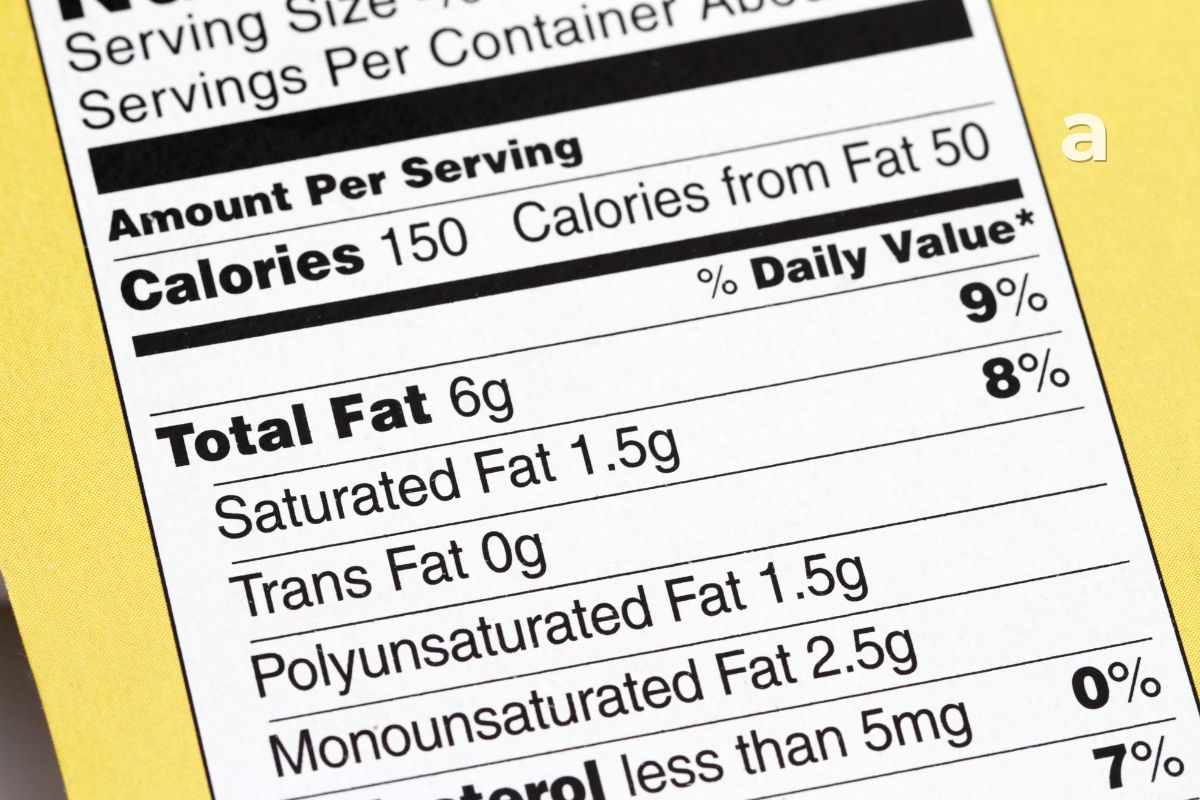
Understanding Fat and Saturated Fat
Fat is another major part of a nutrition label.
It is sometimes treated as something to avoid completely, but reading a label requires a little more context. The label can tell you how much total fat a serving contains and, when provided, how much of that fat is saturated fat.
Start With Total Fat
The nutrition panel may list:
Total fat — X g per serving
This tells you the amount of total fat in the stated serving.
As with calories, protein and carbohydrates, the first thing to check is the serving size.
If you eat more than one serving, you are consuming more than the amount shown on the label.
What Is Saturated Fat?
Some nutrition labels provide a separate value for:
Saturated fat — X g
Saturated fat is one type of fat.
Seeing both total fat and saturated fat helps you understand the composition of the fat in the food rather than treating all fats as exactly the same.
For example, a product could contain 10 g of total fat, of which 3 g is saturated fat.
The two numbers describe different aspects of the same serving.
Why Look at Both Numbers?
Looking only at total fat doesn’t tell you the complete story.
Two products could contain a similar amount of total fat while having different amounts of saturated fat.
When comparing similar products, this information can help you understand how their nutritional profiles differ.
You don’t need to make a decision based on one number alone.
Consider the rest of the label as well.
Don’t Assume “Low Fat” Means “Better”
The front of a package may highlight statements such as:
Low fat
Reduced fat
Fat free
These descriptions can be useful, but they don’t tell you everything about the food.
A product can have less fat while still containing substantial amounts of other nutrients or ingredients that you may want to consider.
This is why turning the package around and reading the nutrition information can provide a more complete picture.
Look at the Ingredient List Too
The nutrition panel tells you how much of a nutrient is present.
The ingredient list helps you understand what the product is made from.
Reading both together can be particularly useful when comparing packaged foods.
For example, two products may have similar amounts of total fat but use quite different combinations of ingredients.
You don’t need to become an expert in every ingredient.
Simply making a habit of checking the list can give you more context.
Compare Similar Foods
When comparing two similar products, check:
- Serving size
- Total fat
- Saturated fat
- Energy
- Protein
- Carbohydrates
- Fiber
- Sugars
- Sodium
- Ingredients
This prevents one nutrient from becoming the entire basis of your decision.
A Simple Fat Check
When you reach the fat section of a nutrition label, ask:
“How much total fat is in one serving?”
Then:
“How much of that is saturated fat?”
Finally:
“What does the rest of the nutrition label tell me about this food?”
The goal of reading a nutrition label isn’t to fear a particular nutrient.
It is to understand the information well enough to make more informed comparisons between foods.
Understanding the difference between nutrients can also be useful when learning about the role of healthy fats and nutrition in the diet.
Understanding Sodium
Sodium is another nutrient worth noticing when you read a nutrition label. Sodium is an essential mineral, but WHO recommends limiting salt intake as part of a healthy diet; its current healthy-diet guidance also distinguishes sodium from salt.
The World Health Organization’s healthy-diet guidance provides further information on sodium, salt and the role of these nutrients in a balanced diet.
It is often associated with salt, but sodium and salt are not exactly the same thing. Sodium is a mineral, while salt is a compound that contains sodium and chloride.
On a nutrition label, the amount may be listed as sodium or, depending on the labeling system, information about salt may also be provided.
Where Does Sodium Come From?
Sodium occurs naturally in some foods, but packaged and prepared foods can also contain sodium from ingredients added during processing.
Foods such as sauces, soups, packaged snacks, instant meals and processed products can vary considerably in their sodium content.
This is one reason the nutrition label can be useful when comparing similar products.
Check the Amount Per Serving
As with every other nutrient, start by checking the serving size.
If a product contains:
Sodium — 300 mg per serving
and you eat two servings, the amount of sodium you consume from the product would be approximately twice the listed amount.
This is easy to overlook when a package contains several servings.
So ask:
“How much sodium does the amount I actually eat provide?”
Look at the % Daily Value When Provided
Some nutrition labels include a % Daily Value (%DV) or a similar reference percentage.
This can help put the amount of a nutrient into context.
Rather than looking only at the number of milligrams, you can also see how that amount relates to the daily reference value used on the label.
The exact reference values and labeling rules can vary by country, so always interpret the percentage according to the labeling system being used.
Compare Similar Products
Sodium can be particularly useful to compare when choosing between similar packaged foods.
For example, two sauces may look almost identical on the shelf but provide different amounts of sodium per serving.
Instead of relying on the product’s front packaging, you can turn the package around and compare the nutrition information directly.
Look at:
- Serving size
- Sodium per serving
- % Daily Value, if provided
- Other relevant nutrients
- Ingredient list
Don’t Forget the Ingredient List
The nutrition panel tells you how much sodium is present.
The ingredient list can provide additional context about what ingredients are used in the product.
Salt may appear as an ingredient, but sodium can also be present in other ingredients and compounds.
You don’t need to memorize every possible source.
The simple habit of checking both sections can help you understand the product more completely.
Sodium Is One Part of the Overall Picture
Just as you shouldn’t judge a food solely by its calorie or sugar content, sodium shouldn’t be considered in isolation.
A useful label-reading habit is to move through the information systematically rather than searching for one number that determines whether you should buy the product.
Ask:
“What does this food provide overall, and how does it compare with the alternatives I’m considering?”
That approach turns the nutrition label from a collection of numbers into a practical tool for making more informed food choices.
Understanding % Daily Value
The % Daily Value (%DV) can make a nutrition label easier to interpret because it puts the amount of a nutrient into a broader daily context.
Instead of seeing only a number such as grams or milligrams, you may also see a percentage showing how much that amount contributes to a daily reference value.
What Does % Daily Value Mean?
If a label lists a nutrient with a percentage, that percentage relates the amount in the stated serving to a daily reference value used for nutrition labeling.
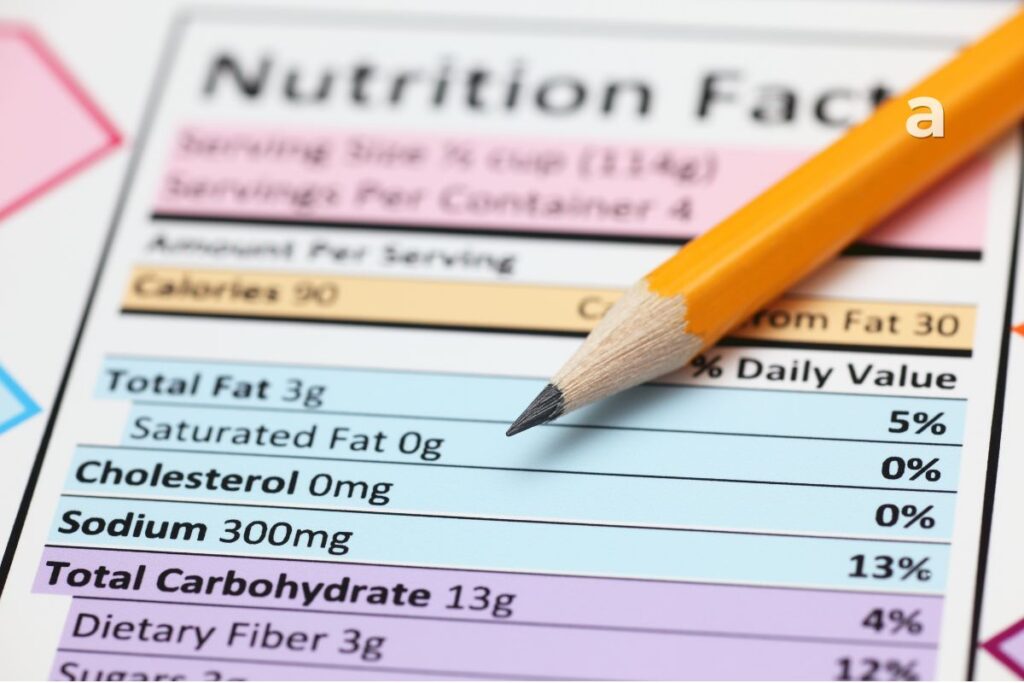
For example, imagine a label shows:
Sodium — 300 mg — 13% DV
The 13% is providing context for the 300 mg listed for that serving.
It doesn’t mean that the food itself represents 13% of everything you should eat in a day.
It is a reference point used to help you understand the nutrient amount.
Always Look at the Serving Size First
% Daily Value is based on the serving described on the label.
So the same rule applies:
Serving size → nutrient amount → % Daily Value
If you consume two servings, you need to consider that you have consumed twice the amount of the nutrient listed for one serving.
This is why looking only at the percentage without checking the serving size can lead to misunderstanding.
Why Can %DV Be Useful?
The percentage can make it easier to compare the relative amount of a nutrient.
The U.S. Food and Drug Administration (FDA) explains that % Daily Value shows how much a nutrient in one serving contributes to the daily diet, which can help put the amount listed on a Nutrition Facts label into context.
The FDA’s guidance on Daily Value and % Daily Value explains how these percentages relate to the amount of a nutrient in a single serving, helping readers put the numbers on a Nutrition Facts label into context.
For example, if one product provides a much higher percentage of a nutrient per serving than another similar product, that difference can be useful when comparing them.
It can also help you quickly identify nutrients that make up a larger or smaller proportion of the relevant daily reference value.
Use It as Context, Not a Complete Judgment
A percentage on its own doesn’t tell you whether a food is universally suitable or unsuitable.
The meaning depends on:
- The serving size
- The nutrient being considered
- The rest of the food’s nutritional profile
- Your individual circumstances and dietary needs
For example, you shouldn’t look at a single percentage and use it as the only reason to choose or reject a food.
Instead, treat it as one additional piece of information.
Compare Similar Products Carefully
When comparing two packaged foods, look at the same nutrients and make sure the serving sizes are reasonably comparable.
For example:
Product A
Sodium — 200 mg — 9% DV
Product B
Sodium — 350 mg — 15% DV
The second product provides more sodium per stated serving.
But before drawing a conclusion, check whether the serving sizes are the same.
If one serving is considerably larger than the other, the comparison needs more context.
Don’t Let the Percentage Replace the Number
The percentage is useful, but the actual amount still matters.
You may want to know the number of:
- Grams of protein
- Grams of fiber
- Grams of sugar
- Grams of fat
- Milligrams of sodium
The %DV simply adds another way of understanding those numbers.
Think of it as context rather than a replacement for the underlying information.
A Simple %DV Habit
Whenever you see a % Daily Value, ask:
“What nutrient is this percentage describing?”
Then:
“What is the serving size?”
And finally:
“How does this information compare with similar products?”
These three questions can make the percentage much more useful.
Once you understand serving size, nutrient amounts and % Daily Value together, the nutrition panel becomes considerably easier to read—and you can move on to another important part of the package: the ingredient list.
How to Read the Ingredient List
The nutrition panel tells you how much of certain nutrients a food contains.
The ingredient list tells you something different:
what the product is made from.
Reading both together gives you a more complete understanding of a packaged food.
Ingredients Are Listed in a Specific Order
For many packaged foods, ingredients are listed in descending order by weight.
This means the ingredients used in greater amounts generally appear earlier in the list, while those used in smaller amounts appear later.
For example, if a product’s ingredient list begins with:
Whole grain → nuts → vegetable oil → sugar
that tells you something about the relative amounts of those ingredients used in the product.
The exact labeling requirements can vary by country and product category, so the ingredient list should be interpreted according to the applicable food-labeling rules.
Look Beyond the First Few Ingredients
You don’t need to memorize every ingredient.
Start by looking at the beginning of the list.
Ask:
“What are the main ingredients in this product?”
Then look for ingredients that are particularly relevant to the comparison you’re making.
For example, if you’re comparing two breakfast products, you might want to see what ingredients appear near the beginning of each list and whether the products differ substantially.
Different Names Can Describe Similar Ingredients
Ingredients aren’t always presented using the everyday name you expect.
A product may contain different forms of sweeteners, oils or other ingredients that you may not immediately recognize.
You don’t need to become an expert in food chemistry to read a label effectively.
If an ingredient is unfamiliar, you can look it up using a reliable source rather than guessing what it means.
The important habit is to notice unfamiliar ingredients rather than automatically assuming they are harmful or beneficial.
Don’t Judge a Product From One Ingredient
Seeing one ingredient you recognize—or don’t recognize—doesn’t tell you everything about a food.
A packaged food is usually made from several ingredients, and its nutritional profile depends on the overall combination.
This is why it’s useful to read the ingredient list alongside:
- Serving size
- Energy
- Protein
- Carbohydrates
- Sugars
- Fiber
- Fat
- Sodium
The ingredient list adds context to those numbers.
Health Claims Don’t Replace the Ingredient List
The front of a package may highlight statements such as:
“Natural”
“Made with whole grains”
“High protein”
“No added sugar”
These statements may draw your attention to a particular characteristic of the product.
But they don’t eliminate the need to read the detailed information on the back.
A useful habit is:
Front of the package for the claim. Back of the package for the details.
Use the Ingredient List When Comparing Products
Suppose two products appear similar.
Instead of choosing based only on their packaging, compare their ingredient lists.
Ask:
“What are the main ingredients in each product?”
Then compare the nutrition panels.
This gives you two different perspectives:
Ingredient list: What is the product made from?
Nutrition panel: What nutrients does the stated serving provide?
Together, they provide more information than either section alone.
A Simple Ingredient-List Check
When reading a packaged food, try these four questions:
- What ingredients appear first?
- Are there ingredients I don’t recognize?
- Are there specific ingredients I am looking for or trying to limit?
- Does the ingredient list make sense alongside the nutrition information?
You don’t need to understand every word on the package.
The goal is simply to become comfortable looking beyond the front label and understanding what the product actually contains.
Once you can read the serving size, nutrition panel and ingredient list together, you have the basic tools needed to compare packaged foods more thoughtfully.
How to Compare Two Nutrition Labels
When you are choosing between two similar packaged foods, looking at only one number can be misleading. A better approach is to compare the labels using the same serving size and then look at several nutrients together.
Start with the serving size. If one product lists a smaller serving than the other, the numbers may not be directly comparable. Check whether you would realistically eat the same amount of each product.
Then compare the calories and key nutrients. Depending on the food, you may want to look at protein, dietary fiber, added sugars, saturated fat and sodium.
The ingredient list can also help you understand what the product contains and how the ingredients are arranged. Ingredients are generally listed by weight, with ingredients used in greater amounts appearing earlier in the list.
A simple comparison might look like this:
| What to compare | Product A | Product B |
|---|---|---|
| Serving size | Check | Check |
| Calories | Compare | Compare |
| Protein | Compare | Compare |
| Dietary fiber | Compare | Compare |
| Added sugars | Compare | Compare |
| Saturated fat | Compare | Compare |
| Sodium | Compare | Compare |
| Ingredient list | Read | Read |
There is no need to find a product with the lowest number in every category. The more useful approach is to understand what each number means and consider the product as a whole.
If two products are similar, comparing their labels side by side can make everyday food choices easier and more informed.
Common Nutrition Label Mistakes
Even when a Nutrition Facts label is easy to find, it is possible to misread the information. These are some common mistakes to avoid.
1. Ignoring the serving size
A package may contain more than one serving. If you assume the entire package represents one serving, you may misunderstand the amounts shown on the label.
2. Looking only at calories
Calories are one part of the label, but they do not tell you everything about a food. Protein, fiber, sugars, saturated fat, sodium and other nutrients can also provide useful context.
3. Confusing total sugars with added sugars
Total sugars can include naturally occurring sugars as well as added sugars. Looking at both values can give you a clearer picture of what is listed on the label.
4. Skipping the ingredient list
The Nutrition Facts panel and ingredient list provide different types of information. The nutrient panel gives quantities of nutrients, while the ingredient list shows the ingredients used in the product.
5. Comparing products with different serving sizes
Two products may appear very different simply because their serving sizes are different. Check the serving information before comparing nutrient amounts.
6. Treating % Daily Value as a personal target
% Daily Value provides context for how much a nutrient in one serving contributes to a daily diet. It is not necessarily a personalized nutrition target for every individual.
7. Making a decision from one number alone
A single number rarely tells the complete story. Looking across the serving size, nutrient amounts, % Daily Value and ingredient list can provide a more useful picture.
A Simple 5-Step Nutrition Label Checklist
You do not need to study every number on a package every time you shop. A simple process can make reading nutrition labels quicker.
1. Check the serving size
First, see how much food the listed numbers refer to.
2. Look at the key nutrients
Check the nutrients that are most relevant to the food you are comparing, such as protein, fiber, sugars, saturated fat or sodium.
3. Check % Daily Value
Use % Daily Value to put the nutrient amounts into context rather than looking at the number alone.
4. Read the ingredient list
Look through the ingredients to understand what the product contains and how the ingredients are presented.
5. Compare similar products
If you have more than one option, compare their serving sizes, nutrient information and ingredient lists using the same approach.
Your 30-Second Label Check
Before putting a packaged food into your shopping basket, you can ask:
□ What is the serving size?
□ What nutrients stand out?
□ How much sugar, fiber, saturated fat and sodium does it contain?
□ What does the % Daily Value tell me?
□ What are the main ingredients?
□ How does it compare with similar products?
The purpose of reading a nutrition label is not to make every food decision complicated. It is simply a way to understand the information already provided on the package and use it more thoughtfully.
These three sections also give the article a stronger reference-guide character rather than ending after explaining individual nutrients.
FAQ
What is a nutrition label?
A nutrition label provides information about the amount of energy and nutrients contained in a specified serving of a packaged food. It can help you understand serving size, calories, protein, carbohydrates, fat, sugars, fiber, sodium and other nutritional information.
How do you read a nutrition label for beginners?
Start with the serving size, then look at the energy or calorie information and the amounts of key nutrients such as protein, carbohydrates, sugars, fiber, fat and sodium. If provided, also check the % Daily Value and read the ingredient list for additional context.
Why is serving size important on a nutrition label?
The nutrient amounts listed on a nutrition label generally apply to the stated serving size. If you eat more or less than that amount, the nutrients and energy you consume will differ from the numbers shown for one serving.
What is % Daily Value on a nutrition label?
% Daily Value is a reference percentage that shows how the amount of a nutrient in a stated serving relates to a daily reference value used on the label. It provides context for the nutrient amount.
What is the difference between the nutrition facts and ingredient list?
The nutrition information tells you how much energy and certain nutrients the stated serving provides. The ingredient list tells you what ingredients are used to make the product. Reading both can provide a more complete picture of a packaged food.
If this stayed with you, you can support Aarohi here🌿
If this piece stayed with you, you can support Aarohi 🌿
Secure payments via UPI, Cards, Net Banking & PayPal
This is not a transaction, it is an exchange of energy.