Ancient Indian Rituals for Emotional and Mental Stability: 7 Daily Practices for Modern Life
Mental fitness is not about eliminating every stressful experience or trying to remain calm all the time. It is about developing everyday habits that create space for attention, reflection, recovery and more thoughtful responses to life’s demands.
Ancient Indian traditions include many practices centered on attention, reflection, breath, movement, routine and self-discipline. Some of these practices can still offer useful ideas for modern everyday life.
But it is important to approach them thoughtfully.
Ancient practices should not automatically be presented as scientifically proven treatments for mental-health conditions. Their historical and cultural meanings can be different from the way similar practices are studied today.
This article explores seven simple practices inspired by Indian traditions and considers how they might fit into modern life as everyday habits for reflection, calm and emotional awareness.
These practices are not a substitute for professional mental-health care.
They are small ways of creating more intentional pauses in an otherwise busy day.
Why Mental Fitness Matters in Daily Life
Mental fitness can be supported by small, consistent practices that create opportunities for attention, reflection and recovery. Modern life can involve constant information, notifications, deadlines, responsibilities and social demands.
Sometimes the difficulty is not that we have no time.
It is that almost every available moment is filled with something.
A message arrives.
A notification appears.
A video starts playing.
Another task is added.
Another piece of information demands attention.
Creating small periods of quiet can therefore become meaningful.
The goal is not to eliminate stress from life.
Stress is a normal part of being human.
The goal is to develop healthier ways of responding to everyday demands and to recognize when additional support is needed.
Psychological resilience is associated with flexibility, adjustment and coping strategies rather than simply “being strong.” The American Psychological Association describes resilience as the process of adapting to difficult or challenging experiences.
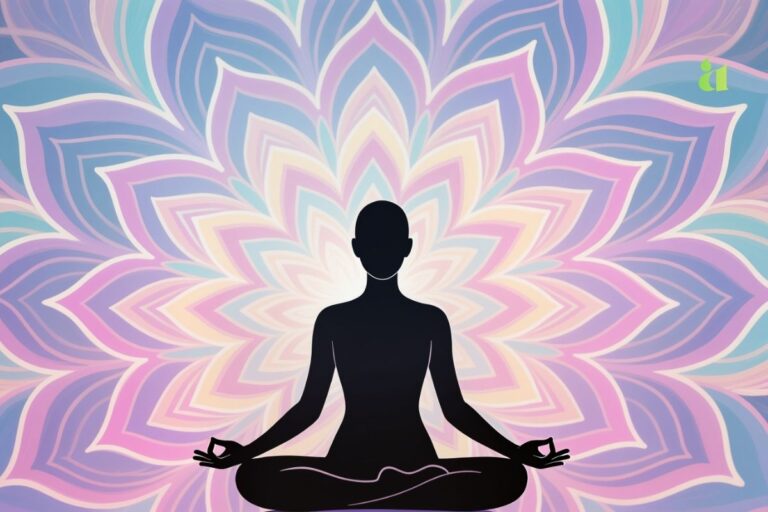
1. Morning Silence: Begin the Day Without Immediate Stimulation
Silence has an important place in several Indian philosophical and contemplative traditions.
The modern version does not need to be complicated.
It can simply mean allowing yourself a few quiet minutes before immediately entering the digital world.
For example:
- Keep your phone away for the first few minutes after waking.
- Sit quietly.
- Open a window.
- Notice your breathing.
- Think about what actually matters that day.
- Avoid immediately checking every notification.
You do not need to follow a strict twenty-minute rule.
The useful part is the pause.
Instead of allowing the first thing you see to determine your attention, you create a small space in which you choose what deserves attention.
A simple morning practice
Before opening social media or messages, ask:
What do I need from today?
Not everything needs an immediate answer.
Sometimes beginning slowly helps you enter the day with greater awareness.
2. Conscious Breathing: Use the Breath as a Pause
Breathing practices have a long history in Indian traditions, including pranayama.
Modern research also examines breathing and relaxation techniques as ways of supporting stress management. NCCIH notes that relaxation techniques can include breathing exercises and that some research suggests slow, deep breathing may help reduce stress.
This does not mean that a breathing exercise can treat every form of anxiety or emotional difficulty.
It simply means that deliberate breathing can be one small relaxation practice.
A simple approach
Sit comfortably.
Breathe normally for a moment.
Then gradually make the exhalation slightly longer than the inhalation, without forcing your breath.
For example:
Inhale gently.
Exhale slowly.
Repeat for a few comfortable cycles.
Stop if you feel uncomfortable, dizzy or unwell.
There is no need to turn breathing into a performance.
The purpose is simply to create a moment of attention.
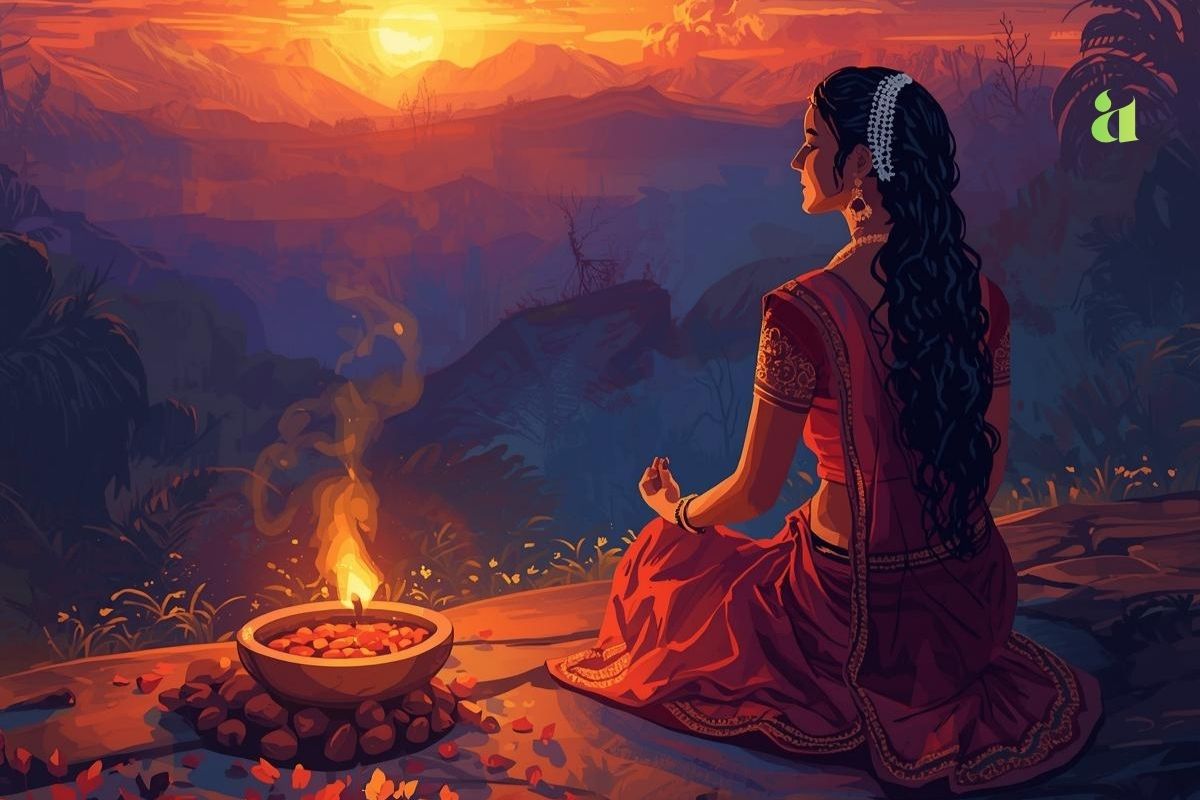
3. Evening Reflection: Learn From the Day
One of the most useful practices in any reflective lifestyle is simply looking back at the day.
Indian philosophical traditions include practices of self-study and reflection, although their historical meanings are broader than a modern journaling exercise.
You can adapt the idea without claiming that your version is identical to the traditional practice.
Before sleeping, ask yourself:
- What affected me today?
- What made me feel calm?
- What caused unnecessary stress?
- Where did I react quickly?
- Where did I respond thoughtfully?
- What did I learn about myself?
- What would I like to approach differently tomorrow?
You do not need to write several pages.
Even three sentences can be enough.
Reflection turns an ordinary day into something you can learn from.
4. Create a Simple Daily Rhythm
Ayurveda includes the traditional concept of dinacharya, or daily routine.
The modern lesson does not need to involve adopting every traditional recommendation.
Instead, we can take a simpler idea:
Regular anchors can make everyday life easier to organize.
These anchors might include:
- a reasonably consistent waking time
- regular meals
- a period for movement
- a work or study routine
- a wind-down period before sleep
- time for relationships
- time without screens
A routine should not become rigid.
Unexpected events are part of life.
The purpose of a daily rhythm is to provide some structure—not to create another reason to feel guilty when the day does not go according to plan.
5. Movement: Reconnect With the Body
Movement has long been part of Indian traditions, particularly through Yoga.
Today, Yoga is studied as a mind-body practice. NCCIH notes that Yoga combines physical postures, breathing techniques and meditation, and that research suggests possible benefits for stress management, sleep, balance and mental or emotional well-being.
But Yoga is not the only way to move.
Walking, stretching, cycling, exercise, dancing or other forms of physical activity can also become part of everyday well-being.
The important question is not:
“Which practice is most impressive?”
It is:
“What kind of movement can I realistically continue?”
If you are new to Yoga or have a medical condition, injury or other health consideration, appropriate professional guidance may be useful. NCCIH notes that Yoga is generally considered safe when practiced appropriately, but injuries can occur.
6. Digital Boundaries: Protect Your Attention
Digital boundaries are not an ancient Indian ritual.
They are a modern adaptation of an older idea: attention deserves care.
Today, our attention can be divided between:
- social media
- news
- messages
- emails
- entertainment
- work
- online shopping
- endless notifications
A simple digital boundary can therefore become a modern contemplative practice.
Try:
- turning off unnecessary notifications
- keeping your phone away during meals
- creating a short screen-free period
- avoiding unnecessary scrolling before sleep
- doing one task without switching between apps
- taking a walk without consuming additional content
The goal is not to reject technology.
It is to decide when technology deserves your attention.
7. Practice Gratitude Without Forcing Positivity
Gratitude appears in many philosophical and spiritual traditions, including Indian traditions, although different traditions understand it in different ways.
For modern everyday life, gratitude can simply mean deliberately noticing what is already present.
At the end of the day, name three things you genuinely appreciated.
They do not need to be extraordinary.
Perhaps:
- a meaningful conversation
- a peaceful cup of tea
- completing something difficult
- a helpful colleague
- time with family
- a walk outside
- simply having a few quiet minutes
Gratitude should not become a demand to pretend that everything is fine.
You can appreciate something good while still acknowledging that another part of life is difficult.
Both can exist at the same time.
Ancient Practice and Modern Evidence Are Not the Same Thing
This distinction is important.
An ancient practice can have cultural, philosophical or personal value without every traditional explanation being scientifically established.
Likewise, modern research may find that a particular practice has potential benefits without proving every historical claim associated with it.
For example, research on Yoga and relaxation techniques suggests potential benefits for areas such as stress management and general well-being, but the strength of evidence varies by practice and condition. NCCIH
This is a healthier way to approach traditional practices:
Respect the tradition.
Understand the modern evidence.
Avoid exaggerated promises.
Choose practices that are appropriate for you.
What These Practices Have in Common
Although these seven practices come from different ideas and traditions, they share several modern themes:
Attention
You deliberately notice what you are doing.
Rhythm
You create useful patterns rather than living entirely reactively.
Reflection
You learn from your experiences.
Recovery
You create opportunities to pause rather than remaining constantly stimulated.
Awareness
You become more familiar with your thoughts, emotions and habits.
Moderation
You avoid turning wellness into another form of excess.
These principles can be useful even if you do not identify with any particular spiritual tradition.
A 10-Minute Mental Fitness Practice Inspired by These Ideas
You do not need to adopt all seven practices immediately.
Try this simple version:
Morning — 3 minutes
Sit quietly.
Put the phone aside.
Take several comfortable breaths.
Ask:
What deserves my attention today?
During the day — 2 minutes
Pause between activities.
Take a few slow breaths.
Notice how you are feeling.
Ask:
Am I reacting automatically, or am I choosing my response?
Evening — 5 minutes
Write down:
- Something that went well.
- Something that was difficult.
- Something you learned.
- Something you appreciated.
- One thing you want to approach differently tomorrow.
That is enough.
A sustainable practice does not have to be complicated.
These small practices can also become part of a broader self-care routine, especially when you are trying to create more sustainable habits around rest, attention and everyday well-being.
How This Connects With Conscious Living
These practices also connect naturally with conscious living.
Conscious living is not about turning every moment into a spiritual exercise.
It is about becoming more aware of everyday choices.
Why am I checking my phone?
Why am I rushing?
Why am I reacting this way?
What actually matters today?
What habit is helping me?
What habit is draining me?
A short pause can sometimes be enough to move from automatic reaction toward a more considered choice.
Ancient Indian Rituals and Inner Awareness
Another common thread is inner awareness.
When you pause, breathe, reflect or observe your habits, you begin noticing what is happening internally.
You may notice:
- recurring thoughts
- emotional triggers
- habits of comparison
- impatience
- avoidance
- unnecessary worry
- moments of calm
- activities that restore your energy
This does not mean every thought has a hidden meaning.
It simply means that observation can help you understand your patterns more clearly.
When These Practices Are Not Enough
Daily rituals can be useful tools for general well-being.
They are not a substitute for professional care when someone is experiencing significant mental-health difficulties.
If you are dealing with persistent anxiety, depression, panic, severe sleep problems, inability to function normally, or other serious symptoms, consider speaking with a qualified mental-health professional.
Breathing, meditation, Yoga or journaling should not be used to delay appropriate treatment.
NCCIH similarly advises that relaxation techniques should not replace conventional care or be used to postpone medical attention. NCCIH
Seeking support is not a failure of mental strength.
Sometimes resilience means recognizing when you should not handle something alone.
A Simple Weekly Reflection
You can also review these practices once a week.
Ask:
Attention
What consumed most of my attention this week?
Stress
What situations repeatedly made me feel overwhelmed?
Recovery
Did I create enough opportunities to rest?
Digital life
Did technology help me or constantly interrupt me?
Relationships
Which interactions gave me energy?
Emotional awareness
Which emotions appeared repeatedly?
Intention
What is one small change I want to carry into next week?
This can become part of your weekly life audit, where you review your time, priorities, habits and choices more systematically.
A Note on Tradition
Indian traditions are diverse.
There is no single “ancient Indian ritual system.”
Ayurveda, Yoga, meditation traditions, Hindu philosophical schools and other Indian traditions have developed across different historical periods and communities.
Therefore, it is better to say that these practices are inspired by or associated with different Indian traditions rather than suggesting that all of them belonged to one unified ancient system.
That distinction matters because respecting tradition also means respecting its complexity.
FAQ: Ancient Indian Rituals for Emotional and Mental Stability
What are some ancient Indian practices associated with mental well-being?
Different Indian traditions include practices involving meditation, breath awareness, Yoga, self-study, silence, reflection and structured daily routines. Their meanings and purposes vary across traditions.
Can ancient Indian rituals improve mental health?
Some practices associated with Yoga, meditation and relaxation have been studied for stress and mental or emotional well-being. Evidence varies depending on the specific practice and health condition. They should not be presented as replacements for professional mental-health treatment. NCCIH
What is pranayama?
Pranayama refers broadly to breathing practices associated with Yoga traditions. Different techniques have different instructions and purposes. Beginners should avoid forceful or uncomfortable breathing practices and seek qualified guidance when appropriate.
Is Yoga a form of mental-health treatment?
Yoga can be used as a complementary practice and may support general wellness or help with some symptoms, but it should not automatically be treated as a replacement for evidence-based mental-health care. NCCIH
What is a simple practice I can start with?
Start with a few minutes of quiet breathing or evening reflection. You do not need to adopt a complicated routine.
Do I need to follow a spiritual tradition to practice these habits?
No. You can learn from a traditional practice while respecting its cultural background and adapting simple elements for everyday reflection and well-being.
Final Reflection
Ancient practices do not need exaggerated promises to remain meaningful.
Their value can sometimes be found in something much simpler:
Pause.
Breathe.
Observe.
Move.
Reflect.
Rest.
Begin again.
Modern life may be very different from the world in which these traditions developed.
But the human need for periods of attention, reflection and recovery remains relevant.
Mental fitness is not about finding one perfect ritual. The most useful approach is neither to dismiss traditional wisdom nor to present every ancient practice as scientifically proven.
Instead, we can approach it with curiosity.
Learn where a practice comes from.
Understand what it means within its tradition.
Look at what modern research actually supports.
And then decide thoughtfully whether a particular practice belongs in your own life.
Sometimes mental and emotional stability does not begin with a dramatic transformation.
It begins with a few intentional minutes in an ordinary day.
If this stayed with you, you can support Aarohi here🌿
If this piece stayed with you, you can support Aarohi 🌿
Secure payments via UPI, Cards, Net Banking & PayPal
This is not a transaction, it is an exchange of energy.