

Outgrowing People: Why Some Relationships End Quietly
Not every relationship ends with an argument.
Sometimes, there is no dramatic goodbye, no harsh words, and no moment you can point to and say, “That was when everything changed.” Instead, conversations become shorter. Messages take longer to answer. Shared routines quietly disappear. One day, you realize that someone who once knew every chapter of your life now feels like a distant memory.
This quiet distance can be confusing because nothing appears to have gone wrong. There is no betrayal to forgive, no conflict to resolve, and no clear ending to grieve. Yet something has undeniably shifted. The connection that once felt effortless now requires effort neither person seems able—or willing—to give.
Many of us carry guilt when this happens. We wonder if we should have tried harder, called more often, or held on longer. We replay old conversations, hoping to find the moment we missed. But life rarely changes in a single dramatic event. More often, it changes through small choices, new responsibilities, unexpected experiences, and the quiet ways people grow over time.
This is the quiet grief of outgrowing people.
It is a form of loss that often goes unnoticed because society teaches us to mourn endings marked by conflict, not those shaped by change. Yet some of the most meaningful relationships in our lives are not meant to last forever. Their purpose may have been to walk beside us during one season, helping us become who we needed to be before our paths naturally diverged.
Outgrowing someone does not always mean you stopped caring. It does not mean the relationship failed, nor does it erase the laughter, comfort, or lessons you once shared. Sometimes it simply means that two people are growing in different directions, each carrying new dreams, responsibilities, and perspectives that slowly reshape their lives.
Accepting this truth is rarely easy. We often hold onto old versions of people because they remind us of who we once were. Letting go can feel like losing a part of our own story. But growth has a quiet way of asking us to release what no longer fits—not with bitterness, but with gratitude.
Perhaps the hardest part of growing older is realizing that not every meaningful relationship is meant to remain exactly as it was. Some people are chapters, not the entire book. They leave behind memories, lessons, and kindness that continue to shape us long after the relationship itself has changed.
If you’ve ever experienced a relationship ending quietly rather than dramatically, you may also relate to Some Doors Close Without Making a Sound, where we explore why life’s most meaningful endings often arrive without warning.
This reflection is not about giving up on people or encouraging distance. It is about understanding that change is a natural part of every life. It is about learning to honor relationships for what they were, accepting what they have become, and finding peace in the quiet spaces between who we once were and who we are still becoming.
Sometimes, the most loving thing we can do is allow a relationship to become a beautiful memory instead of forcing it to remain something it no longer is.

When Growing Means Growing Apart
There is a quiet assumption many of us carry into adulthood: that the people who matter today will always remain close tomorrow. We imagine friendships lasting forever, family dynamics staying the same, and familiar conversations continuing just as they always have. But life rarely follows the stories we write in our minds.
Growth changes us.
Sometimes, growth also changes how we experience ourselves around others. If you’ve ever wondered why your personality seems to shift depending on who you’re with, you might enjoy reading Why You Feel Different Around Different People.
It changes the way we think, the dreams we pursue, the values we hold, and the lives we build. Sometimes these changes happen so gradually that we barely notice them until we look back and realize how different we have become.
The same is true for the people around us.
Someone who once shared your everyday life may now be balancing a demanding career, raising a family, moving to another city, or simply discovering a different version of themselves. At the same time, your own priorities may be evolving in ways that neither of you expected. Without intention or conflict, two lives that once moved together begin following different rhythms.
This is one of the most natural parts of outgrowing people.
It does not happen because someone becomes a bad friend or because love suddenly disappears. More often, it happens because growth asks each of us different questions, and we answer them in different ways.
Think about the friendships that were built around school, university, or the first years of a career. Those relationships were shaped by shared routines, common experiences, and similar responsibilities. As life changes, those shared foundations often change too. New commitments replace old habits, and the effortless closeness that once held a relationship together quietly begins to fade.
This can feel unsettling because we often mistake change for failure.
We wonder whether we should have done more to keep the relationship alive. We blame ourselves for becoming distant or assume that the other person no longer cares. Yet many relationships don’t end because of a single mistake. They simply become different as two people continue growing in separate directions.
Growth is rarely symmetrical.
One person may discover a passion for travel while another finds joy in building a quiet home. One may become deeply interested in personal reflection, while another is focused on professional ambition. Neither path is wrong. They are simply different expressions of the lives each person is choosing to create.
Accepting these differences requires emotional maturity.
It asks us to let go of the belief that every meaningful relationship must remain unchanged forever. Instead, we begin to understand that some people are companions for a particular season of life. Their presence was genuine, their influence was real, and their absence does not diminish the value of what was shared.
There is a quiet beauty in recognizing this.
Relationships are not measured only by their duration. They are also measured by the kindness they offered, the lessons they taught, and the person they helped us become. Some people walk beside us for decades. Others stay only long enough to leave a lasting imprint on our hearts.
Neither is more important than the other.
Perhaps growing apart is not always something to fear. Perhaps it is simply one of life’s gentle reminders that growth, by its very nature, creates new paths. And while those paths may no longer run side by side, they can still begin from a place of gratitude rather than regret.
When we stop asking, “Why didn’t this relationship last forever?” and begin asking, “What did this relationship help me become?” we discover a different way of understanding loss—one that leaves room for appreciation instead of bitterness.
The people we outgrow are often the same people who once helped us grow. That truth deserves to be remembered with compassion.
Not Every Goodbye Needs an Explanation
One of the hardest things about outgrowing people is that there is often no clear ending.
No final conversation.
No dramatic disagreement.
No moment where both people acknowledge that the relationship has changed.
Instead, life quietly fills the space that the relationship once occupied. Messages become occasional. Plans remain unmade. Birthdays are remembered a little later each year. Before long, silence becomes the new normal.
This kind of ending can feel strangely unfinished.
As human beings, we naturally look for explanations. We want to understand why something changed, what we could have done differently, or whether the relationship might still be repaired. Our minds search for a reason because uncertainty is often more uncomfortable than the truth itself.
But not every relationship leaves behind an answer.
Some simply fade because life keeps moving.
People relocate. Priorities shift. Responsibilities grow. New friendships form. Different experiences shape different perspectives. Without anyone making a conscious decision to leave, the connection slowly becomes part of the past.
This doesn’t mean the relationship lacked value.
In fact, some of the most meaningful relationships in our lives end without conflict. They simply reach the end of the role they were meant to play.
That can be difficult to accept because we often associate endings with failure. We believe that if something mattered, it should have lasted forever. Yet life tells a different story.
Think about teachers who changed the course of your life, colleagues who encouraged you during difficult years, neighbours who became like family, or childhood friends who knew every version of your younger self. Many of these relationships naturally become less central as life evolves, but their influence remains woven into who we are.
Their absence does not erase their significance.
One of the quietest forms of emotional maturity is learning to stop demanding closure from every relationship. Sometimes closure does not arrive through a final conversation. Sometimes it arrives through acceptance.
Acceptance does not mean pretending the loss never hurt.
Acceptance often begins with a conscious choice. That quiet shift is explored further in The Difference Between a Wish and a Decision, which reflects on how intentional decisions shape our lives more than unfulfilled hopes.
It means recognizing that people are allowed to change, and so are we.
It means understanding that a relationship can be complete without lasting forever.
There is freedom in this perspective.
When we stop waiting for an explanation that may never come, we begin to release the emotional weight of unanswered questions. Instead of replaying every conversation in search of hidden meaning, we allow ourselves to appreciate the relationship for what it genuinely was.
Perhaps the silence itself is not the lesson.
Perhaps the lesson is learning that gratitude can exist without permanence.
Not every goodbye needs a dramatic ending to be real.
Some goodbyes happen so quietly that we only recognize them long after they have already become part of our story.
And maybe that is one of life’s gentlest reminders—that love, friendship, and connection are not measured only by how they end, but by how deeply they shape us while they are present.
When we begin to see relationships this way, we stop chasing perfect endings and start valuing meaningful moments. We learn that peace does not always come from receiving answers. Sometimes it comes from accepting that the chapter has closed, even if no one ever turned the final page.
The Difference Between Distance and Disrespect
Not every relationship that becomes distant has become unhealthy.
This is one of the most difficult truths to accept because distance often feels personal. When someone no longer calls as often, replies more slowly, or seems less present in our lives, it is easy to believe we have done something wrong.
Our minds naturally search for explanations.
“Did I upset them?”
“Have they stopped caring?”
“Was I not important enough?”
Sometimes those questions are necessary. But many times, they are simply reflections of our own fear of being left behind.
Distance and disrespect are not the same thing.
Disrespect is intentional. It ignores boundaries, dismisses feelings, breaks trust, or repeatedly causes harm. Distance, however, is often quieter. It can emerge from changing priorities, different life stages, emotional exhaustion, new responsibilities, or personal growth.
A friend raising young children may have little time for long conversations. Someone caring for an aging parent may become emotionally unavailable for a season. A person rebuilding their own mental health may withdraw from social connections while learning to care for themselves.
Their silence is not always a statement about your worth.
Sometimes it is simply a reflection of the life they are living.
Recognizing this difference requires compassion—not only for others, but also for ourselves.
Compassion allows us to stop interpreting every change as rejection. It reminds us that people carry burdens we cannot always see. Just as we hope others will understand our difficult seasons, we can offer that same understanding to those whose lives have become more demanding or more complex.
At the same time, compassion should never become an excuse for accepting unhealthy behavior.
There is an important difference between someone who has grown distant because life has changed and someone who repeatedly treats you without care or respect. Healthy relationships may experience seasons of silence, but they are still built on mutual kindness, honesty, and consideration.
Learning to recognize that difference is an important part of emotional maturity.
Emotional maturity also means recognizing when choosing yourself isn’t selfish but necessary. Our reflection on Choosing Yourself explores this journey with compassion and honesty.
As we continue outgrowing people, we also begin outgrowing the habit of measuring every relationship by constant communication. Instead, we start noticing something deeper: how people make us feel when we are together, whether they respect our boundaries, and whether the relationship continues to support the people we are becoming.
Sometimes a friendship grows quieter but remains full of warmth whenever you reconnect.
Other times, frequent conversations may hide a relationship that no longer feels safe, respectful, or genuine.
Frequency is not always the best measure of closeness.
Presence is.
There is also another quiet truth that many of us learn only with time.
Not everyone is meant to walk beside us throughout every chapter of life.
Some people accompany us through moments of uncertainty, helping us become stronger before continuing on their own path. Others arrive later, bringing perspectives we could not have understood earlier. Neither relationship is more valuable simply because it lasted longer.
The beauty of human connection is not found only in permanence.
It is found in the ways people influence our lives while they are present.
When we stop confusing distance with rejection, we begin to approach relationships with greater peace. We become less afraid of change and more grateful for the seasons we were fortunate enough to share.
Perhaps growing apart does not always mean someone loved us less.
Sometimes it simply means that life asked both people to keep growing—even if that growth led them in different directions.
And maybe that understanding is one of the kindest gifts we can offer ourselves.
Research highlighted by the American Psychological Association suggests that supportive, respectful relationships play an important role in psychological well-being, while healthy boundaries are equally important for emotional health.

Why We Feel Guilty for Moving Forward
One of the quietest emotions that accompanies outgrowing people is guilt.
Not because we wanted the relationship to end, but because somewhere along the way, we began building a life that no longer looked the same. New interests replaced old routines. Different dreams reshaped our priorities. We started saying yes to opportunities we once would have avoided and no to commitments we once accepted without question.
Growth often asks us to become someone unfamiliar—even to ourselves.
That transformation can feel exciting, but it can also feel like a betrayal of the people who knew us before.
We wonder whether changing means we are leaving others behind.
We ask ourselves if becoming healthier, more confident, or more self-aware somehow makes us disloyal to those who shared our earlier struggles. It is a question many people carry quietly, especially when relationships begin to change as their lives evolve.
Yet personal growth has never been an act of betrayal.
It is an act of becoming.
The guilt often comes from confusing change with abandonment.
Choosing a new direction does not mean rejecting your past. It simply means allowing yourself to respond to who you are today instead of remaining who you were yesterday.
Think about the child who leaves home to study in another city. The move does not erase their love for their family. The entrepreneur who works long hours to build a dream does not suddenly value old friendships less. The person who begins therapy and learns healthier boundaries has not become selfish simply because they no longer accept every expectation placed upon them.
Growth changes the shape of our lives, but it does not have to erase the love we carry.
Sometimes we feel guilty because we remember the promises we made years ago.
“We’ll always stay this close.”
“Nothing will ever change between us.”
At the time, those promises were sincere.
But they were made by people who could not yet imagine the lives they would eventually live.
Life has a way of introducing experiences that reshape us. Careers demand our attention. Families grow. Loss teaches unexpected lessons. New passions awaken. We discover strengths we didn’t know we possessed and limitations we can no longer ignore.
None of these changes make our earlier promises dishonest.
They simply remind us that human beings are not meant to remain unchanged.
Perhaps what we truly mourn is not only the relationship itself, but the version of ourselves that existed within it.
Many people compare their present lives with a past that feels simpler or more certain. If you’ve ever struggled with that feeling, you may appreciate Feeling Behind in Life, a reflection on finding peace with your own timeline.
The friend who laughed without responsibilities.
The student who believed the future would always include the same circle of people.
The younger self who assumed closeness would never require effort.
As time passes, we realize we are grieving more than a person. We are grieving an entire season of life.
Understanding this changes everything.
It helps us see that the sadness we carry is not proof that we made the wrong choice. It is proof that something meaningful existed.
Meaningful relationships deserve to be missed.
They deserve gratitude.
They deserve remembrance.
But they do not require us to stop growing.
There is a quiet freedom in accepting that you can honor your past without living inside it. You can appreciate the people who shaped you while also embracing the person you are becoming.
One does not cancel the other.
In fact, the healthiest relationships often celebrate growth, even when that growth creates distance. They do not ask us to remain smaller so that the connection feels familiar. Instead, they leave us with lessons, memories, and encouragement that continue long after our paths have separated.
Moving forward does not mean forgetting.
It means carrying the best parts of those relationships into the next chapter of your life.
The kindness someone showed you.
The confidence they inspired.
The laughter you shared.
The courage they helped you discover.
These gifts do not disappear simply because the relationship changes. They become part of who you are.
Perhaps that is why growing apart can coexist with gratitude.
Not every relationship is meant to last forever, but every meaningful relationship leaves something behind. And sometimes, the greatest way to honor those connections is not by trying to recreate the past, but by allowing the lessons they gave us to shape the future we are still creating.
So if you find yourself feeling guilty for moving forward, remember this:
You are not walking away from the people who mattered.
You are walking toward the person your experiences—including those relationships—have helped you become.
And that journey is not something to apologize for. It is one of the quietest expressions of a life that continues to grow.
Honoring What a Relationship Once Meant
As we grow older, we begin to understand something that rarely makes sense in the moment:
Not every relationship is meant to stay.
Some people enter our lives to walk beside us for years. Others remain only for a single season. Yet the length of a relationship has never been the only measure of its value.
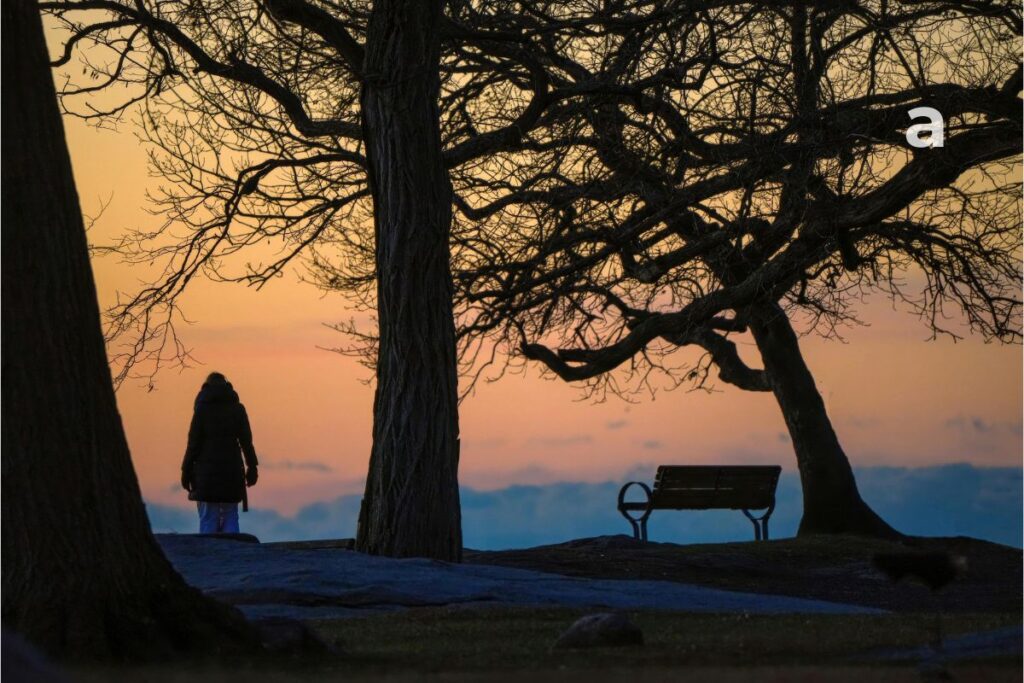
A sunset lasts only a few moments, but we remember it for years.
In much the same way, some relationships leave a lasting imprint even after they quietly fade from our everyday lives.
When we are outgrowing people, our first instinct is often to focus on what has been lost. We notice the empty spaces where conversations once existed. We miss the traditions that slowly disappeared. We compare the closeness we once shared with the distance that exists today.
But gratitude invites us to ask a different question.
Instead of asking, “Why didn’t this relationship last?” we begin asking, “What did this relationship give me?”
That single shift changes the way we remember people.
Perhaps they taught you how to trust when trusting felt difficult.
Perhaps they stood beside you during a chapter when you doubted yourself.
Perhaps they challenged your thinking, encouraged your dreams, or simply made ordinary days feel lighter through shared laughter.
Those gifts remain.
They do not vanish because the relationship changed.
One of the quiet mistakes we often make is believing that a relationship loses its meaning if it no longer exists in the same form. But memories are not erased by distance. Lessons are not cancelled by time. Love is not made meaningless simply because life moved in another direction.
Some of the people we rarely speak to today still live within our decisions.
We hear their encouragement when we face something difficult.
Sometimes a single conversation stays with us long after the person is gone. The Conversation I Never Forgot explores how brief moments can leave lasting emotional footprints.
We remember their kindness when someone else needs compassion.
We repeat advice they once offered without even realizing where we first learned it.
In subtle ways, they continue walking with us.
That is the quiet legacy of meaningful relationships.
It is also why letting go does not have to mean forgetting.
Forgetting asks us to erase the past.
Honoring asks us to carry it with wisdom.
There is an important difference.
Honoring a relationship does not require pretending it was perfect. Every relationship has misunderstandings, disappointments, and moments of silence. Looking back with gratitude does not mean ignoring those realities. It simply means refusing to let the ending become the only part of the story that matters.
A beautiful book is not remembered only by its final page.
Neither is a meaningful relationship.
When we remember people only through the lens of how they left, we overlook everything they contributed while they were present. We reduce years of laughter, support, and shared experiences to a single ending.
Life is more generous than that.
It allows us to hold two truths at once.
We can miss someone and still accept that the relationship has changed.
We can feel sadness without wishing to return to who we used to be.
We can appreciate what once existed without trying to force it back into our lives.
That balance is not easy.
It requires emotional maturity to recognize that gratitude and grief often walk together. One reminds us that something beautiful existed. The other reminds us that it could not remain unchanged.
Neither feeling is wrong.
Together, they tell the complete story.
As we become more comfortable with this truth, we stop viewing people as permanent possessions and begin seeing them as fellow travelers. Some accompany us for a few miles. Others stay for an entire journey. Every one of them leaves footprints across the landscape of our lives.
Those footprints deserve appreciation.
Not because the relationship lasted forever, but because it mattered while it lasted.
Perhaps that is one of the gentlest ways to make peace with outgrowing people.
Not by trying to reclaim the past.
Not by pretending the distance never happened.
But by quietly saying:
“Thank you for the chapter we shared.”
Because some relationships are not meant to be carried forever.
They are meant to be remembered with warmth, honored with gratitude, and allowed to rest where they belong—in the chapters that helped shape the story we are still writing.
Research from UC Berkeley’s Greater Good Science Center suggests that practicing gratitude is associated with stronger relationships, greater optimism, improved emotional well-being, and increased resilience. Choosing gratitude over regret can help us navigate life’s changing seasons with greater peace.
Moving Forward Without Bitterness
There comes a moment in every season of change when we must make a quiet choice.
We can continue carrying resentment for the relationships that changed, or we can carry gratitude for the relationships that once existed.
Both are forms of remembering.
But only one allows us to move forward with peace.
When we experience the pain of outgrowing people, bitterness can feel like a form of protection. If we convince ourselves that someone never cared, that the friendship meant nothing, or that the relationship was entirely one-sided, it becomes easier to explain the distance.
Yet bitterness rarely heals a wounded heart.
It simply asks us to keep reopening the wound.
Resentment has a way of anchoring us to the very chapter we are trying to leave behind. We replay conversations that cannot be changed, imagine different endings that never happened, and silently wait for apologies that may never come.
Meanwhile, life continues inviting us into new experiences, new friendships, and new possibilities.
Holding on too tightly to what has ended can prevent us from fully embracing what is beginning.
Acceptance does not ask us to forget.
It asks us to stop fighting reality.
Reality says that people change.
Reality says that circumstances change.
Reality says that every relationship, like every season, carries its own beginning, middle, and end.
There is no failure in that.
Nature has always understood what we often resist.
Autumn does not apologize for letting its leaves fall.
Winter does not cling to the flowers of spring.
The ocean does not hold every wave that reaches the shore.
Everything in nature teaches us that change is not the opposite of beauty—it is part of beauty itself.
Human relationships are no different.
Some people arrive when we need encouragement.
Others appear when we need a difficult lesson.
Some teach us how to trust.
Others teach us how to set healthier boundaries.
A few simply remind us that joy can exist in ordinary moments.
Even after they leave, their influence quietly remains.
Perhaps that is why it is possible to feel grateful without expecting someone to return.
The relationship has already given what it came to give.
Its purpose has already become part of your story.
This perspective changes the way we meet new people as well.
Instead of expecting every relationship to last forever, we begin appreciating each one for what it offers in the present moment. We become less focused on permanence and more attentive to presence.
We listen more carefully.
We love more honestly.
We express appreciation more freely.
Because we understand that every chapter is temporary.
And somehow, that understanding makes each chapter even more precious.
Moving forward also means allowing yourself to be surprised again.
New friendships may not resemble the old ones.
Future relationships may grow in unexpected ways.
The people who understand the person you are becoming may be waiting just beyond the chapter you are reluctant to close.
Life has a remarkable way of introducing the right people at the right time—not to replace those who came before, but to accompany us through the next stage of our journey.
That possibility deserves space.
Bitterness occupies that space.
Hope opens it.
As we continue growing, we discover that peace is not found in keeping every relationship exactly as it was.
Peace is found in accepting that change is not always the end of love.
Sometimes it is simply love taking a different form.
It becomes respect instead of daily conversation.
Gratitude instead of expectation.
Warm memories instead of constant presence.
And that can be enough.
Enough to smile when an old photograph appears.
Enough to silently wish someone well without needing to reconnect.
Enough to remember a chapter with affection instead of regret.
Perhaps this is what emotional maturity quietly looks like.
Not holding on to everyone.
Not letting everyone go without feeling.
But learning to carry people in your heart without asking them to remain in your life forever.
Because the people we outgrow are not erased from our story.
They become part of the reason we are capable of writing the next chapter.
According to Harvard Health Publishing, nurturing healthy relationships supports emotional well-being and overall brain health, while positive social connections can also contribute to better physical health. As relationships evolve, maintaining supportive connections remains an important part of living well.
Editorial Note: This article offers reflective perspectives on personal growth and relationships. It is intended for educational and inspirational purposes and should not replace professional mental health advice. If relationship changes are causing significant emotional distress, consider speaking with a qualified mental health professional.
Conclusion
Life is not only a collection of destinations. It is also a collection of companions.
Some walk beside us for years. Others stay only long enough to leave behind a lesson, a memory, or a quiet reminder of who we once were. Their presence shapes us, even if their path eventually leads elsewhere.
The quiet grief of outgrowing people is not really about losing someone. It is about accepting that growth changes every life—including our own. And while that truth can be painful, it is also deeply human.
Perhaps the goal is not to make every relationship last forever.
Perhaps the goal is to love people well while they are part of our journey, to learn from them while they are present, and to remember them with kindness when life gently leads us in different directions.
Some relationships become lifelong friendships.
Others become beautiful memories.
Neither is a failure.
Both are evidence that we were fortunate enough to share a part of our lives with another human being.
As you continue your own journey, you may find yourself thinking about someone who is no longer as close as they once were.
Instead of asking why they left, perhaps ask a quieter question:
“Who did this relationship help me become?”
Growth is rarely about leaving the past behind. More often, it’s about carrying its lessons forward with greater clarity and compassion.
Continue Reading
- Some Doors Close Without Making a Sound
- Choosing Yourself
- Why You Feel Different Around Different People
- Feeling Behind in Life
The answer may not remove the sadness.
But it might replace regret with gratitude.
And sometimes, that gentle shift is enough to remind us that even relationships that quietly fade can continue to illuminate the path ahead.
If this stayed with you, you can support Aarohi here🌿
Frequently Asked Questions
What does it mean to outgrow people?
Outgrowing people means that your personal growth, values, priorities, or life circumstances have changed in ways that naturally alter certain relationships. It doesn’t necessarily mean someone did something wrong. Often, it reflects the reality that people evolve at different times and in different directions.
Is it normal to outgrow friends?
Yes. It is completely normal to outgrow friendships as life changes. Career paths, family responsibilities, personal goals, and emotional maturity can reshape how people connect. Many friendships naturally evolve without conflict, and that doesn’t diminish the value they once had.
Why do some relationships end without conflict?
Not every relationship ends because of an argument or betrayal. Many simply fade as routines change, priorities shift, and people grow into different versions of themselves. These quiet endings can feel confusing, but they are a common part of life’s natural transitions.
Does outgrowing someone mean the relationship failed?
No. A relationship does not have to last forever to be meaningful. Some people enter our lives to teach us important lessons, offer support during a particular season, or help shape who we become. Their purpose isn’t erased simply because the relationship changes over time.
How can I let go of a relationship without resentment?
Begin by accepting that change is a natural part of life. Instead of focusing only on the ending, reflect on what the relationship contributed to your journey. Gratitude often creates more peace than holding on to unanswered questions or lingering disappointment.
Can people reconnect after growing apart?
Yes, sometimes they can. As life circumstances change, people may reconnect with greater understanding and maturity. However, reconciliation should happen naturally rather than through pressure. Even if reconnection doesn’t happen, the relationship can still remain meaningful in your memories.
Why do I feel guilty about moving on?
Many people associate moving forward with leaving others behind. In reality, personal growth isn’t an act of betrayal. It simply means allowing yourself to continue evolving while appreciating the people who were part of earlier chapters in your life.
How do I know if it’s time to accept that a relationship has changed?
If a relationship consistently feels forced despite honest effort from both sides, it may have naturally reached a different stage. Acceptance doesn’t mean you stop caring. It means recognizing that relationships, like people, evolve—and that honoring the past can coexist with embracing the future.
If this piece stayed with you, you can support Aarohi 🌿
Secure payments via UPI, Cards, Net Banking & PayPal
This is not a transaction, it is an exchange of energy.







This beautifully captures something many of us experience but rarely talk about. Outgrowing people doesn’t erase gratitude—it simply reminds us that every relationship belongs to a different season of life. 🌿
I loved the reminder that meaningful relationships don’t have to last forever to have lasting value. Thank you for putting this feeling into words.