
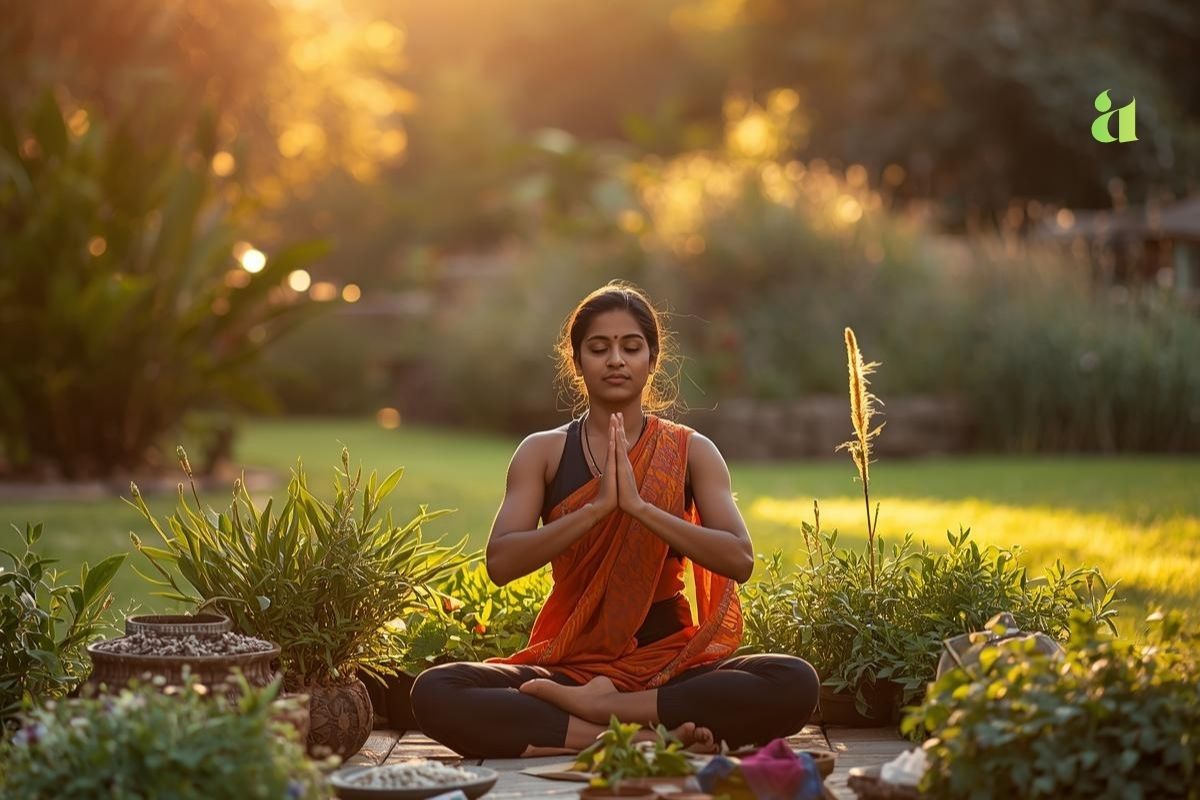
Indian Traditional Wisdom: Understanding Ayurveda, Yoga and Holistic Living
Indian traditional wisdom is a broad and diverse body of ideas, practices, philosophies, and ways of living that have developed across generations.
Within this wider tradition, Ayurveda and Yoga have become especially well known. They offer different but sometimes overlapping ways of thinking about the relationship between daily habits, the body, the mind, attention, environment, and a person’s sense of balance.
For Aarohi, the most useful way to approach this subject is not as a promise of instant healing or as a replacement for modern healthcare.
It is as an opportunity to understand a cultural and philosophical tradition—and to consider which everyday principles, such as moderation, routine, awareness, movement, reflection, and connection with natural rhythms, can be meaningful in contemporary life.
Ayurveda has its own concepts, terminology, and systems of practice, while Yoga includes physical, breathing, meditative, and philosophical dimensions. Neither should be reduced to a collection of wellness trends.
At the same time, not every traditional claim has the same level of scientific evidence.
Understanding that distinction allows us to appreciate Indian traditional wisdom without turning it into either a rejection of modern medicine or an unquestioning promise of wellness.
Understanding the Foundation of Indian Traditional Wisdom
Indian traditional wisdom is not a single system.
It includes many philosophical and practical traditions that developed across different periods, regions, communities, and schools of thought.
Ayurveda is one established traditional system of health knowledge, while Yoga has developed as a broader philosophical and practical tradition involving physical practices, breathing, meditation, concentration, and ethical ideas.
The World Health Organization recognizes Ayurveda as one of the traditional health resources used around the world and has developed standardized terminology and practice benchmarks for Ayurveda.
This does not mean that every traditional practice has been scientifically proven to treat a health condition.
It means that these traditions have a substantial historical and contemporary presence and deserve to be understood accurately.
For a modern reader, that distinction is important.
We can appreciate traditional knowledge while still asking reasonable questions about evidence, safety, effectiveness, and appropriate use.
The Meaning of Balance in Ayurveda
One of the ideas associated with Ayurveda is the importance of balance.
Ayurvedic thought includes concepts such as Vata, Pitta, and Kapha, commonly described as doshas.
Within Ayurvedic theory, these concepts are used to understand individual constitution, tendencies, and states of balance or imbalance.
They are part of the traditional framework of Ayurveda rather than categories that should automatically be treated as modern medical diagnoses.
This distinction matters when reading about traditional health systems.
A person can learn about Ayurvedic concepts as part of cultural or wellness education without using them to self-diagnose a medical condition.
The broader idea of paying attention to one’s routines, environment, digestion, sleep, activity, and emotional state can also encourage a more observant relationship with everyday life.
That connects naturally with inner awareness—noticing what is happening within us before automatically reacting to it.
Ayurveda and the Idea of Daily Routine
The original article emphasizes a recurring theme: small, consistent habits can matter more than occasional dramatic changes.
This idea can be understood without making a medical promise.
Daily routines influence how we organize our lives.
For example, someone may benefit from having relatively consistent times for:
- waking
- eating
- working
- moving
- resting
- sleeping
- disconnecting from screens
A routine does not have to be rigid.
These everyday practices can also be viewed alongside practical self-care tips, especially when the focus is on rest, boundaries, body care, and sustainable habits.
Its purpose can simply be to reduce unnecessary chaos and make room for activities that support everyday well-being.
This is one place where traditional wisdom can become practically relevant to modern life.
Instead of waiting for a major lifestyle transformation, we can ask:
Which small habits can I repeat consistently?
Yoga: More Than Physical Exercise
Yoga is often presented today primarily as a form of physical exercise.
But the tradition is broader than postures alone.
Yoga can include physical postures, breathing practices, meditation, concentration, and philosophical or ethical dimensions.
The National Center for Complementary and Integrative Health notes that yoga typically combines physical postures, breathing techniques, and meditation, while classical Yoga includes additional spiritual elements.
Modern research is also examining yoga for different aspects of health and well-being.
Some evidence suggests that yoga may help with stress management, sleep, balance, and aspects of mental and emotional well-being, while evidence varies by condition and practice.
This is a more useful way to discuss Yoga than claiming that it automatically “balances the nervous system” or prevents illness.
The practice can be meaningful without making promises it cannot support.
Why Modern Life Can Feel Out of Balance
The original article contrasts traditional rhythms with modern lifestyles and points to speed, digital stimulation, stress, and disconnection from ordinary routines.
These observations remain relevant as reflections on modern life.
Many people move between work, messages, social media, notifications, responsibilities, and entertainment with very little uninterrupted attention.
The result can be a feeling of always being occupied without necessarily feeling present.
Traditional approaches that encourage attention to routine, breath, movement, rest, reflection, or time away from constant stimulation may therefore feel relevant—not because they offer a magical solution, but because they invite us to slow down and observe how we are actually living.
This is also where conscious living becomes relevant.
A more conscious approach asks:
“Is this habit helping me live the kind of life I actually want?”
Through life reflections, individuals can begin recognizing patterns in behavior, attention, and everyday routines.
The Relationship Between Mind and Body
Indian traditional wisdom often treats physical and mental experience as interconnected.
Modern readers may recognize a similar everyday reality.
A stressful period can affect sleep.
Poor sleep can affect concentration and mood.
Long periods of inactivity can influence how energetic we feel.
An overloaded schedule can leave little room for reflection or recovery.
These observations do not require us to adopt every traditional health claim.
They simply remind us that human experience is interconnected.
At the same time, symptoms should not automatically be interpreted through a traditional framework.
Persistent pain, significant emotional distress, unexplained physical changes, or other concerning symptoms deserve appropriate professional evaluation.
Traditional wellness practices and modern healthcare do not have to be treated as enemies.
The important question is whether a practice is appropriate, safe, and supported for the particular situation.
Reconnecting With the Body
The original article describes modern life as sometimes disconnecting people from signals such as fatigue, stress, and emotional exhaustion.
There is value in learning to notice these signals.
You might pause during the day and ask:
- Am I physically tired?
- Have I eaten regularly?
- Have I been sitting for too long?
- Have I spent too much time looking at screens?
- Am I mentally overloaded?
- Do I need movement?
- Do I need quiet?
- Have I been ignoring something that needs attention?
This is not self-diagnosis.
It is simply observation.
Sometimes the most useful response to noticing tiredness is not another productivity technique.
It is rest.
Food and Everyday Awareness
Traditional Indian approaches have long included food and eating within broader ideas of lifestyle.
But modern readers should be careful about turning traditional dietary concepts into universal nutritional rules.
Different people have different nutritional needs.
A balanced diet depends on factors such as age, activity, health status, food availability, culture, and individual circumstances.
A useful everyday principle is simply to become more attentive to what we eat.
Notice:
- variety
- portion sizes
- vegetables and fruits
- whole or minimally processed foods
- protein sources
- fiber-rich foods
- hydration
- eating patterns
- how often highly processed foods appear in the diet
For a more practical modern approach, you can also explore our guide to balanced eating.
Traditional wisdom can offer cultural context, but it should not replace individualized nutritional advice when a medical or dietary condition requires professional guidance.
The Importance of Patience
One of the strongest themes in the original article is patience. It argues that traditional approaches emphasize gradual adjustment rather than dramatic transformation.
That idea can be useful beyond Ayurveda.
Modern wellness culture often encourages immediate transformation.
A new year.
A new routine.
A new diet.
A new productivity system.
A completely different lifestyle.
But meaningful habits often take time to become part of everyday life.
Instead of asking:
“How can I change everything this month?”
try asking:
“What is one change I can realistically continue?”
A slower approach may be less exciting, but it can be easier to sustain.
Indian Traditional Wisdom and Sustainable Living
Traditional ways of living often developed in close relationship with local environments, seasons, food systems, family structures, and available resources.
That does not mean that everything described as “ancient” was automatically sustainable or appropriate.
It does, however, give us an opportunity to think about our relationship with consumption.
We can ask:
- Do I need this?
- Can something be repaired?
- Can I reduce unnecessary waste?
- Can I use what I already have?
- Can I choose durable products?
- Can I reconnect with seasonal and local food where practical?
Sustainable living does not require recreating the past.
It requires making more thoughtful choices in the present.
What Ayurveda Can—and Cannot—Tell Us
Ayurveda can be studied as a traditional health system with its own concepts, practices, terminology, and history.
It should not, however, be presented as a universal substitute for evidence-based medical diagnosis or treatment.
The National Center for Complementary and Integrative Health notes that evidence for Ayurvedic medicine varies and that relatively few well-designed clinical trials have established effectiveness for many health conditions. It also warns that some Ayurvedic preparations may contain potentially toxic amounts of substances such as lead, mercury, or arsenic.
That makes one principle especially important:
Natural does not automatically mean safe.
If you are considering Ayurvedic medicines, herbs, supplements, or other products—especially if you take prescription medicines, are pregnant, have an existing health condition, or are considering replacing conventional treatment—speak with an appropriately qualified healthcare professional.
Traditional knowledge deserves respect.
So does evidence.
What Yoga Can—and Cannot—Tell Us
Yoga can be a meaningful practice for movement, breathing, attention, reflection, and well-being.
Research suggests potential benefits in several areas, but results depend on the condition, the type of practice, and the individual.
Yoga should therefore not be presented as a cure-all.
It is also important to practice appropriately.
The NCCIH notes that yoga is generally considered safe for healthy people when practiced appropriately, but injuries can occur, and guidance from a qualified instructor can reduce risk. Certain health conditions and pregnancy may also require modifications or professional guidance.
The practical lesson is simple:
Choose practices that fit your body and circumstances rather than forcing your body to fit a practice.
Returning to Natural Rhythms
The original article ends with the idea of reconnection: reconnection with natural rhythms, internal awareness, and emotional clarity.
This can be understood in a simple modern way.
Maybe it means eating without rushing.
Going outside without constantly checking your phone.
Taking a few quiet minutes before beginning the day.
Allowing yourself to sleep instead of treating exhaustion as a badge of productivity.
Making time for movement.
Spending time with people without multitasking.
Noticing when your schedule has become too full.
These are not dramatic acts.
But they can change the way an ordinary day feels.
A Simple Indian-Inspired Reflection Practice
You do not need to adopt an entire traditional system to explore the reflective side of Indian wisdom.
Try this once a week.
1. Observe
What is happening in your body, attention, mood, and daily routine?
2. Notice
Which habits seem to support your well-being?
3. Question
Which habits are leaving you constantly rushed, distracted, or exhausted?
4. Simplify
What is one unnecessary thing you can reduce?
5. Choose
What is one small practice you want to continue for the next week?
The goal is not perfection.
It is awareness followed by a realistic choice.
Indian Traditional Wisdom and Conscious Living
At its heart, much of the reflective appeal of Indian traditional wisdom comes from paying attention.
Paying attention to the body.
Paying attention to habits.
Paying attention to thoughts.
Paying attention to relationships.
Paying attention to how we use time.
This naturally connects with conscious living, where everyday choices are examined rather than simply repeated on autopilot.
You do not have to adopt every traditional belief to practice this kind of awareness.
You can simply become more deliberate about how you live.
A Modern Way to Learn From Traditional Wisdom
There are two equally unhelpful extremes.
The first is to dismiss traditional knowledge simply because it is old.
The second is to assume that something is true simply because it is ancient.
A more thoughtful approach sits between the two.
Ask:
What is the historical idea?
How is it traditionally understood?
What does modern evidence say?
Is the practice safe for me?
How can I apply the useful principle without making unsupported health claims?
This approach respects tradition without abandoning critical thinking.
It also allows Indian traditional wisdom to remain a living subject of learning rather than turning it into a collection of exaggerated wellness promises.
FAQ: Indian Traditional Wisdom, Ayurveda and Yoga
What is Indian traditional wisdom?
Indian traditional wisdom refers broadly to diverse philosophical, cultural, health, spiritual, and lifestyle traditions that developed across the Indian subcontinent. Ayurveda and Yoga are two well-known traditions within this broader landscape.
Is Ayurveda the same as modern medicine?
No. Ayurveda is a traditional system of health knowledge with its own concepts and practices. It should not automatically be treated as equivalent to modern biomedical medicine or as a replacement for appropriate medical diagnosis and treatment.
What are Vata, Pitta and Kapha?
Vata, Pitta, and Kapha are concepts within Ayurvedic theory commonly described as doshas. They are part of the traditional Ayurvedic framework and should not be treated as modern medical diagnoses.
Is Yoga only exercise?
No. Yoga includes physical postures, breathing, meditation, concentration, and philosophical or ethical dimensions. Modern practice often emphasizes physical postures, but the broader tradition is considerably wider.
Can Ayurveda and Yoga be part of a modern lifestyle?
Some people incorporate practices associated with Ayurveda and Yoga into everyday life. The appropriate approach depends on the individual practice and the person’s circumstances. Practices should be considered for safety and evidence rather than adopted simply because they are described as traditional.
Is natural medicine always safe?
No. “Natural” does not automatically mean safe. Some Ayurvedic preparations may contain potentially toxic substances, and herbal or other products can interact with medicines. Appropriate professional guidance is important when health conditions or medications are involved.
Can traditional wisdom replace medical treatment?
It should not be assumed to. If you have a medical condition or concerning symptoms, seek appropriate healthcare. Traditional or complementary practices should be considered carefully and should not be used to delay necessary medical care.
Closing Reflection
Indian traditional wisdom does not need to be presented as a magical answer to modern life.
Its value can also be found in the questions it invites us to ask.
How do I live?
How do I rest?
How do I relate to my body?
How much attention do I give my everyday habits?
What happens when I slow down?
What does balance mean in my own life?
Ayurveda and Yoga are traditions with their own histories, concepts, practices, and limitations. They deserve to be approached with both appreciation and discernment.
We can respect the wisdom of the past without romanticizing it.
We can appreciate modern science without assuming that every question about human well-being has a simple answer.
And we can bring the two conversations together through curiosity, evidence, safety, and awareness.
Perhaps the most useful lesson is not to search for a perfect lifestyle.
It is to become more attentive to the life we are already living.
Balance is not a destination. It is an ongoing practice of noticing, adjusting, and choosing again.
If this stayed with you, you can support Aarohi here🌿
If this piece stayed with you, you can support Aarohi 🌿
Secure payments via UPI, Cards, Net Banking & PayPal
This is not a transaction, it is an exchange of energy.