
Chhath Puja: Meaning, Four Days of Rituals and Traditions
Before sunrise, the riverbank begins to stir.
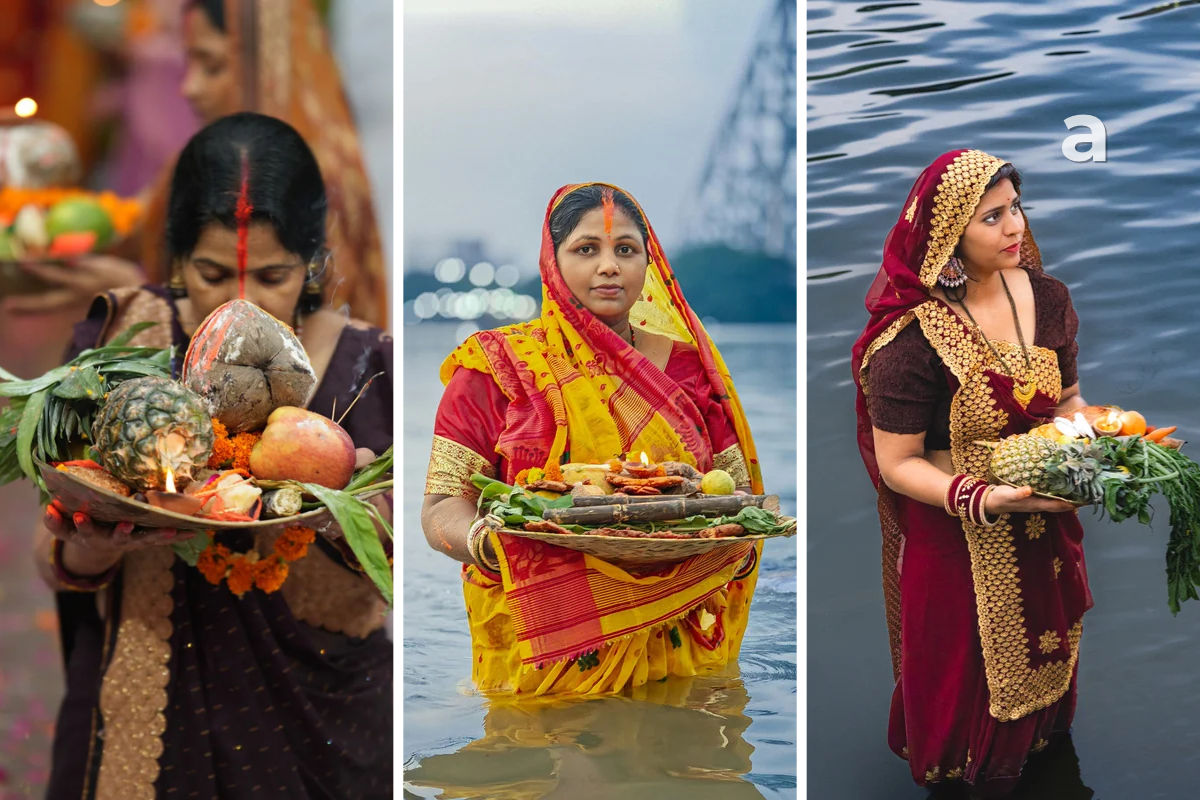
Someone carries a bamboo basket filled with fruit. A child holds a small lamp carefully between both hands. Families arrive in the half-light, some after travelling through the night. The air is cool, but the ghat is alive with quiet movement: greetings, song, the rustle of leaves, the soft sound of water against the steps.
Then the sun appears.
For a few moments, people stand facing the light, offering arghya with a stillness that seems to gather everyone into the same prayer.
This is one face of Chhath Puja, the Mahaparv observed with particular devotion in Bihar, Jharkhand, eastern Uttar Pradesh, Nepal’s Terai, and communities across India and the world. It is a festival of worship, but also of preparation, shared work, memory, and gratitude. Its rituals bring the home, the body, the harvest, the river, and the sun into one continuous act of attention.
Chhath is commonly observed over four days: Nahay Khay, Kharna, Sandhya Arghya, and Usha Arghya. The precise customs around food, fasting, songs, and offerings can differ between regions and families. The Bihar Tourism guide and Incredible India’s overview describe the familiar sequence and the distinctive worship of the setting and rising sun.
What Chhath Puja honours
Chhath Puja is dedicated to Surya, the Sun, and to Chhathi Maiya, also associated in many traditions with Shashthi Devi. Devotees offer prayers for well-being, protection, strength, and the flourishing of family life. Many also understand the observance as an expression of gratitude to the forces that sustain life.
The sun gives light and warmth. Its energy supports crops, seasons, and the rhythms of daily life. Water carries life through fields and settlements. The festival brings these relationships into view through the act of standing at the water’s edge and offering prayer to the sun.
That does not mean every devotee describes the meaning in exactly the same way. For one family, Chhath may be a vow kept across generations. For another, it may be the first year a daughter, son, or younger relative takes part. Some people speak of faith and blessings; others emphasize discipline, gratitude, community, or a promise made during a difficult time. These meanings can sit beside one another.
The word Mahaparv reflects the importance the festival holds for many communities. Yet the scale of the celebration does not erase its intimate character. A mother may teach a daughter how to arrange the offerings. A neighbour may help clean the courtyard. A family far from home may gather around a small water-filled vessel because no river is nearby. The public ritual and the private memory belong to the same observance.
When Chhath Puja is observed
The better-known Kartik Chhath falls on the sixth day of the bright fortnight of the lunar month of Kartik, usually in October or November. It follows Diwali in the seasonal calendar, but its observance has its own distinct rhythm and preparation.
Chaiti Chhath is also observed by some communities during the month of Chaitra in spring. The scale and local practices can vary. Dates are based on the lunar calendar, so the festival’s calendar date changes from year to year.
Chhath is especially associated with Bihar and neighbouring regions, but migration has carried the tradition well beyond them. In cities, people may gather at rivers, ponds, lakes, reservoirs, or specially prepared community ghats. Where a traditional water body is not accessible, families and local groups may create a respectful place for worship at home or in a shared space.
The setting changes. The central gesture remains: approaching the water, facing the sun, and offering thanks.
The four days of Chhath Puja
Day one: Nahay Khay
Nahay Khay begins the period of observance. The name is commonly understood as bathing and eating. Homes and cooking spaces are cleaned, and the person observing the fast—often called the vratin or parvaitin—takes a ritual bath. In some communities, the bath is taken at a river or other water body; in others, it takes place at home according to family custom and circumstance.
Food for the day is prepared with particular care. A familiar meal in many parts of Bihar is kaddu-bhat: rice served with bottle gourd, often alongside chana dal. The exact menu differs by household and region. The emphasis is on a simple, cleanly prepared meal taken as the observance begins.
The work of Nahay Khay is both practical and symbolic. Utensils are washed. The cooking area is prepared. Ingredients are gathered. Family members help make sure the household is ready for the days ahead. For some, this is the quietest day of the festival, when the home begins to change before the public gatherings at the ghat.
Day two: Kharna, or Lohanda
Kharna is a day of fasting that continues until evening. After sunset, the vrati performs prayer and takes the Kharna prasad. A commonly prepared offering includes rasiya kheer—rice cooked with jaggery and milk—along with roti or other foods according to local practice. The prasad is shared with family and others.
After Kharna, many devotees begin the main fast, which continues through the evening arghya and the following morning’s Usha Arghya. In the best-known form of this observance, the fast is nirjala, without food or water. The length and details of the fast follow family and community traditions, and not everyone observes it in the same way.
Kharna is a turning point in the four-day sequence. The day begins in restraint and ends with a small, carefully prepared meal. The prasad is not simply food to eat; it has first been offered in devotion and then shared. Its preparation asks for patience, cleanliness, and the help of many hands.
Day three: Sandhya Arghya
Sandhya Arghya, also called Sanjhiya Arghya, takes place at sunset on the main day of worship. Preparations often begin well before families leave for the ghat. Offerings are arranged in bamboo baskets or soops. Thekua, seasonal fruits, sugarcane, coconuts, and other items may be included, depending on local custom and availability.
People travel together to the river, pond, or designated place of worship. At the ghat, families arrange their offerings and wait for the sun to descend. Devotees stand in the water or at its edge and offer arghya to the setting sun. The prayer may be quiet, spoken, sung, or shared through familiar words passed down in the family.
Worshipping the setting sun is one of the most striking features of Chhath. Many festivals turn their attention to beginnings and rising light. Chhath also honours the sun as it sets. Devotees do not turn away when the day is ending. They offer thanks to the light that has sustained them, and they trust that it will return.
At some ghats, the evening is filled with folk songs in Bhojpuri, Maithili, Magahi, and other languages. The melodies carry memories of mothers, daughters, home, departure, and prayer. A person who has moved away may know the lyrics from childhood, even if they have not sung them in years. At Chhath, a song can make distance feel briefly smaller.
Some families observe Kosi or Kosi Bharna, an additional ritual associated with the festival. Its timing and form differ by community. It may involve a small structure made with sugarcane, lamps, and offerings, accompanied by prayers for family well-being. It is an important tradition for those who practise it, but it is not a required part of every family’s Chhath observance.
Day four: Usha Arghya and Paran
Before dawn, families return to the ghat for Usha Arghya, also called Bihaniya Arghya. The darkness is still present when people begin to gather. Lamps remain lit. Offerings are carried once more to the water’s edge, and everyone waits for the first light.
When the sun rises, devotees offer arghya to the morning sun. This completes the central sequence of evening and morning worship. After the offering, the vrati performs paran, the breaking of the fast, according to their family’s custom. Prasad is shared, often with relatives, neighbours, and those who helped during the observance.
The return home carries its own feeling. The four days have asked for time and effort from the household and community. The fast is complete; the baskets are lighter; the ghat slowly empties. But what remains is not only relief. There is also the sense of having taken part in something held by many generations.
The offerings: thekua, fruits, and the work behind the basket
The offerings prepared for Chhath are known collectively as prasad. Thekua is among the best-known: a firm, sweet offering made from wheat flour and jaggery or sugar, often prepared with ghee. Families may also bring rice sweets, seasonal fruits, sugarcane, coconut, bananas, and other local produce.
There is no single basket that every family must reproduce. Availability, region, household custom, and personal circumstances all shape the offerings. The care with which they are prepared matters as much as the list itself.
The bamboo soop and daura are more than containers. They connect the ritual to the craftspeople who make them and to materials grown from the land. Preparing the prasad can become a shared household task: someone cleans fruit, another shapes thekua, someone else arranges the baskets. Children watch and learn by helping.
The food also recalls the long journey that brings a meal to the table: soil, rain, seasons, cultivation, and human work. Aarohi has explored that connection in Before Food Reaches Our Plate. During Chhath, the harvest is not abstract. It is held, washed, arranged, and offered.
Chhathi Maiya, Surya, and the stories people tell
Chhath is associated with Surya and Chhathi Maiya, but there is no single story that every community uses to explain the festival’s origin. Devotional accounts and regional folklore connect the observance with figures such as Karna, Draupadi, Sita, and Rama. Some local traditions describe particular places where these figures are believed to have performed worship.
These stories are meaningful within the communities that carry them. They are best understood as different devotional tellings rather than as one settled historical explanation. Sahapedia’s discussion of Chhath’s origin stories brings together several of these narratives and the varied ways people remember them.
For many families, the story is also personal: a vow made by a grandparent, a ritual learned from a mother, a song associated with someone who is no longer there. A festival can be ancient in its community memory and immediate in its household meaning.
Fasting, devotion, and care for the person observing
Chhath fasting is described as rigorous, and many devotees undertake a demanding fast after Kharna. At the same time, devotion should not become a contest in endurance. The details of fasting are shaped by family practice, health, age, pregnancy, medications, and individual circumstances.
Women have been central to many family traditions, but men also observe the fast. The vrati’s role is not defined by gender alone; it is carried through commitment, preparation, prayer, and the support of those around them.
Anyone considering an extended fast who has a health condition, is pregnant, takes regular medication, or is otherwise unsure about fasting should discuss it with a qualified healthcare professional. Do not stop or change prescribed medication without medical advice. The World Health Organization’s guidance on fasting and chronic conditions emphasizes individual medical advice for people with conditions such as diabetes or hypertension. That guidance is about Ramadan, but the need to consider health and medication also matters when planning any extended fast.
Care at the ghat matters too. Choose a safe, designated place; follow local instructions; take care around deep water, slippery steps, crowds, and open flames; and make sure children remain with a responsible adult. If the water or weather conditions are unsafe, families can seek a safer location or follow a home observance in keeping with their tradition.
The ghat as a shared responsibility
Chhath brings people into close relationship with rivers, ponds, and other water bodies. A ghat becomes a place of worship through the care and participation of a community. That connection carries a responsibility: to leave the water and its surroundings as clean as possible.
Families and local organizers can reduce plastic packaging, use reusable containers where practical, keep waste away from the water, and follow local guidance about offerings after the ritual. These steps do not diminish devotion. They honour the natural world that the festival approaches with reverence.
The river is not merely a backdrop for a photograph. It is a living source of water for people, animals, and ecosystems. Respect for the place is part of respect for the ritual.
Chhath away from home
For people who have moved from Bihar, Jharkhand, eastern Uttar Pradesh, or Nepal’s Terai, Chhath can make home feel close even when it is far away. The familiar songs, the arrangement of the soop, and the taste of thekua can carry a whole landscape into a different city.
In some places, community groups prepare a public ghat. In others, a small group gathers by a lake or at a carefully arranged home space. The form may change because of work schedules, access to water, health, or the needs of a dispersed family. The meaning does not depend on recreating every detail exactly as it was done in a village or hometown.
This is one way a living tradition continues: people keep its heart while adapting its practice to the place where they are.
Why the setting sun is honoured too
The evening offering holds a thought that is easy to miss. Chhath does not praise only what is beginning. It also acknowledges what is nearing completion.
The setting sun has given the day its light. Its work is not erased because darkness follows. The next morning’s offering then welcomes its return. Between those two gestures is a full cycle: gratitude for what has been received, patience through the night, and hope for what comes again.
Perhaps this is one reason the Mahaparv stays with people. It asks them to look at the same sun at two different thresholds—dusk and dawn—and to meet each moment with reverence.
A festival carried by many hands
Chhath Puja is prayer, but it is also labour. Someone cleans the home. Someone prepares the prasad. Someone gathers the fruit. Volunteers organize the ghat. Neighbours help one another reach the water. Elders explain the sequence; children learn the songs.
The observance is often remembered through these small acts as much as through the arghya itself. A basket being lifted. A hand steadying a lamp. A familiar voice beginning a song. The first light touching the water.
In those moments, the Mahaparv becomes both personal and shared. People stand together without needing to have identical lives or explanations. They arrive carrying their own hopes and memories, and they face the same rising sun.
Frequently asked questions about Chhath Puja
Why do devotees offer arghya to both the setting and rising sun?
The evening and morning offerings form the central worship sequence. Devotees honour the setting sun and welcome the rising sun, expressing gratitude for the day’s life-giving light and hope for its return.
What happens during Kharna?
Kharna is the second day of the observance. Many devotees fast through the day and take a prayerful evening meal of prasad, often including jaggery kheer. In many traditions, the main fast begins after Kharna.
Is Chhath Puja observed only by women?
No. Women are central to many family and community traditions, but men also observe Chhath. The person undertaking the fast is often called a vrati or parvaitin.
What is commonly offered as Chhath prasad?
Thekua, fruits, sugarcane, coconut, and other locally available foods are common offerings. The exact items and recipes vary between regions and households.
Is Chhath Puja observed only in Bihar?
No. It is especially associated with Bihar, Jharkhand, eastern Uttar Pradesh, and Nepal’s Terai, and is also observed by communities living elsewhere in India and around the world.
Chhath Puja moves from a clean courtyard to a shared riverbank, from the evening sun to the first light of morning. Its four days hold discipline, food, song, memory, and the work of a community.
When the final arghya is offered, the sun is no longer only something distant in the sky. For a moment, it is the centre of a family’s gratitude and a community’s shared attention.
And when people turn from the ghat and begin the walk home, carrying baskets, lamps, and the prasad, the festival continues in what they carry with them: a renewed sense of connection to one another, to the land, and to the light that returns.
If this stayed with you, you can support Aarohi here🌿
If this piece stayed with you, you can support Aarohi 🌿
Secure payments via UPI, Cards, Net Banking & PayPal
This is not a transaction, it is an exchange of energy.


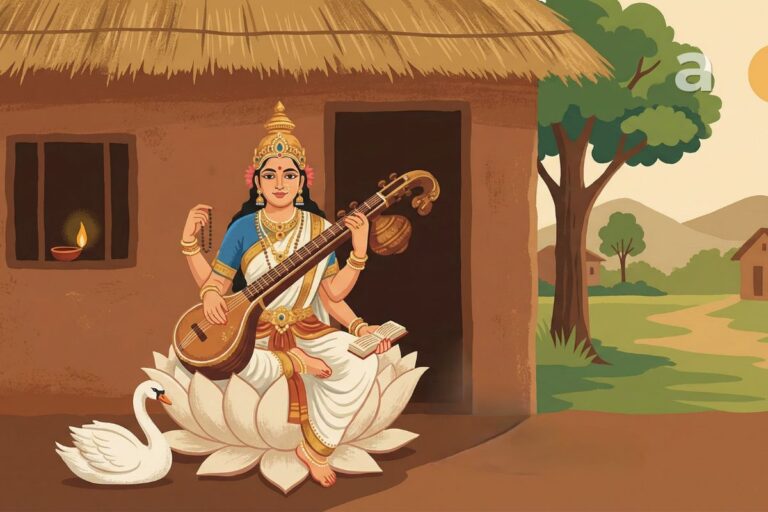
One of the most beautiful aspects of Chhath is offering prayers to both the setting and rising Sun. What does this tradition mean to you personally — gratitude, patience, faith, or hope?
For many of us, Chhath is closely connected with childhood memories — waking up early, watching the preparations, listening to traditional songs, and accompanying family members to the ghat. Which childhood memory of Chhath do you remember most clearly?