
A Cup of Tea for an Old Friend: A Quiet Love Story
A cup of tea for an old friend had been part of Raghav’s Sunday routine for three years, though no one had come to share it.
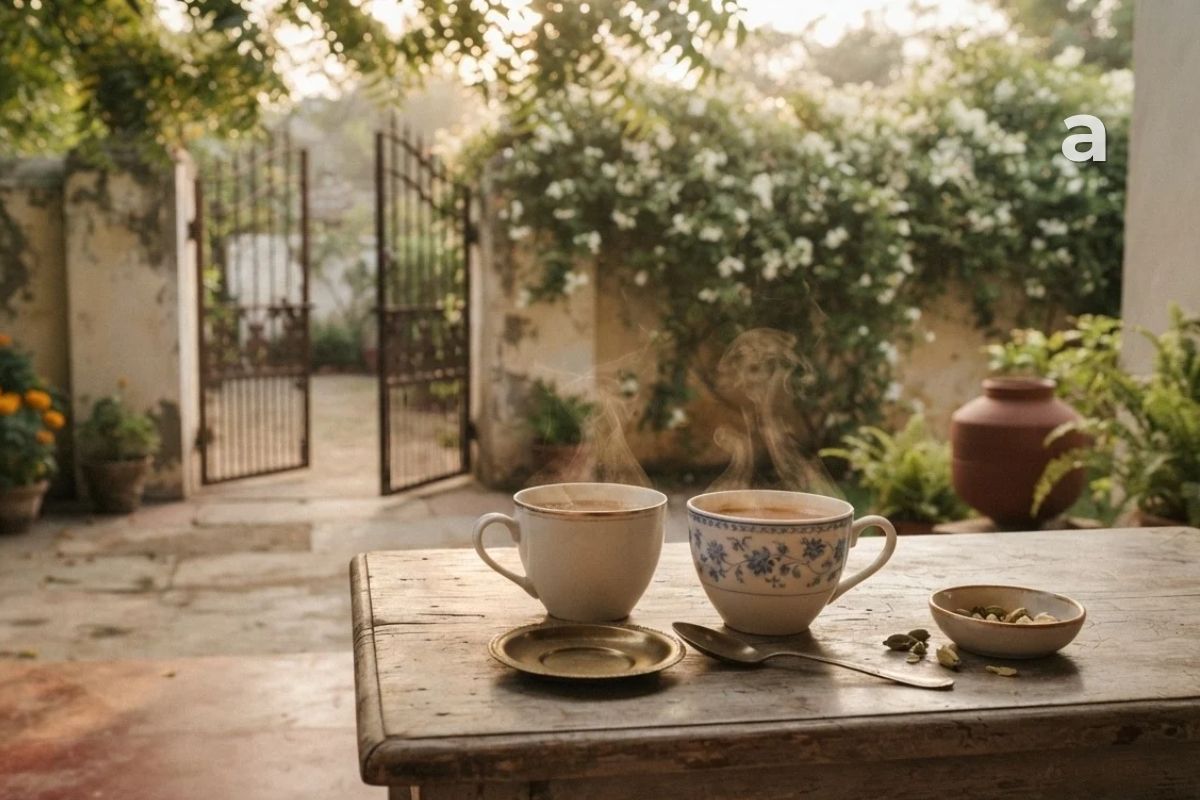
At five o’clock, he measured two spoons of tea leaves into a small steel pot. He crushed a piece of ginger, added cardamom, and waited for the water to darken. When the milk rose, he lowered the flame.
He poured two cups.
Then he carried them to the veranda and set them on the table beneath the window.
One cup was for himself. The other had no name.
Raghav did not think of it as waiting. Waiting suggested an expectation, and he had learned not to build a life around expectations. The second cup was simply part of the ritual, like opening the veranda shutters or watering the basil plant beside the steps.
If nobody came, he drank both cups slowly.
He never thought a cup of tea for an old friend could turn back time. The ritual simply left a little room for company.
Most Sundays, nobody came.
Then, one late-November afternoon, the gate clicked open.
A Cup of Tea for an Old Friend
Raghav was wiping the rim of the second cup when he heard the latch.
A woman stood in the courtyard with one hand still resting on the iron gate. A thin grey scarf was wrapped around her neck. Her hair was shorter than he remembered, and there were a few silver strands near her temples.
For one quiet moment, neither of them moved.
“Meera,” he said.
She gave him a small, almost uncertain smile. “Hello, Raghav.”
He looked at the cups. Then at her.
“I made tea.”
“I can see that.”
“I didn’t know you were coming.”
“Neither did I,” she said. “Not until I was standing outside.”
The answer made him laugh softly. It was the first familiar thing between them.
Meera stepped onto the veranda. Raghav pulled out the chair opposite his own. She sat, placing her bag on the floor beside her.
The cup was still warm.
“You remembered the ginger,” she said.
“I remember a lot of things.”
“I was always asking for more ginger.”
“You said the tea tasted like hot water without it.”
“It often did.”
They smiled, and then the quiet returned—not hostile, only aware of all the years sitting between them.
Meera held the cup in both hands. The steam touched her face.
For the first few minutes, they spoke about what could be said without effort. Her journey. The cold weather. The roadworks near the old market. Raghav’s bookshop, which had moved from the main road to a smaller lane after the rent rose.
“How long are you here?” he asked.
“Until Friday. I’m helping my mother clear out the old house.”
“The one near the school?”
She nodded. “She’s moving closer to my brother. The house is too much for her now.”
Raghav understood. He knew the rooms she meant: the front room where Meera’s mother kept a blue glass bowl, the balcony where they had once hidden from a rainstorm, the narrow kitchen where Meera was forbidden to make tea because she always used too much sugar.
“You’re selling it?” he asked.
“I think so.” She looked down into her cup. “It’s strange to make decisions about a place that has kept so many versions of you.”
Raghav turned his cup slowly on the table.
“Yes,” he said. “It is.”
The Years They Had Not Discussed
They had met at seventeen, in the town library.
Meera had been sitting on the floor between the shelves, searching for a book that was already in her hand. Raghav had pointed it out. She had looked at the cover and said, “I knew that.”
“You were looking for it,” he had replied.
“I was looking for another copy.”
“There’s only one.”
“Then you should have said that first.”
He had liked her before he knew what to call liking someone. She spoke as if every ordinary thing deserved a question. He was quieter, but she never treated his quiet as a problem to solve.
They became friends in the way that sometimes happens without a plan. They studied at the same table. They walked home through the market. They disagreed about books and agreed about tea. When one of them had something difficult to say, the other usually noticed before the words arrived.
For years, they lived close enough for friendship to feel effortless. If Meera wanted to talk, she walked to Raghav’s house. If Raghav found a book she would like, he left it with her mother. Their families knew one another. Their future seemed like a thing they could discuss later.
Then later arrived.
Meera received a job offer in Bengaluru. The salary was modest, the room she could afford was small, and the work was exactly what she wanted: editing books for a publishing house. She spoke about it for weeks, trying to sound practical.
Raghav’s father had recently fallen ill. The bookshop needed someone to run it, and Raghav had decided he would stay.
Neither choice was wrong. Neither was easy.
On the evening before Meera’s train, they sat together at the station. Her suitcase was between them. The platform smelled of dust, metal, and tea from the vendor’s cart.
“I could stay,” Meera had said.
Raghav remembered the sentence more clearly than the train’s arrival.
“You should go,” he had replied.
She looked at him then, waiting.
He wanted to say: I want you here. I want to ask you to stay. I also know you would wonder, years from now, whether you had chosen your life or given it away for mine.
Instead, he said, “You’ve worked hard for this.”
Meera had nodded. “Yes.”
The train arrived. She left.
For a while, they called and exchanged messages. Their lives grew busy in different directions. A week passed, then a month. Sometimes one of them thought of calling and decided it was too late in the evening. Sometimes the other did the same.
Silence did not fall between them all at once. It accumulated, like dust in a room neither of them entered.
A Photograph Between the Pages
Meera glanced toward the living room. A shelf stood just inside the veranda doors, crowded with books. One of them had a faded blue cover.
“Do you still have that?” she asked.
Raghav followed her gaze. “The book with the terrible ending?”
“The ending wasn’t terrible.”
“The main character leaves without explaining anything.”
“That can be a good ending.”
“It can also be a frustrating one.”
She laughed. “You always did want everyone to say exactly what they meant.”
“No,” he said. “I wanted the people in books to.”
The book had belonged to Meera. She had lent it to him the summer before she left and never asked for it back. He went inside and brought it to the table.
A photograph slipped from between its pages.
It landed face up.
They were both in it, younger, sitting on the steps of the library. Meera was laughing at something outside the frame. Raghav was looking at her rather than the camera.
“I forgot about this,” she said.
“I didn’t.”
She touched the edge of the photograph but didn’t pick it up.
“I look very sure of myself.”
“You were.”
“I was good at sounding sure.”
“I know.”
The sentence seemed to open a small space in the conversation.
Meera looked at him. “Did you ever think I was waiting for you to ask me to stay?”
Raghav didn’t answer quickly. He had learned that some questions deserved the time they had been denied.
“At the station?” he asked.
“Yes.”
“I thought you wanted me to tell you to go. To say that you were allowed to choose yourself, even if I wanted you here.”
She considered that. “I wanted both.”
He nodded. “I understand that now.”
“Back then, I heard ‘go’ as ‘I don’t want you enough to ask you to stay.’”
Raghav lowered his eyes to the photograph. “I was afraid that if I asked you to stay, you would do it for me and resent me later.”
“You could have told me that.”
“I could have.”
“So could I.”
The honesty was gentle, but it did not make the past disappear. It gave the past a shape they could finally look at together.
The Thing They Had Called Friendship
The tea had cooled. Raghav offered to make another pot.
“Let this one be,” Meera said. “It’s still good.”
He sat back down.
For years, Raghav had thought of that station conversation as the moment their lives separated. He had replayed it enough to know where he might have paused, which word he might have changed, how easily he could have asked one more question.
But the past did not contain a single missed sentence that would have made everything simple. There had been many small opportunities to speak, and both of them had taken the easier path.
“I should have called after you left,” he said.
“I should have called too.”
“I thought you were building a life you wanted. I didn’t want every call from home to make you feel guilty.”
“Sometimes I wanted a call from home.”
“I know that now.”
She stirred her tea though she had added nothing to it. “I thought if you wanted me in your life, you would say so.”
“I thought you knew.”
“Neither of us was very good at making things easy.”
“No,” he said. “We were excellent at being reasonable.”
She smiled. “Reasonable people can do a lot of damage quietly.”
Raghav looked at her, and the smile left her face—not because she was upset, but because she had finally said something she had carried for a long time.
“Did you love me?” she asked.
The question was plain. It did not ask for a promise.
“Yes,” he said. “I think I did. I know I did.”
Meera held the cup still. “I loved you too.”
Neither of them reached across the table.
They had both lived full lives since then. Meera had worked hard, made friends, travelled, and learned to make a home in a city that had once frightened her. Raghav had taken over the bookshop, cared for his father, and built a life that belonged to him. The words they were saying did not erase any of that.
“I don’t know what those words mean now,” Meera said.
“Neither do I.”
“That feels honest.”
Perhaps that was what the tea had offered them: not an answer about what they had been, but a cup of tea for an old friend and room to ask what they could be now.
“It’s a start.”
The Last Sip
The light changed while they sat there. The afternoon sun withdrew from the far wall, leaving the veranda cooler. Somewhere down the lane, a bicycle bell rang twice.
Meera finished the last sip of tea.
“I should go,” she said. “My mother is expecting me before dinner.”
Raghav stood and walked her to the gate.
At the latch, she turned back. “Will you be here next Sunday?”
“Probably.”
“Will you make tea?”
“I usually do.”
“For two?”
He looked toward the veranda. The cups were still on the table.
“Yes,” he said. “For two.”
She rested her hand on the gate. “Then perhaps I’ll come by.”
“Perhaps,” he said.
There was no promise hidden in the word. No demand for an answer by Friday. It was only a small opening, held carefully between them.
Meera stepped through the gate and turned once to wave. Raghav returned the wave. Then he closed the gate without locking it.
He went back to the veranda. One cup was empty. The other held a little tea, now cool. He carried both inside and washed them.
For three years, he had treated the second cup as a place for memory. That afternoon, it had become something else—not a guarantee, not a return to the life they might have lived, but room for another conversation.
The next Sunday, Raghav made tea at five.
He did not know whether Meera would come. He did not need to decide what her visit would mean if she did. He crushed the ginger, waited for the milk to rise, and set two cups on the table.
At five minutes past five, he heard the gate.
This time, he smiled before he stood.
Some friendships do not return to the shape they once had. Some loves do not ask to be made young again. They simply meet us where we are, carrying the years honestly, and ask whether we have time for one more cup.
Related reading: Continue with The Conversation I Never Forgot, another Aarohi reflection on the words that stay with us.
If this stayed with you, you can support Aarohi here🌿
If this piece stayed with you, you can support Aarohi 🌿
Secure payments via UPI, Cards, Net Banking & PayPal
This is not a transaction, it is an exchange of energy.





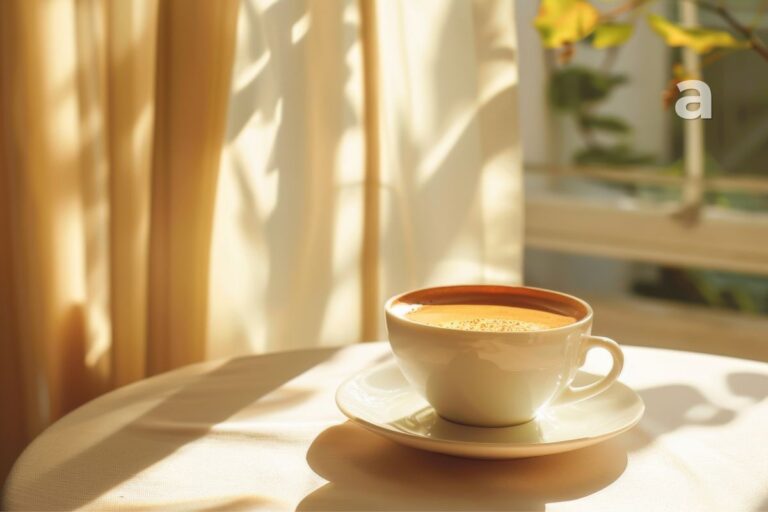
The two cups of tea are such a beautiful symbol throughout this story. One cup for the present, another holding space for memory, and eventually the possibility of another conversation. A quiet and deeply reflective story.