

The Man Who Left a Different Note Every Morning
The Note Beneath the Sugar Jar
The man who left a different note every morning always arrived at 7:10 and left a note beneath the sugar jar.
Nobody knew who it was for.
The café owner had watched him do it for almost three years.
Same table.
Same chair.
Same black coffee.
Same quiet arrival, just after the morning rush began.
He was neither particularly old nor particularly young. He dressed simply—usually a pale shirt, dark trousers, and shoes that looked as though they had been polished many times. He never brought a laptop. Never spoke on the phone. Never seemed to be waiting for anyone.
He simply came in.
Ordered his coffee.
Sat at the table near the window.
And wrote.
Always on a small square of cream-colored paper.
He would take several minutes, sometimes longer, holding the pen above the page as though the right words were difficult to find. Then he would fold the paper twice, place it carefully beneath the glass sugar jar, and finish his coffee.
At exactly 7:25, he would leave.
The next morning, the note would be gone.
And another one would take its place.
Nobody touched them.
Not the café owner.
Not the servers.
Not the regular customers who had slowly become familiar with the strange ritual.
There was an unspoken rule in the café:
Whatever was beneath the sugar jar belonged to him.
For a long time, nobody even knew his name.
The staff simply called him the morning man.
Then, one rainy Tuesday, the youngest waiter finally noticed something unusual.
The man had written more than usual.
He folded the paper.
Placed it beneath the sugar jar.
Then, before leaving, he looked at it for several seconds.
Not proudly.
Not sadly.
Almost as if he were saying goodbye.
The waiter watched him walk through the glass door and disappear into the wet morning.
He waited until the café became busy again.
Then he looked at the little folded note beneath the sugar jar.
For the first time in three years, he wondered:
Who keeps taking these notes away every morning?
And more importantly—
Why does the man keep writing them?
Nobody Knew Who He Was Writing To
The next morning, the man arrived at 7:10 as usual.
The waiter watched him more carefully this time.
He ordered his black coffee.
Walked to the table near the window.
Took the same cream-colored paper from his coat pocket.
And began to write.
The waiter tried not to stare.
He failed.
There was something strangely deliberate about the man’s handwriting. He wrote slowly, stopping every few sentences. Sometimes he crossed out an entire line. Sometimes he simply sat with the pen between his fingers, looking through the window at people rushing along the pavement.
When he finished, he folded the note twice.
Then he placed it beneath the sugar jar.
The waiter noticed that the man’s fingers remained on the jar for a moment.
Almost protectively.
Then he stood and left.
The waiter waited.
Ten minutes.
Twenty.
Nothing happened.
Eventually, curiosity won.
He glanced around the café before carefully lifting the sugar jar.
The note underneath was short.
It contained only one sentence:
“I hope you had a better morning today.”
The waiter frowned.
That was all.
No name.
No date.
No explanation.
He put the note back exactly where he had found it.
But the sentence stayed with him.
The following morning, there was another note.
“You would have liked the rain today.”
The day after that:
“I still remember how you took your coffee.”
Then:
“I passed the old place yesterday.”
The notes were never long.
Sometimes they contained only six or seven words.
But slowly, they began to sound less like messages and more like pieces of a conversation that had been interrupted years ago.
The café owner eventually noticed the waiter becoming distracted.
“What are you looking at?” she asked.
“Nothing.”
She raised an eyebrow.
He sighed.
“The notes.”
She looked toward the window.
“You’ve been reading them?”
“Only a few.”
She was quiet for a moment.
Then she said, “Don’t.”
“Why?”
“Because whatever they are, they’re not ours.”
The waiter nodded.
But curiosity had already done its work.
For the first time, the café staff began noticing details they had ignored for years.
The man never came on Sundays.
He never changed his table.
He never added sugar to his coffee.
And, strangely, he always carried two sheets of paper.
One was the note he left behind.
The other stayed folded inside his coat.
Nobody knew why.
Nobody knew who received the first note.
Nobody knew who had taken all the others.
Until one morning, the waiter arrived early and saw something that made him stop at the café door.
The sugar jar was already sitting on the man’s table.
And beneath it was a note.
But the man hadn’t arrived yet.
The Notes Nobody Was Supposed to Read
The waiter stood at the café door for several seconds.
The note was already there.
Beneath the sugar jar.
Waiting.
He looked around the empty café.
The chairs were still upside down on several tables. The lights had only just been switched on. Outside, the street was quiet except for the occasional sound of a passing bus.
The man was nowhere to be seen.
The waiter walked toward the table.
He did not touch the note immediately.
Instead, he stared at it.
There was something unsettling about finding it there before its owner.
Finally, he lifted the sugar jar.
The paper was folded twice, exactly as always.
He opened it.
Three words were written inside.
“You can stop now.”
The waiter felt a chill.
He read it again.
Then again.
For the first time, the notes did not feel like a private conversation.
They felt like a warning.
He put the paper back beneath the jar.
At 7:10, the bell above the café door rang.
The man walked in.
He stopped when he saw the waiter standing beside his table.
For a moment, neither of them spoke.
Then the man looked at the sugar jar.
His face changed.
Not with anger.
With fear.
“You read it,” he said quietly.
The waiter lowered his eyes.
“I didn’t mean to.”
The man pulled out the chair and sat down.
He did not order his coffee.
He simply stared at the window.
After a long silence, the waiter finally asked the question that had been sitting inside the café for years.
“Who are the notes for?”
The man’s hands tightened around the edge of the table.
“You shouldn’t know.”
“Then why leave them here?”
The man looked at him.
For the first time, the waiter noticed how tired he seemed.
“Because,” he said, “someone has been taking them.”
The waiter glanced at the sugar jar.
“Who?”
The man didn’t answer.
Instead, he reached inside his coat and pulled out the second sheet of paper—the one he always carried but never left behind.
He unfolded it.
There were dozens of dates written across the page.
Three years of them.
Every morning he had come.
Every morning he had written.
Every morning, someone had taken the note.
The waiter looked at the dates.
Then he noticed something strange.
They weren’t random.
They were all the same date.
March 14.
Year after year.
The man folded the paper again.
“Tomorrow,” he said, standing up, “I’ll write the last one.”
Then he walked out without touching his coffee.
The waiter watched him disappear down the street.
And for the first time, he understood something frightening:
The notes had never been about remembering someone.
They had been about waiting for someone to return.
The Morning He Changed the Sentence
The next morning, the waiter arrived before sunrise, still thinking about the man who left a different note every morning.
He kept thinking about the man’s words.
“Tomorrow, I’ll write the last one.”
At 7:10, the bell above the café door rang.
The man walked in.
But something was different.
He looked older than he had the day before.
Not physically.
Something in his face had changed.
He ordered his usual black coffee and sat by the window.
For several minutes, he did nothing.
The cream-colored paper remained untouched beside his cup.
The waiter watched from behind the counter. It was the kind of quiet mystery that makes us notice the small things we usually overlook—something explored in Aarohi Prime’s Life & Reflections.
At 7:17, the man finally picked up his pen.
He wrote one sentence.
Stopped.
Read it.
Then slowly crossed it out.
He wrote another.
Crossed that out too.
For nearly ten minutes, he continued this way.
Finally, he folded the paper.
The waiter expected him to place it beneath the sugar jar.
Instead, the man stood and walked toward the counter.
He placed the folded note directly in front of the waiter.
“Keep this,” he said.
The waiter looked at him.
“Why?”
“Because tomorrow, I may not be here.”
Before the waiter could ask what he meant, the man turned around.
Then he stopped.
He looked back at the note.
“Actually,” he said quietly, “there’s something else.”
He opened it.
The waiter read the sentence.
It was different from every message that had come before.
“I waited long enough. Now it’s your turn.”
The waiter looked up.
“What does that mean?”
But the man had already walked away.
He pushed open the café door and disappeared into the morning.
The waiter stood there holding the note.
For three years, the man had written to someone who never appeared.
For three years, someone had taken those messages.
And now, for the first time, he had handed one to someone else.
The waiter turned the paper over.
There was something written on the back.
A date.
March 14.
And beneath it, an address.
The waiter recognized the street immediately.
It was only six blocks from the café.
He had passed it hundreds of times.
But he had never noticed the small building at the end of the lane.
Under the address were four words:
“Ask for the photograph.”
The waiter looked toward the door. The man was gone. And suddenly, the notes beneath the sugar jar no longer seemed like messages from one person to another. They reminded him of all the things people quietly postpone saying, doing, or facing—the same quiet theme explored in The Life We Keep Postponing.
They seemed like clues.
And tomorrow was March 14.
The Day the Chair Stayed Empty
March 14 arrived with rain.
Not heavy rain.
Just the quiet, persistent kind that blurred the windows and made the café feel smaller than usual.
The waiter kept looking at the door.
7:05.
7:10.
7:15.
The bell didn’t ring.
At 7:20, he looked toward the familiar table by the window.
The chair was empty.
The coffee remained unmade.
And beneath the sugar jar, there was no note.
For the first time in three years, the man had not come.
The waiter told himself there was nothing unusual about it.
People get sick.
People change routines.
People stop visiting cafés.
But this was different.
The man had come every morning for almost three years.
Even during storms.
Even on holidays.
Even on the morning the café had lost electricity.
And yesterday, he had said:
“Tomorrow, I may not be here.”
The waiter reached into his pocket.
The folded note was still there.
I waited long enough. Now it’s your turn.
And beneath it:
Ask for the photograph.
At 8:00, the café became busy.
Customers came and went.
Cups were washed.
Chairs scraped against the floor.
Life continued as though nothing had happened.
But the waiter couldn’t stop looking at the empty chair.
At 10:30, he finally left the café.
The address was only a few streets away.
He walked through the rain until he reached a narrow lane lined with old houses and closed shops.
At the very end stood a faded two-storey building.
There was no sign outside.
Only a brass number beside the door.
The waiter checked the address again.
This was it.
He knocked.
An elderly woman opened the door.
She looked at him without surprise.
“Are you from the café?” she asked.
The waiter froze.
“How did you know?”
She smiled faintly.
“Because he told me someone might come.”
The waiter felt his heart quicken.
“You know him?”
The woman stepped aside.
“I knew him a long time ago.”
He entered.
The hallway smelled of old books and rain.
On the wall were several framed photographs.
Families.
Children.
Weddings.
Birthdays.
And then the waiter saw it.
A photograph of the man.
Much younger.
Standing beside a woman outside a small café.
The same café.
The same window.
The same table visible behind them.
The waiter moved closer.
But it wasn’t the man who caught his attention.
It was the woman standing beside him.
Because beneath the photograph was a handwritten date:
March 14, 1998.
And underneath it, just one name.
Anna.
The elderly woman looked at the photograph.
Then she said quietly,
“He has been writing to her for twenty-eight years.”
The waiter stared at her.
“But she’s gone, isn’t she?”
The woman nodded.
“Twenty-eight years ago.”
She paused.
Then added:
“That’s why he never expected anyone to answer.”
The waiter looked again at the photograph.
And suddenly, the mystery became much larger than a man leaving notes beneath a sugar jar.
Because if Anna had been gone for twenty-eight years—
who had been taking the notes every morning?
The Envelope Behind the Counter
The waiter returned to the café just before noon, still trying to understand the man who left a different note every morning.
He said nothing to the owner.
He couldn’t.
How could he explain that the man they had watched every morning for three years had been writing to a woman who had died twenty-eight years ago?
And how could he explain the question that frightened him most?
Who had been taking the notes?
He went straight to the man’s table.
The sugar jar was still there.
He lifted it.
Nothing.
He checked beneath the table.
Nothing.
Then he noticed something he had never noticed before.
There was a narrow wooden panel underneath the table.
It looked slightly loose.
He knelt down and pulled it gently.
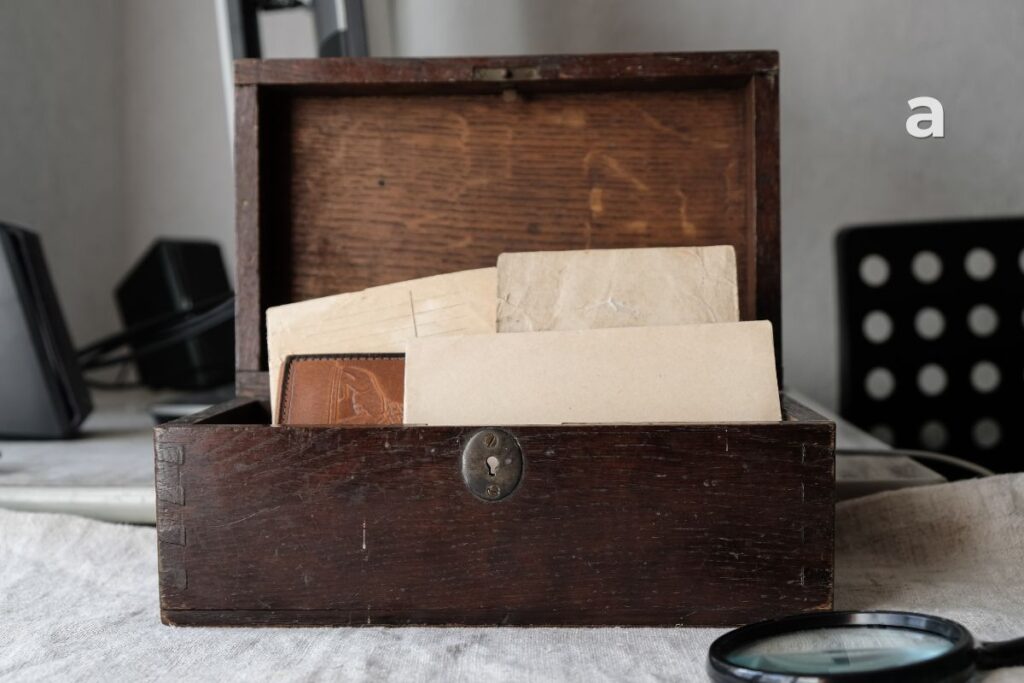
Behind it was a small envelope.
Yellowed with age.
His name was not written on it.
Neither was the man’s.
There were only two words:
FOR TOMORROW.
The waiter stared at the envelope.
He remembered what the man had said.
“I waited long enough. Now it’s your turn.”
His hands trembled as he opened it.
Inside was a single photograph.
The same photograph he had seen at the old woman’s house.
The young man.
The young woman.
The café behind them.
But there was something on the back.
A handwritten message.
“If I ever stop coming, give this to the person who asks why.”
The waiter read it twice.
Then a third time.
Beneath the sentence was another line:
“Tell him I kept my promise.”
The waiter sat down.
For the first time, the pieces began to come together.
The man hadn’t been waiting for Anna to return.
He had been keeping a promise he had made to her.
But what promise?
He turned the photograph over again.
At the very bottom, almost hidden beneath the handwriting, was another sentence.
“She asked me to leave one message every year until someone finally understood.”
The waiter felt his breath catch.
One message every year.
But the man had been leaving notes every morning.
That meant the daily notes had started much later.
There had been another reason.
He looked toward the café entrance.
Rainwater was still dripping from the umbrellas outside.
The morning crowd had disappeared.
The chair by the window remained empty.
Then the café owner walked over.
“What did you find?”
The waiter slowly handed her the photograph.
She looked at it.
Her expression changed immediately.
“You found it.”
“You knew about this?”
She nodded.
“Not everything.”
“What do you know?”
The owner sat down opposite him.
“The man didn’t own this café.”
The waiter looked confused.
“He didn’t?”
“No.”
She pointed toward the photograph.
“He worked here once.”
The waiter stared at the young man in the picture.
“How long ago?”
The owner looked toward the empty chair.
“Twenty-eight years ago.”
Then she lowered her voice.
“And the woman beside him…”
She paused.
“She was the reason he left.”
The waiter looked at her.
“Why?”
The owner didn’t answer.
Instead, she reached beneath the counter and pulled out an old metal box.
She placed it on the table.
Inside were dozens of folded papers.
Hundreds, perhaps.
All written in the same handwriting.
All carrying the same date.
March 14.
The waiter stared at the collection.
Then he noticed something that made his stomach tighten.
The oldest note was dated 1998.
The newest was dated yesterday.
Twenty-eight years of messages.
Twenty-eight years of waiting.
And somewhere inside that box was the one message the man had never been able to write.
The message Anna had been waiting to hear.
The Name on the Old Photograph
The waiter picked up the oldest photograph from the metal box.
The edges had turned soft with age.
The image itself was beginning to fade, but the two people in it were still unmistakable.
The young man stood beside Anna, both of them smiling at something outside the frame.
Behind them was the same café.
The same window.
The same table.
The same place where, twenty-eight years later, he had continued to sit every morning.
The waiter turned the photograph over.
This time, he noticed something he had missed before.
There were two names written on the back.
Anna.
And beneath it:
Daniel.
Daniel.
That was the first time the waiter learned the man’s name.
He looked at the café owner.
“Daniel?”
She nodded.
“That was his name.”
“Why didn’t anyone ever call him that?”
“Because when he came back three years ago, he asked us not to.”
The waiter frowned.
“Why?”
The owner looked toward the empty chair.
“He didn’t want anyone to know who he had been.”
The waiter looked down at the photograph again.
“Who was Anna?”
The owner was silent for a while.
Then she said, “She was supposed to marry him.”
The waiter looked up.
“Supposed to?”
“They were young. Very young. They had plans to leave the city together.”
“What happened?”
The owner opened the metal box and removed another folded paper.
“This.”
She handed it to him.
It was dated March 14, 1998.
The handwriting was Daniel’s.
The message was only a few lines long.
Anna, I know you asked me to come with you.
I should have.
I’m sorry I was afraid.
If you still want me, I’ll be at the station tomorrow.
The waiter read it twice.
Then he noticed the date.
March 14.
The day before the photograph had been taken.
“What happened at the station?”
The owner shook her head.
“Daniel went.”
“And Anna?”
“She never came.”
The waiter stared at the paper.
“Why?”
The owner didn’t answer immediately.
Instead, she took another photograph from the box.
This one was older.
It showed a railway platform.
Anna was standing beside a suitcase.
Daniel was nowhere in sight.
On the back, in faded handwriting, were four words:
“I waited until sunset.”
The waiter felt something tighten in his chest.
Anna had gone to the station.
Daniel had gone too.
But they had somehow missed each other.
Two people standing in the same city, waiting for the same person, each believing the other had chosen not to come.
He looked at the owner.
“Did they ever meet again?”
“No.”
“Then how did Daniel know she had waited?”
The owner looked at the old photograph.
“He didn’t.”
She turned it over.
There was another message.
One Daniel had written years later.
“I spent twenty-eight years believing she left without me.”
The waiter read the next line.
And suddenly understood why Daniel had returned to the café.
“Until last year, when I finally learned the truth.”
He looked up.
“What truth?”
The owner’s eyes moved toward the door.
“The truth about where Anna went.”
The waiter waited.
But the owner said nothing more.
Instead, she placed one final photograph on the table.
It showed Anna.
Older now.
Standing beside a little girl.
And written on the back was a name.
“Anna Miller — 2001.”
The waiter stared at the photograph.
Anna had not disappeared in 1998.
She had been alive.
She had built another life.
And somehow, Daniel had found her story only recently.
But there was one question the photograph could not answer.
Why had Anna never come back for him?
The Man Who Left a Different Note Every Morning
The waiter looked at the photograph for a long time.
Anna had lived.
She had grown older.
She had raised a child.
She had built a life somewhere else.
And Daniel had spent twenty-eight years believing that she had simply chosen not to return.
“Why didn’t she tell him?” he asked.
The café owner looked down at the metal box.
“She tried.”
The waiter looked up.
“What?”
“She wrote to him.”
The owner reached inside the box and pulled out a thin envelope.
It was addressed simply:
Daniel — Café Window Table
The waiter opened it carefully.
Inside was a letter.
Anna’s handwriting was neat, but uneven in places.
She had written it in 2001.
Three years after the day at the station.
She explained that she had waited for Daniel until sunset.
When he didn’t come, she believed he had changed his mind.
She left the city the following morning.
Years later, she discovered that her mother had been seriously ill and had secretly intercepted several of Daniel’s letters, believing he was distracting Anna from her family.
By the time Anna learned the truth, she was already married.
She had a young daughter.
And Daniel had disappeared from her life.
The final lines of the letter were difficult to read.
But the waiter could make them out.
“If he ever comes back, tell him I didn’t leave because I stopped loving him.”
The waiter lowered the letter.
“So she knew he was coming back?”
“No,” the owner said.
“She simply hoped he might.”
The waiter looked toward the empty chair.
“Then why did Daniel leave a note every morning?”
The owner smiled sadly.
“Because he finally found this letter last year.”
The waiter remembered the date.
March 14.
The same date Daniel had been writing about for twenty-eight years.
“He came back here after reading it?”
“Yes.”
“And started leaving the notes?”
“He said he had spent too many years talking to an old memory.”
The owner paused.
“So he decided to speak anyway.”
The waiter looked at the stack of papers.
For three years, Daniel had written every morning.
Not because he believed Anna would walk through the door.
But because writing gave him a place to put everything he had never been able to say.
Some notes were apologies.
Some were ordinary observations.
The rain was heavy today.
The café changed its chairs.
I finally learned how to make decent coffee.
Others were memories.
I passed the station.
I heard our song.
I remembered the blue dress.
And some were simply wishes.
I hope you’re well.
I hope life was kind to you.
I hope you forgave me.
The waiter suddenly understood.
The notes had never really been letters. They were a private form of reflection—a kind of inner conversation that begins when we finally stop running from what we feel. Sometimes that process leads us toward Inner Work & Awareness.
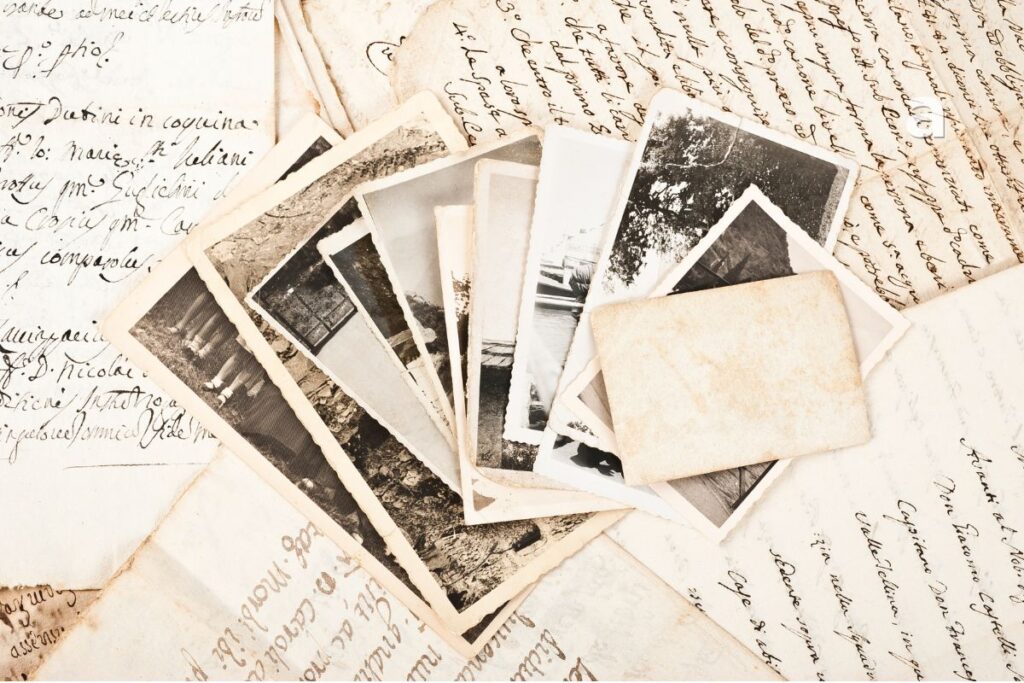
They were a conversation with a past that could no longer answer.
But then he noticed one final envelope at the bottom of the box.
It was sealed.
Unlike the others, it had no date.
Only one word was written on the front:
Anna.
The waiter looked at the owner.
“What’s inside?”
“I don’t know.”
“Then why haven’t you opened it?”
She shook her head.
“Because Daniel told me not to.”
“When?”
“Yesterday.”
The waiter remembered the empty chair.
The last note.
The words:
I waited long enough. Now it’s your turn.
He slowly picked up the envelope.
And then he noticed something that made him stop.
There was a second name written beneath Anna’s.
Not Daniel.
Not the café owner’s.
It was his own.
For the person who finally asked why.
The Note He Never Got to Leave
The waiter stared at his own name on the envelope.
For several seconds, he couldn’t bring himself to open it.
It was strange to see his name written in handwriting he had never seen before.
For the person who finally asked why.
The café owner said nothing.
She simply stood beside him.
Finally, he opened the envelope.
Inside was a single sheet of cream-colored paper.
The handwriting was Daniel’s.
But unlike the notes beneath the sugar jar, this one was several pages long.
He began reading.
Daniel explained that after finding Anna’s letter the previous year, he had returned to the café for one reason.
He wanted to remember her without remembering only the mistake.
For years, he had carried the belief that Anna had abandoned him.
It had made his regret easier to live with.
If she had chosen to leave, then perhaps there was nothing he could have done.
But the truth was harder.
They had both waited.
They had both loved each other.
And they had both spent years believing a lie.
Daniel wrote that he had eventually found Anna’s daughter.
He had learned where Anna lived.
He had even received a recent photograph of her.
But he had never contacted her.
The waiter stopped reading.
Why?
He continued.
Daniel didn’t want to enter a life that had already moved forward.
Letters have long carried this kind of private human history—small records of people, relationships, memories, and moments that might otherwise disappear. Collections such as the Library of Congress preserve many examples of personal correspondence and handwritten records from different periods.
Anna had built a family.
She had become a mother.
Perhaps a grandmother.
She had memories that no longer included him.
Daniel didn’t want to become an old unfinished chapter that someone was forced to reopen.
So he wrote instead.
Every morning.
One note.
Not for Anna to read.
For himself to finally say.
The waiter turned the page.
Near the bottom, Daniel had written:
“There is something I understood too late.”
He continued.
“Sometimes we think closure means getting one last conversation with the person we lost.”
“It doesn’t.”
“Sometimes closure is accepting that the conversation may never happen.”
The waiter lowered the letter.
Outside, the rain had stopped.
Sunlight had begun touching the café window.
He read the final page.
Daniel had written about the last note he planned to leave.
He had intended to write:
I waited for you.
But that morning, he changed the sentence.
Instead, he wrote:
I hope you were happy.
The waiter remembered the note.
The one Daniel had handed him.
The one that said:
“I waited long enough. Now it’s your turn.”
At the bottom of the letter was one final instruction.
“Tomorrow morning, leave this beneath the sugar jar.”
The waiter looked up.
“Tomorrow?”
The café owner nodded.
“He asked me to make sure you did.”
“But where is he?”
She hesitated.
“I don’t know.”
The waiter folded the letter carefully.
Then he looked toward the familiar table.
For three years, Daniel had arrived at 7:10.
Tomorrow, for the first time, someone else would sit there.
Someone else would write the final note.
He placed the letter inside the old metal box.
Then he noticed a tiny photograph tucked beneath it.
Anna.
Older now.
Smiling.
On the back, Daniel had written only one sentence:
“Some people leave our lives. That doesn’t mean the love has to leave with them.”
The waiter held the photograph for a moment.
Then he understood what Daniel had really left behind.
Not a mystery.
Not a collection of notes.
Not even a love story.
He had left behind a choice.
To keep waiting for an answer—or finally become the person who writes the last line.
Some Messages Are Meant to Find Us Late
The next morning, the waiter arrived at the café before 7:00, ready to sit where the man who left a different note every morning had sat for so long.
For the first time, he walked toward the window table carrying a piece of cream-colored paper.
He sat in Daniel’s chair.
For a moment, he simply listened.
The soft hum of the refrigerator.
The clink of cups behind the counter.
The distant sound of traffic beginning outside.
At 7:10, the café owner placed a black coffee in front of him.
Neither of them said anything.
The waiter unfolded the paper.
He had thought about what to write all night.
In the end, there was no apology.
No explanation.
No grand farewell.
Only a few simple words.
He wrote:
“I hope you were happy.”
He folded the paper twice.
Then he placed it beneath the sugar jar.
The same place Daniel had left hundreds of notes.
For a while, nothing happened.
Then the café door opened.
An elderly woman stepped inside.
She looked around slowly, as though searching for something she had once known.
The waiter stood.
“Can I help you?”
The woman smiled.
“I was told to come here.”
“By whom?”
She looked toward the window.
“Daniel.”
The waiter couldn’t speak.
She walked to the table.
Her eyes fell on the sugar jar.
Then she noticed the folded note beneath it.
Her hand trembled slightly.
“Is he here?”
The waiter shook his head.
“No.”
She nodded, as though she had expected that answer.
Then she sat down.
For several minutes, neither of them spoke.
Finally, the waiter placed the old photograph on the table.
The woman looked at it.
She touched Daniel’s younger face with one finger.
“He kept this?”
“For twenty-eight years.”
She smiled through tears.
“He always kept things too long.”
The waiter almost smiled.
Then he handed her the cream-colored note.
She opened it.
Read the sentence.
And closed her eyes.
She didn’t ask who had written it.
She already knew.
Before leaving, she placed something beneath the sugar jar.
A small folded piece of paper.
The waiter looked at her.
“What’s that?”
She smiled.
“A reply.”
Then she walked out.
The waiter waited until the door closed.
He lifted the sugar jar.
The note contained only seven words:
“I was happy. I hope you were too.”
He read it twice.
Then carefully folded it and placed it inside the old metal box.
The next morning, the chair by the window was empty again.
There was no man at 7:10.
No black coffee.
No quiet handwriting.
But beneath the sugar jar was a blank sheet of cream-colored paper.
The waiter understood.
Some stories don’t end when someone leaves.
Sometimes they end when someone finally says what should have been said years ago.
And sometimes, the message we spend our lives waiting to receive has been waiting for us too.
Just somewhere else.
At another table.
In another year.
In another person’s handwriting.
Because not every message arrives when we need it.
Some messages are meant to find us late.
If stories like this speak to you, begin with Start Here and explore more reflections from Aarohi Prime.
If this stayed with you, you can support Aarohi here🌿
If this piece stayed with you, you can support Aarohi 🌿
Secure payments via UPI, Cards, Net Banking & PayPal
This is not a transaction, it is an exchange of energy.





Stories like this restore faith in humanity. They remind us that we don’t need extraordinary resources to make a difference—just a willing heart and a little intention.
This story is a beautiful reminder that kindness doesn’t need a stage or an audience. The smallest gestures often become the moments people remember for years.