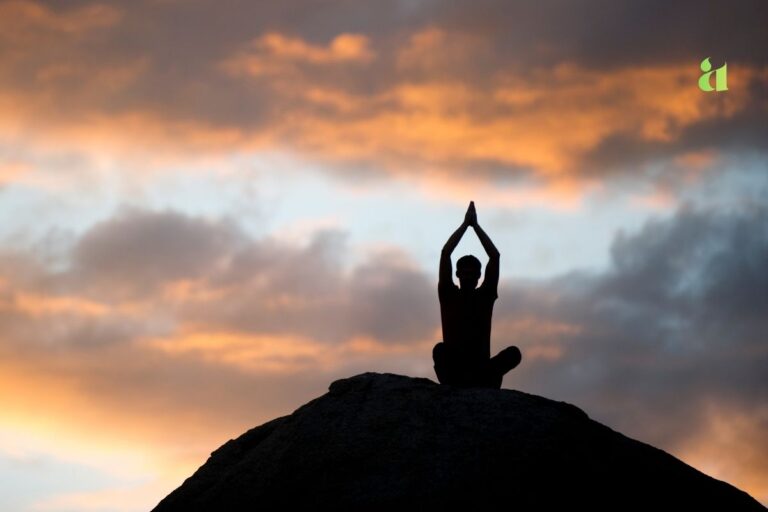

Learning to Slow Down Without Losing Yourself
Learning to slow down without falling behind is one of the hardest — and most necessary — skills in modern life.
We live in a culture that rewards speed, urgency, and constant output. Slowing down often feels risky, as if pausing means losing momentum or missing opportunities. Yet many of us feel exhausted, distracted, and quietly disconnected — even while doing everything “right.”
This reflection explores how learning to slow down without falling behind can help us reclaim clarity, balance, and a more meaningful sense of progress.
Why Learning to Slow Down Without Falling Behind Matters Today
Learning to slow down without falling behind is not about rejecting ambition.
It is about redefining growth in a way that is sustainable, human, and rooted in awareness.
When life is lived at full speed:
- Decisions become reactive
- Attention becomes fragmented
- Progress feels rushed but empty
Slowing down creates space — and space allows intention to return.
1. Learning to Slow Down Without Falling Behind Starts With Awareness
The first step in learning to slow down without falling behind is noticing where urgency has replaced intention.
Ask yourself:
- Am I rushing because it’s necessary — or because it’s expected?
- Do I move fast out of clarity, or out of fear of being left behind?
Awareness does not demand immediate change. It simply invites honesty.
Organizations like the World Health Organization also recognize the importance of mental well-being in navigating fast-paced modern life.
2. Slowing Down Without Falling Behind Means Listening to the Body
The body often signals the need to slow down long before the mind agrees.
Signs may include:
- Constant fatigue despite rest
- Shallow breathing
- Tension that never fully releases
Learning to slow down without falling behind means respecting these signals — not overriding them in the name of productivity.
If you’re new here, the Start Here page offers a gentle orientation to how Aarohi approaches mindful living and reflection.
Rest is not a reward. It is a requirement.
Research-backed approaches like mindfulness pract highlighted by Mindful.org show how slowing attention improves clarity and emotional balance.
3. Redefining Growth Beyond Speed and Output
One of the greatest myths of modern life is that faster always means better.
Learning to slow down without falling behind allows us to redefine growth as:
- Making thoughtful choices
- Saying no with clarity
- Choosing fewer commitments with deeper presence
This kind of growth may be quiet, but it is deeply transformative.
This idea is explored more deeply in 7 Gentle Truths About a Mindful Living Journey, where slowing down is seen not as withdrawal, but as awareness.
4. Slowing Down Without Falling Behind in a Fast World
The world will not slow down for us.
That is precisely why learning to slow down without falling behind becomes a personal responsibility.
This does not mean withdrawing from life.
It means engaging with it more consciously.
Progress does not disappear when we slow down — it becomes more aligned.
5. Learning to Slow Down Without Falling Behind at Work and Life
Slowing down can feel especially difficult in professional and social spaces where urgency is normalized.
Yet learning to slow down without falling behind often leads to:
- Better decision-making
- Fewer mistakes
- Stronger boundaries
- More sustainable creativity
Intentional pacing protects energy — and energy sustains momentum.
6. Slowing Down Without Falling Behind Is a Practice, Not a Switch
There is no finish line to slowing down.
Learning to slow down without falling behind is a daily practice of choosing presence over pressure. Some days you will rush. Some days you will pause. Both are part of being human.
The goal is not perfection — it is awareness.
7. Choosing a Gentler Way Forward
Learning to slow down without falling behind invites us to move through life with trust rather than urgency.
Trust that:
- You are not late
- Your pace is valid
- Depth matters more than speed
When movement comes from clarity instead of fear, falling behind is no longer a concern.
There is a quiet fear beneath the idea of slowing down.
It is not laziness.
It is not lack of ambition.
It is the fear of being left behind.
We live in a world that equates speed with relevance. Movement with meaning. Productivity with worth.
So when you begin learning to slow down without falling behind, you are not just adjusting your schedule.
You are renegotiating your identity.
You may notice resistance first.
A voice that says:
“If I slow down, I will lose momentum.”
“If I pause, someone else will move ahead.”
“If I rest, I will regret it.”
But momentum without direction eventually exhausts you.
Slowing down is not the opposite of progress.
It is the refinement of it.
There is a difference between moving quickly and moving clearly.
Clarity requires space.
When you slow down, you begin to notice what truly deserves your energy. Not everything urgent is important. Not everything visible is meaningful.
Some growth happens quietly.
Without applause.
Without metrics.
Without comparison.
Learning to slow down without falling behind requires redefining what “behind” actually means.
Behind whom?
According to whose timeline?
Measured by what standard?
Often, the pressure to keep up is not externally enforced. It is internally constructed.
We compare invisible timelines.
We assume others are progressing faster because their milestones are more visible.
But life is not a synchronized race.
It is a deeply personal unfolding.
When you slow down intentionally, something stabilizes inside you.
You begin responding instead of reacting.
You choose your pace rather than inheriting it.
There is strength in that restraint.
It takes courage to say:
“I will move at a pace that sustains me.”
Because sustainability is rarely glamorous.
It is disciplined.
It is steady.
It is consistent.
And consistency builds more quietly than urgency.
You may also discover that slowing down increases depth.
You listen more attentively in conversations.
You complete tasks with more presence.
You make decisions with less emotional turbulence.
This is not falling behind.
This is building internal alignment.
When pace and values align, growth becomes less frantic.
There is also a physiological aspect to this.
The nervous system does not thrive under constant acceleration.
Chronic urgency keeps the body in subtle alertness. Even when nothing is wrong.
Slowing down signals safety.
And safety allows clearer thinking.
You begin to notice that some of your speed was fueled by anxiety, not purpose.
And once anxiety loosens, your pace adjusts naturally.
Not dramatically.
But deliberately.
You may still work hard.
You may still pursue goals.
You may still strive.
But striving no longer feels desperate.
It feels grounded.
Learning to slow down without falling behind also reshapes how you measure time.
Instead of asking, “How much did I accomplish?”
You begin asking, “How present was I?”
Instead of counting tasks,
You notice impact.
Instead of rushing to the next milestone,
You honor the current one.
This shift reduces internal noise.
And with less noise, you hear yourself more clearly.
There will still be days when urgency pulls at you.
Deadlines exist.
Responsibilities remain.
Slowing down does not eliminate reality.
It transforms how you meet it.
You prioritize.
You delegate.
You release what does not belong to you.
And slowly, the fear of falling behind weakens.
Because you begin to see that you are not behind.
You are simply choosing sustainability over spectacle.
Over time, that choice compounds.
Your work improves.
Your relationships deepen.
Your decisions feel steadier.
You are not racing anymore.
You are building.
And building, unlike racing, is meant to last.
Perhaps the deeper lesson here is this:
Slowing down is not about stepping away from ambition.
It is about separating ambition from anxiety.
One exhausts you.
The other expands you.
When you learn to slow down without falling behind, you realize that pace is not the enemy.
Misalignment is.
And alignment rarely requires speed.
It requires awareness.
A Gentle Reflection
If this reflection resonates, sit with it.
And if it doesn’t, feel free to leave it behind.
You can explore more reflections in the Journal — a quiet collection of essays and stories written slowly and read the same way.
A Question to Sit With
Where in your life are you rushing — not because you must, but because you’ve been taught to?
You’re welcome to share your thoughts in the comments, or simply carry the question with you.